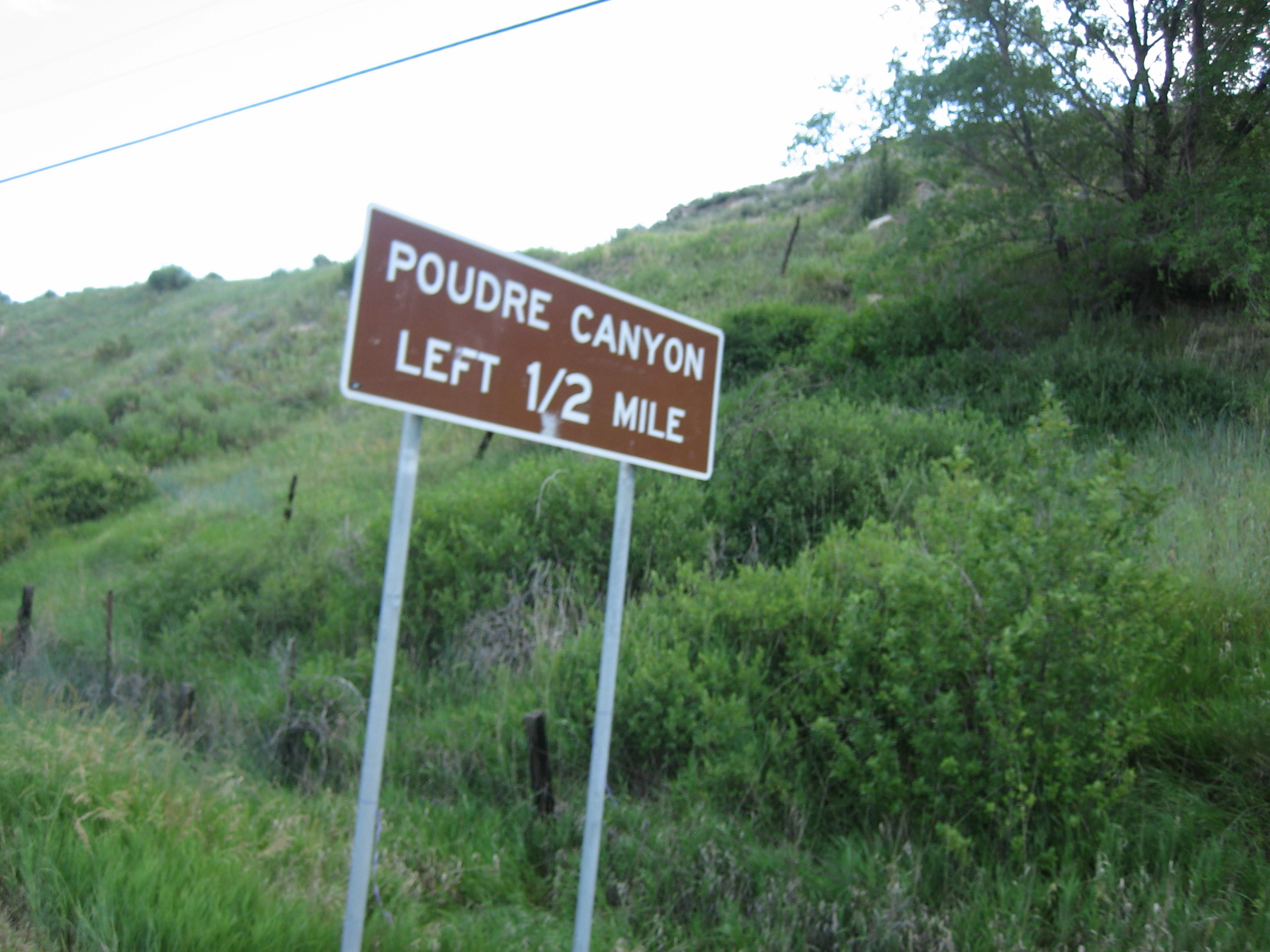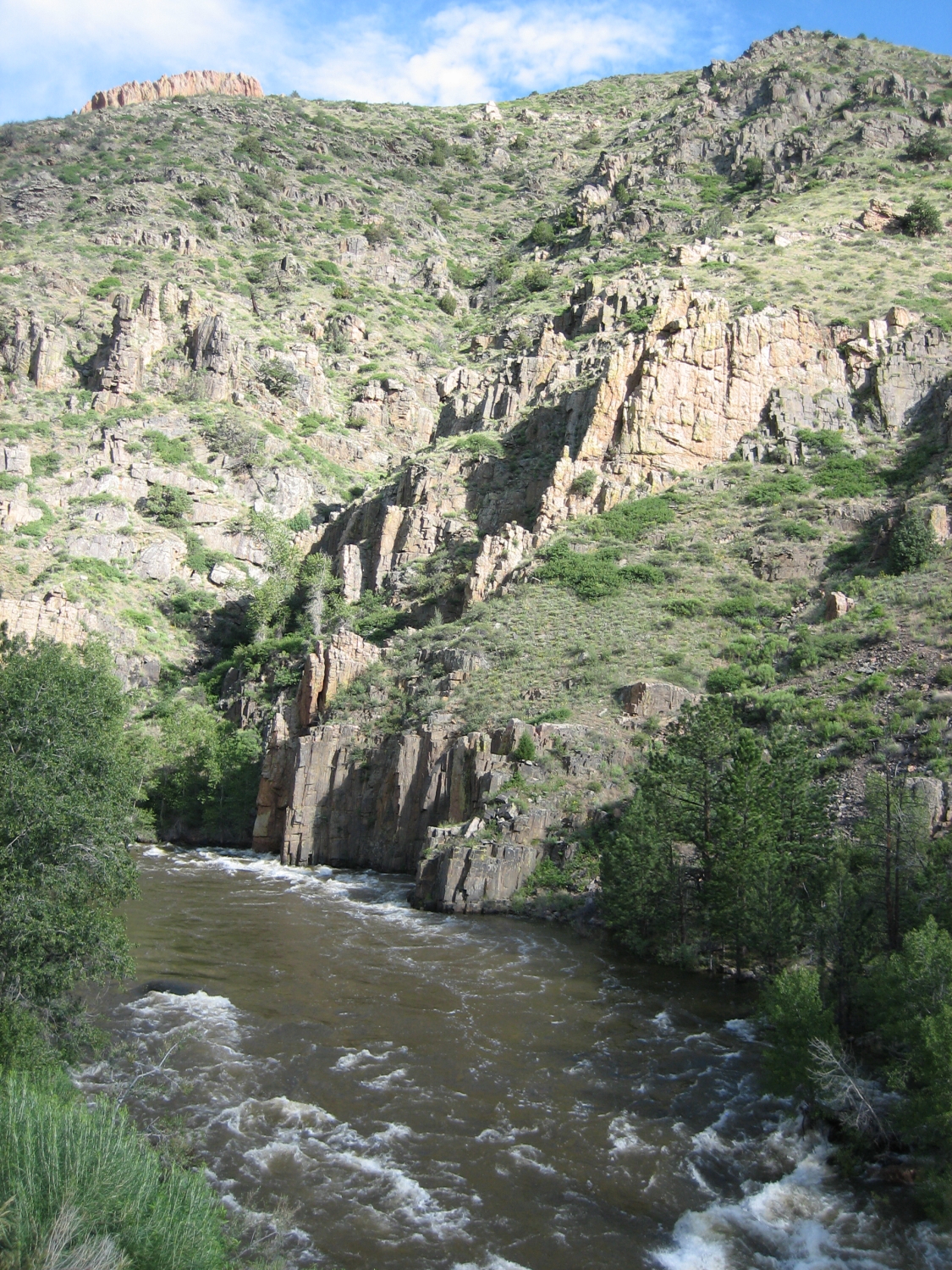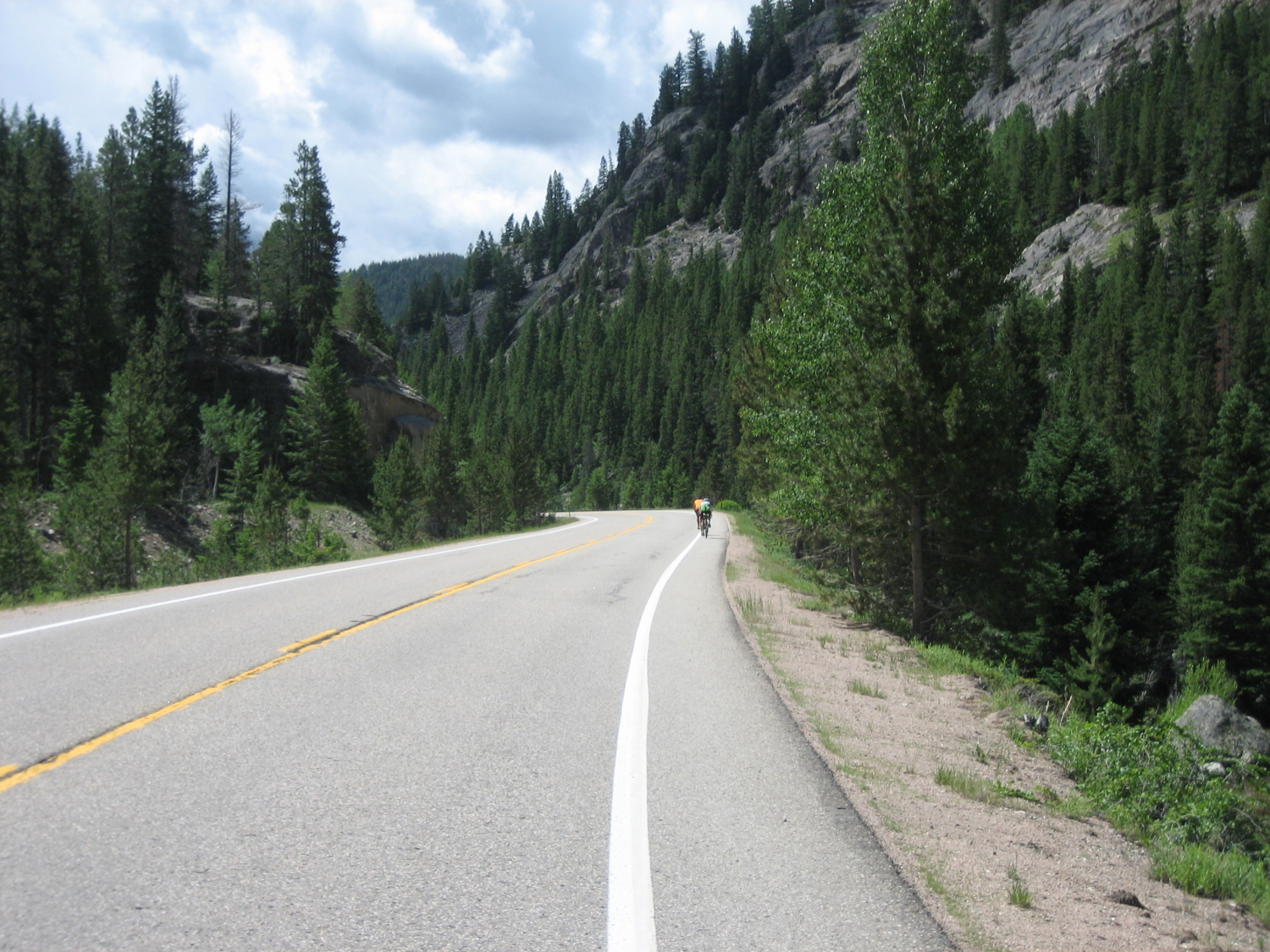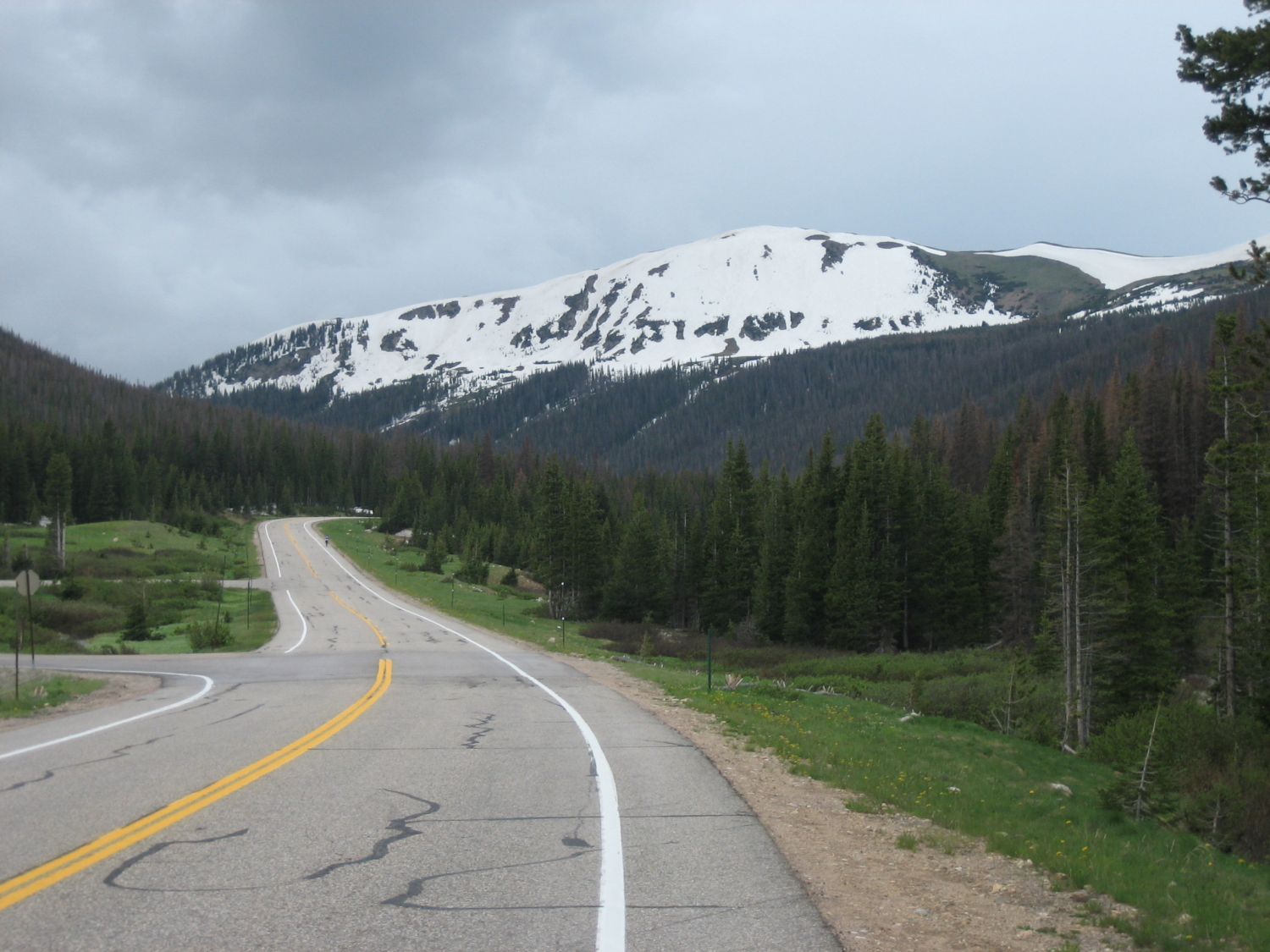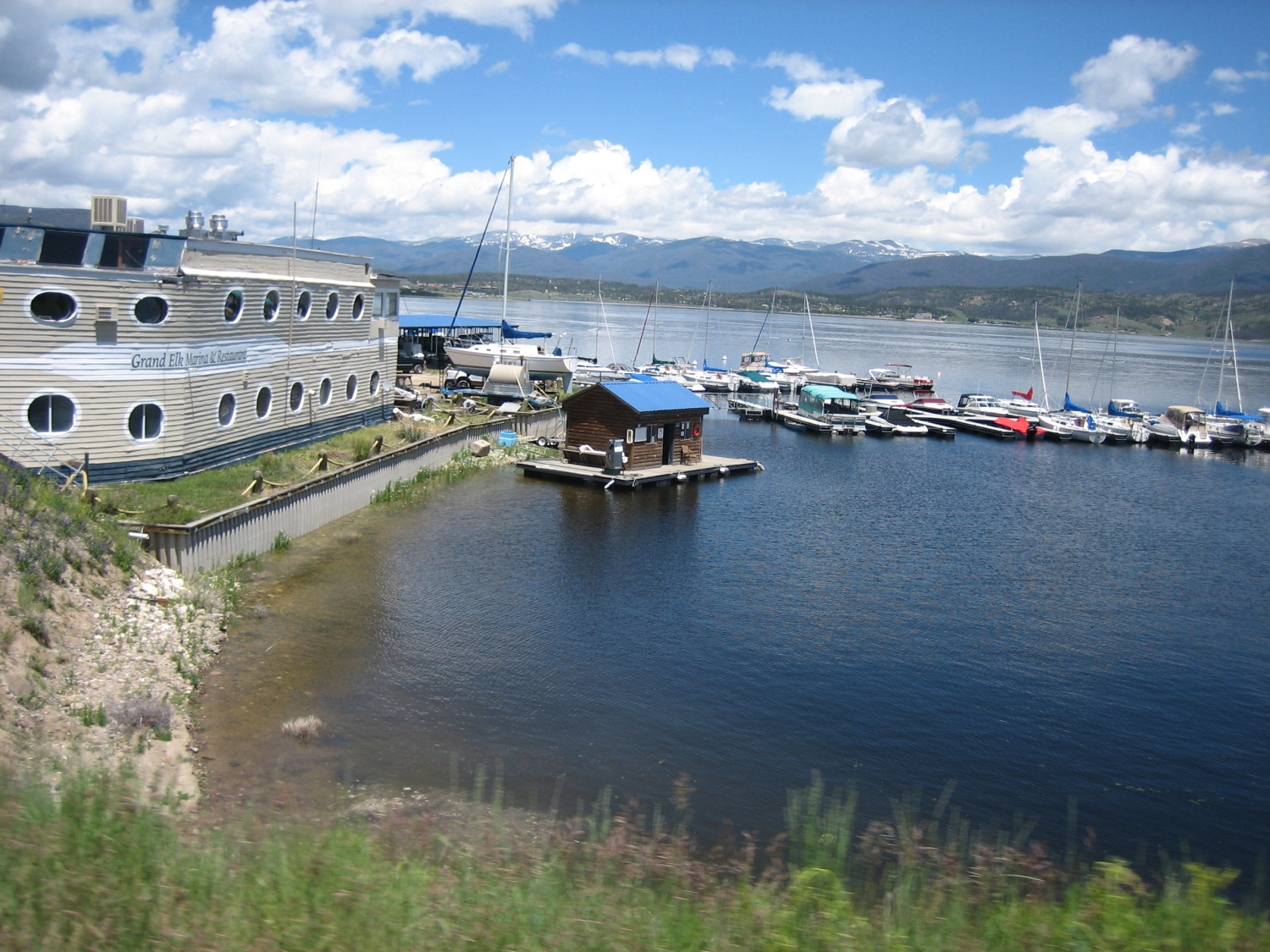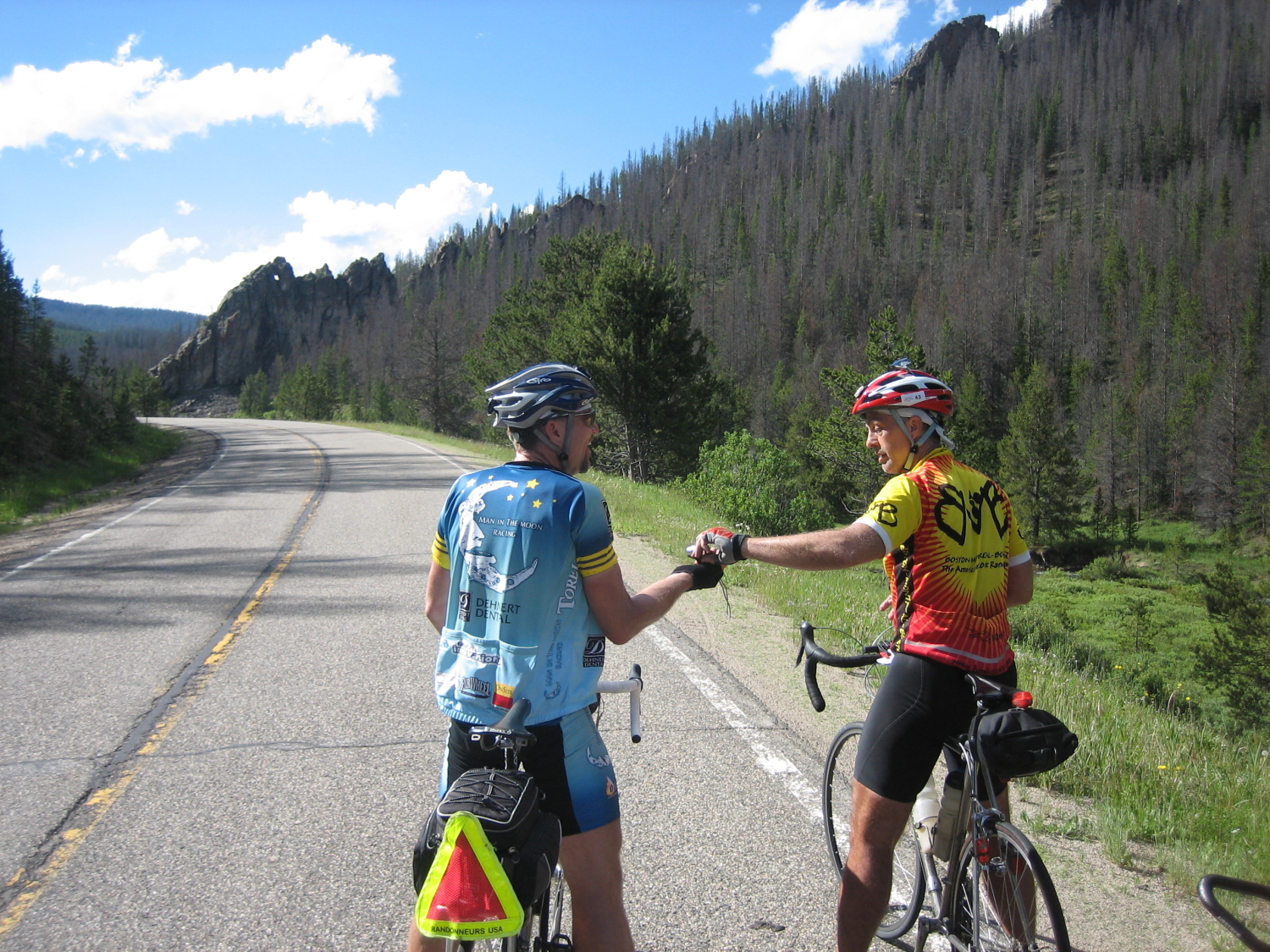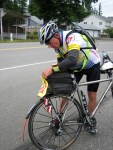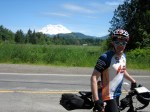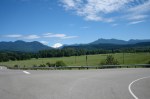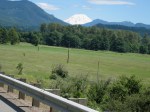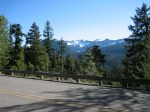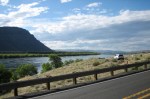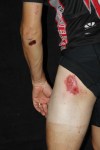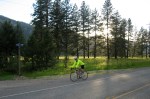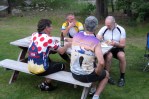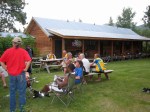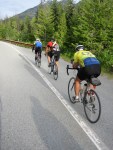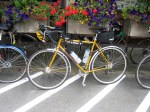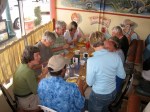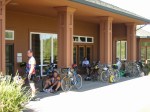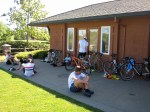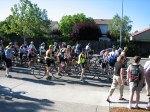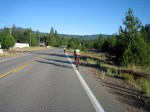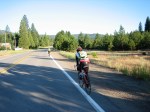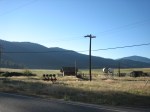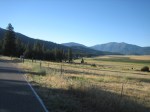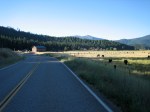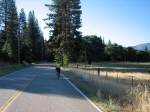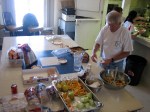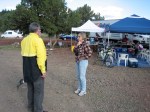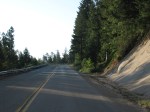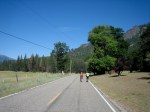
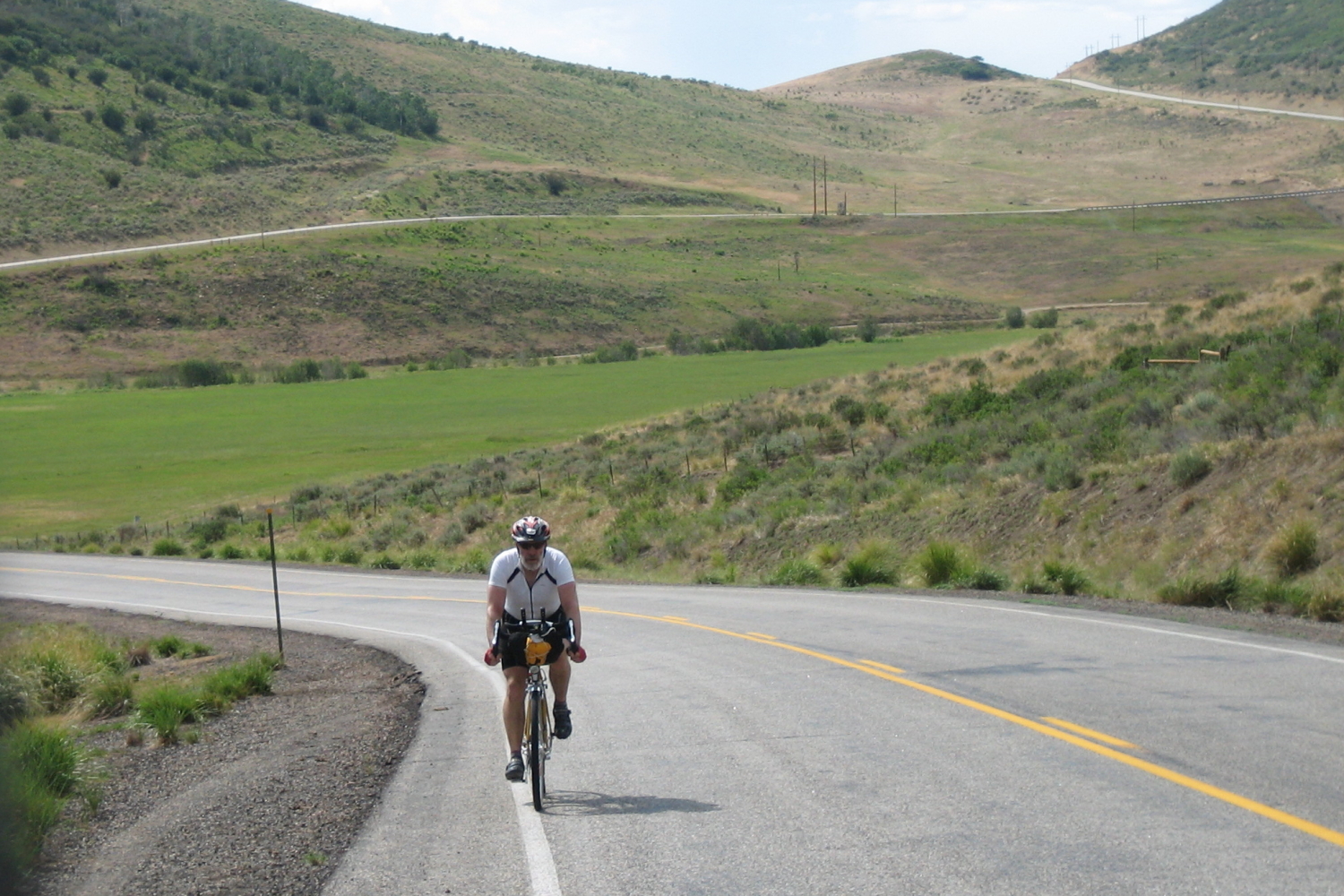
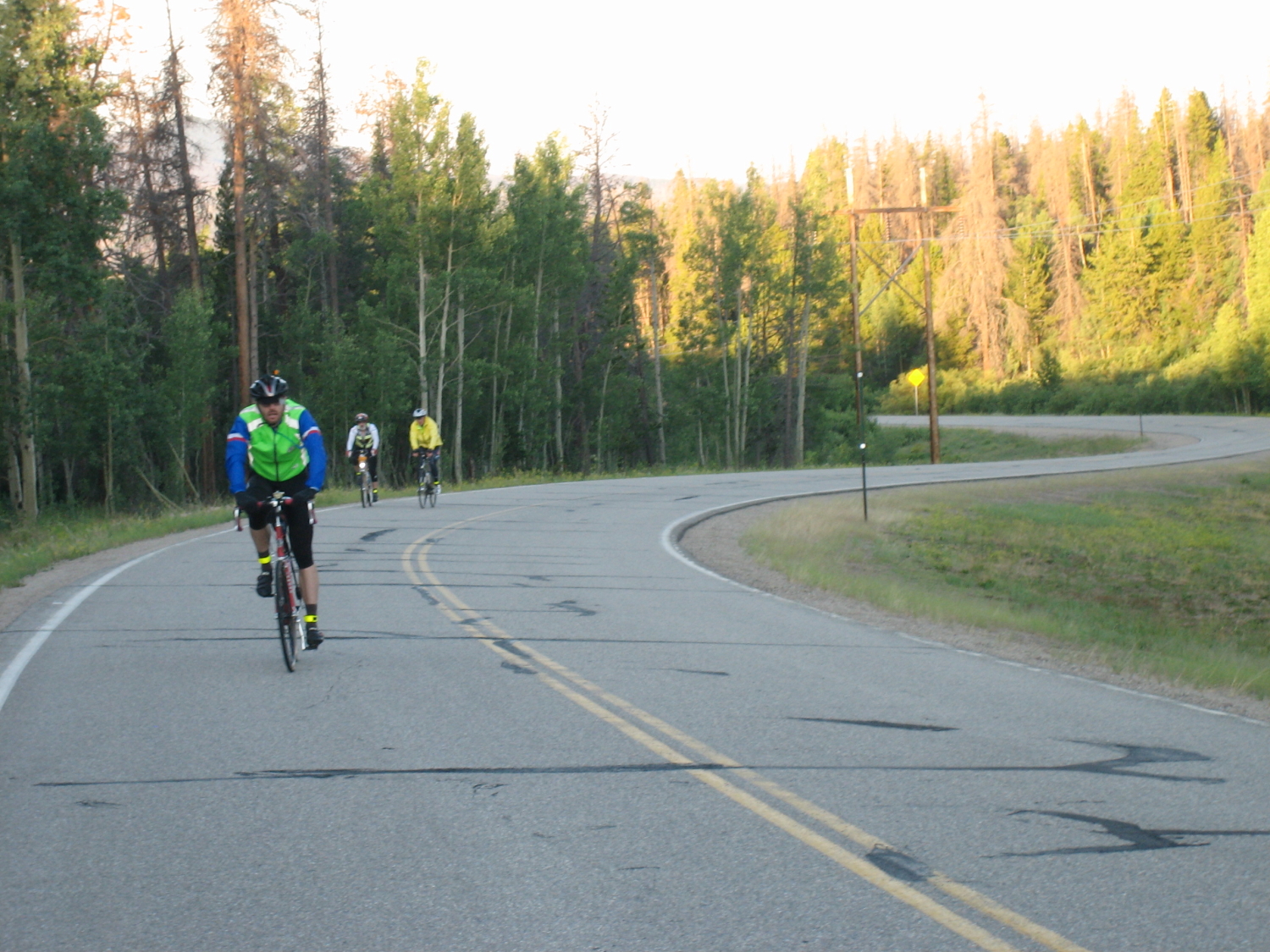
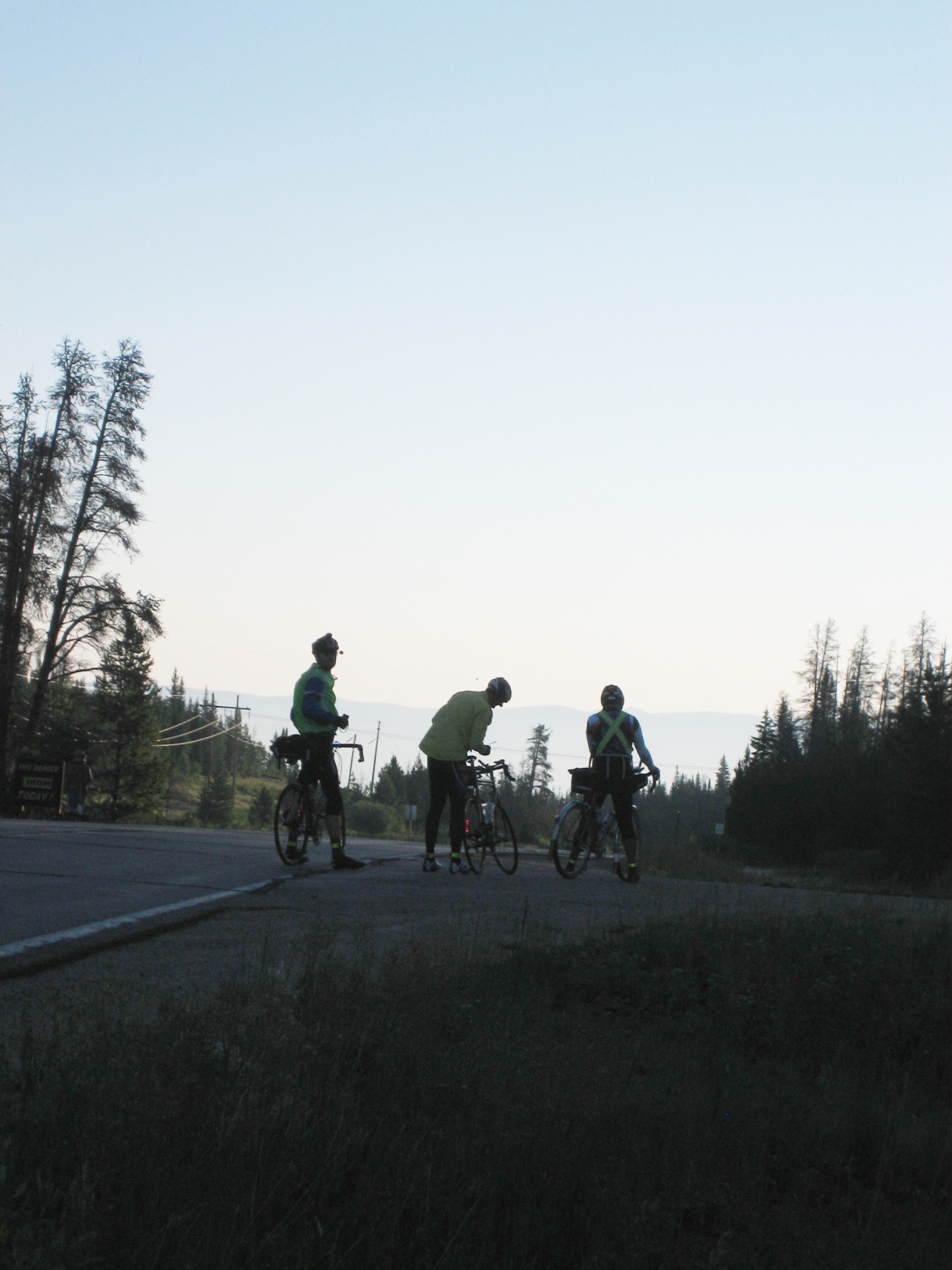
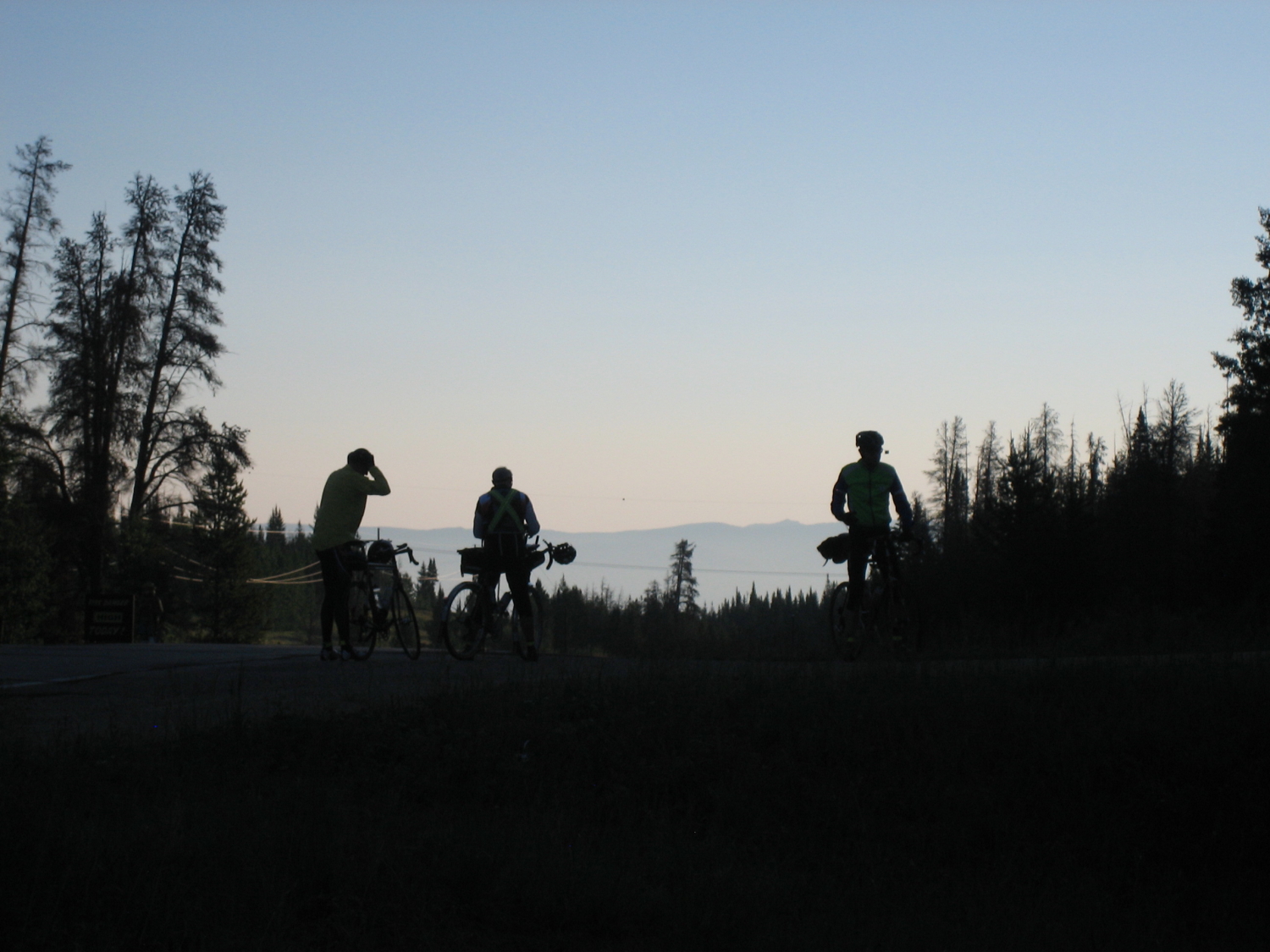
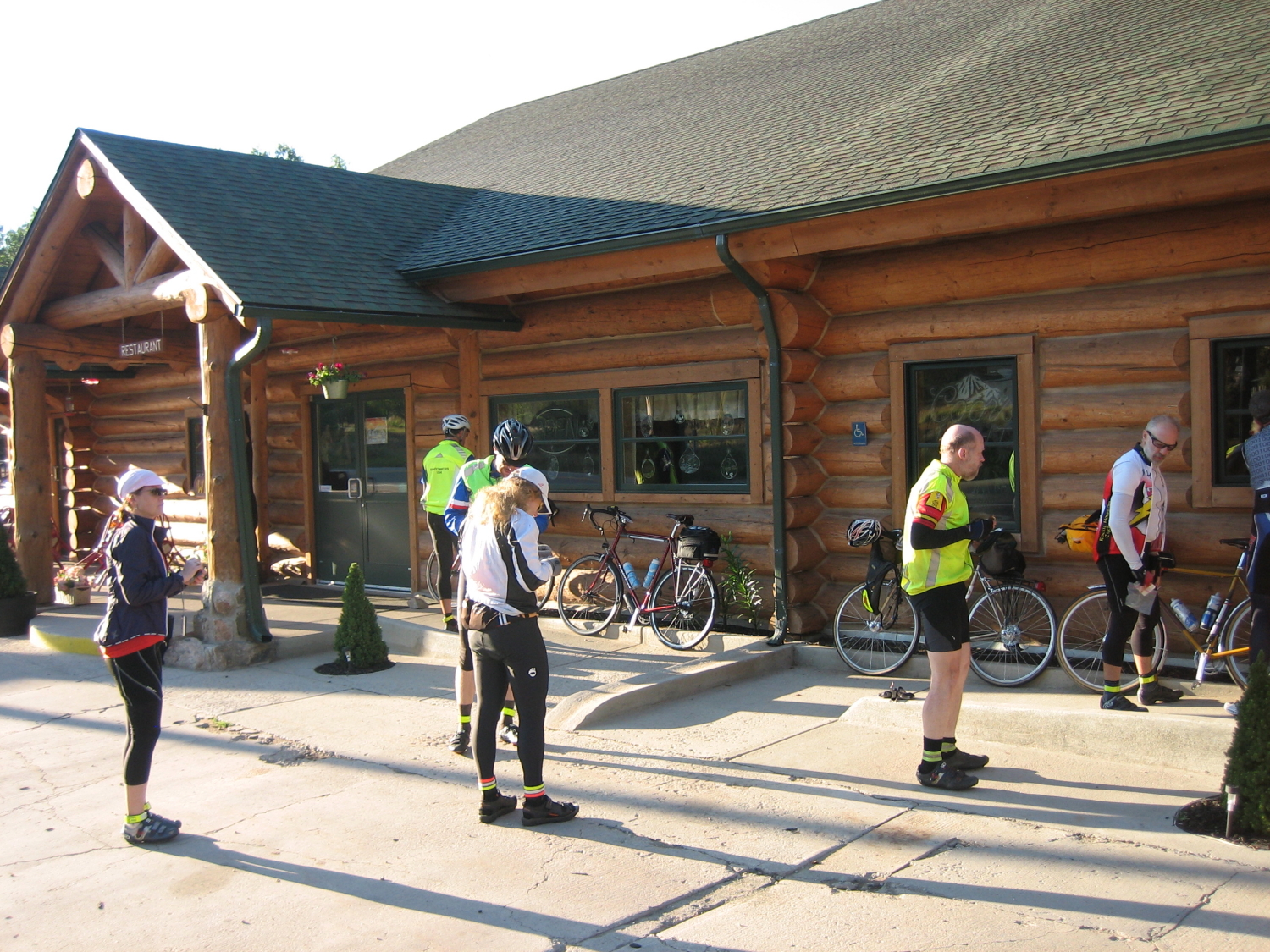
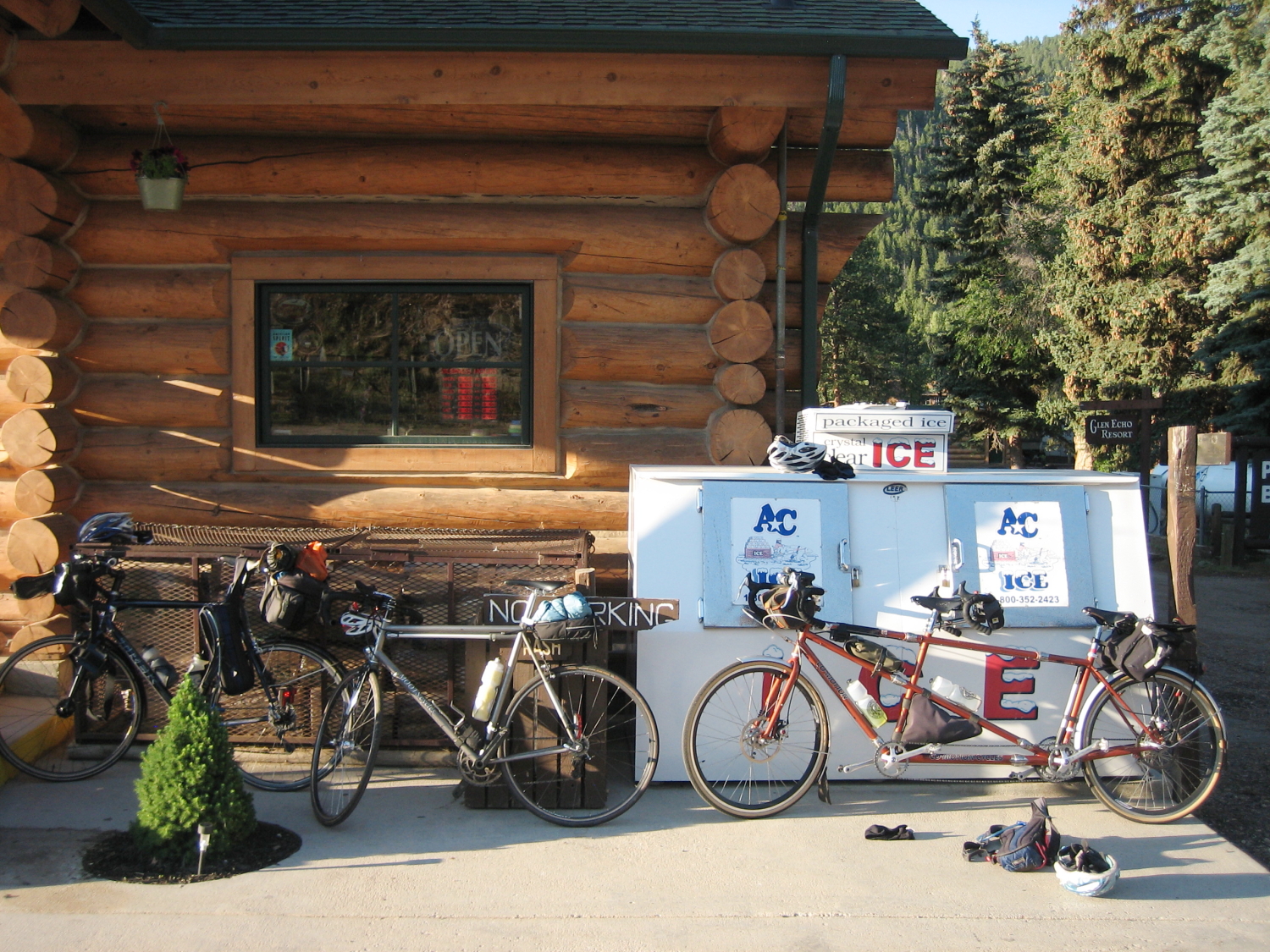
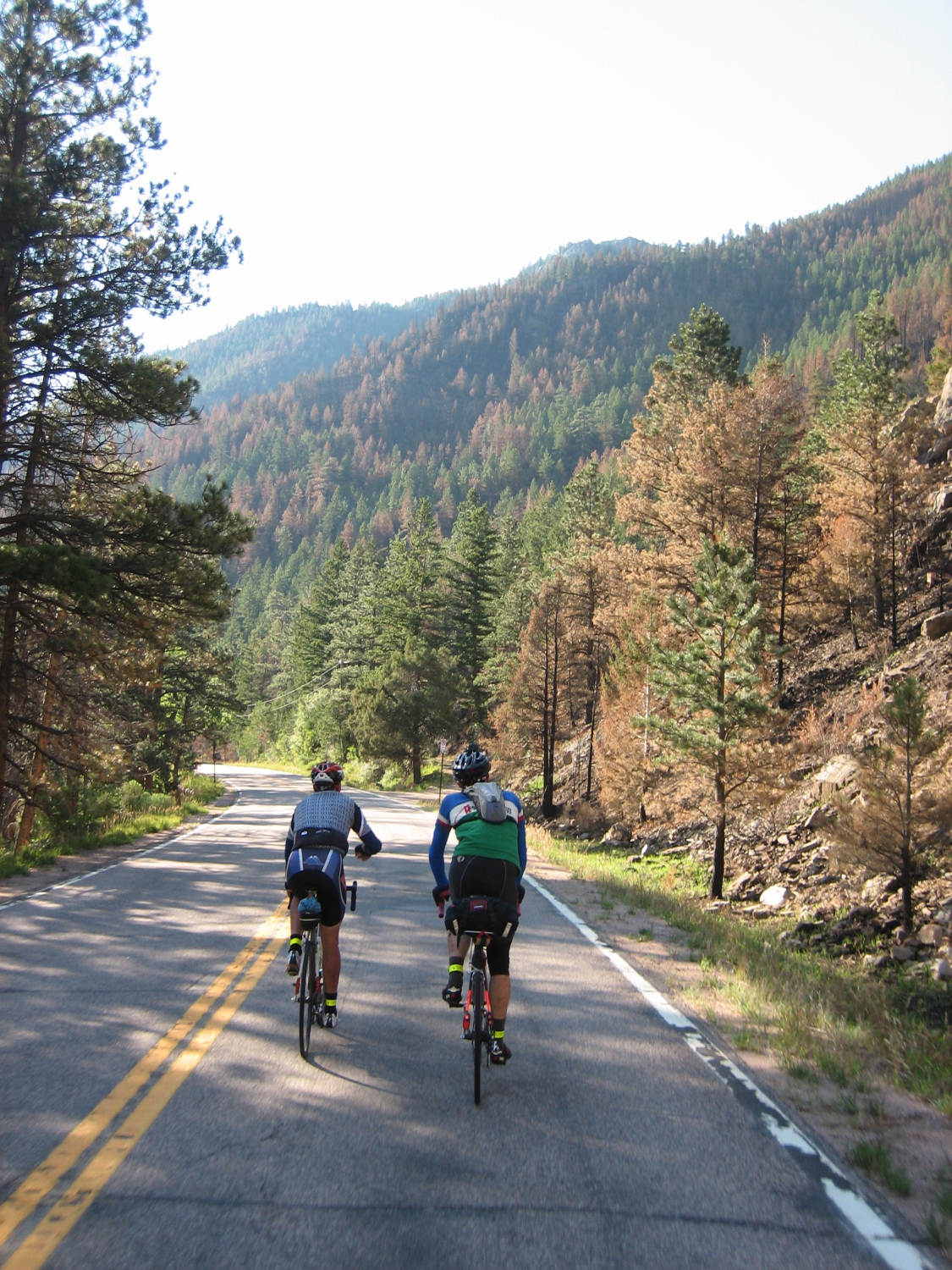
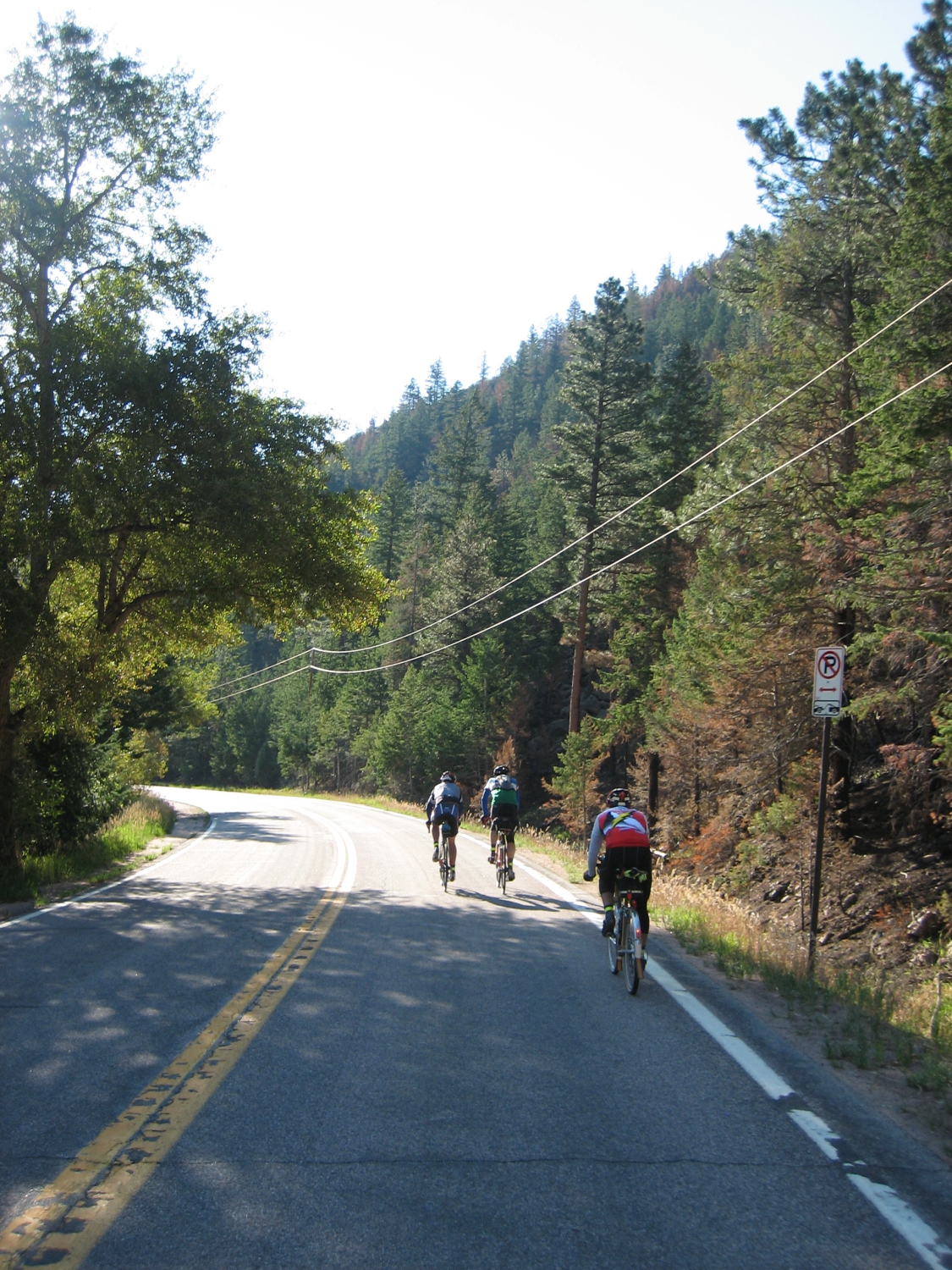
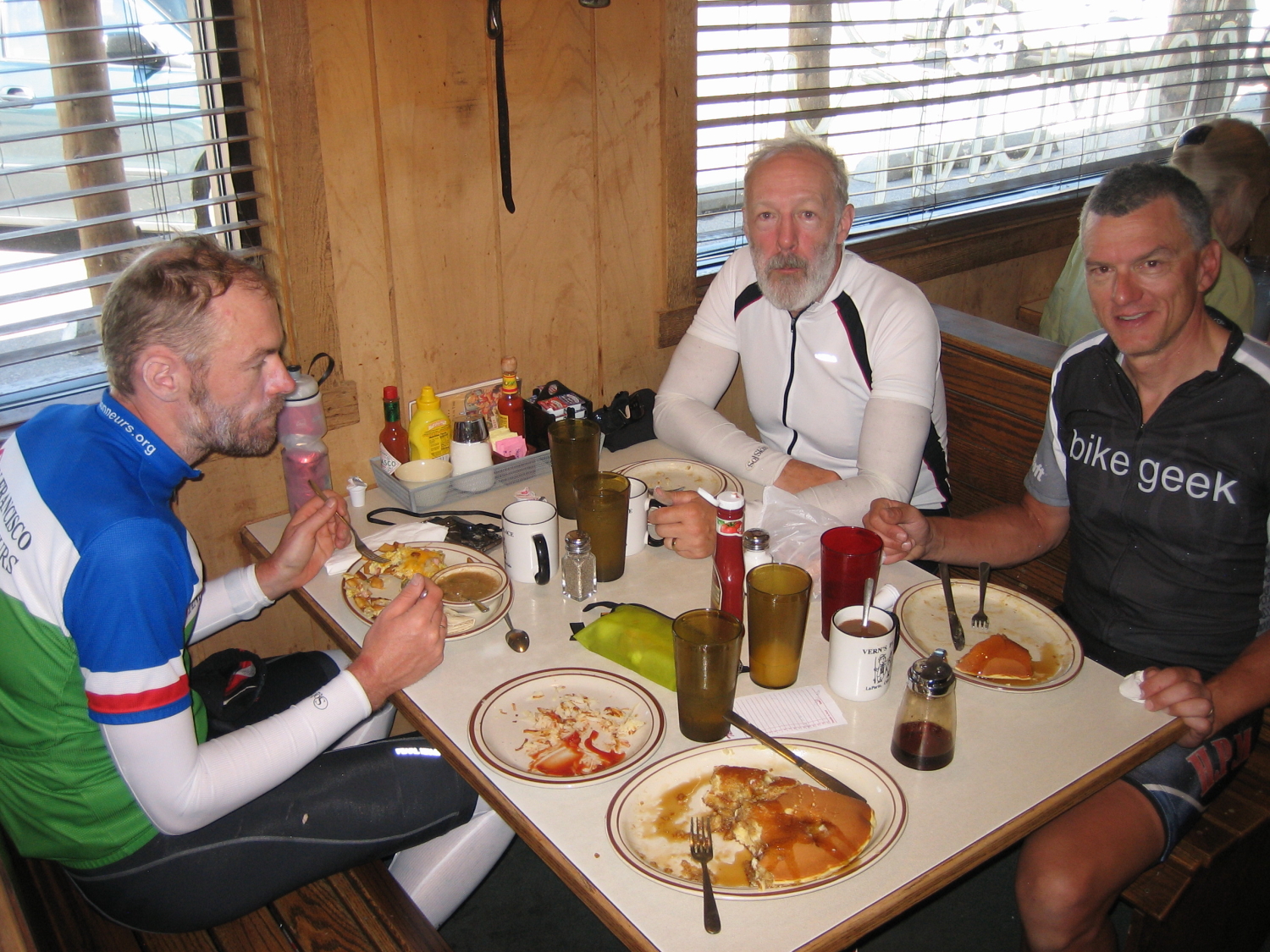
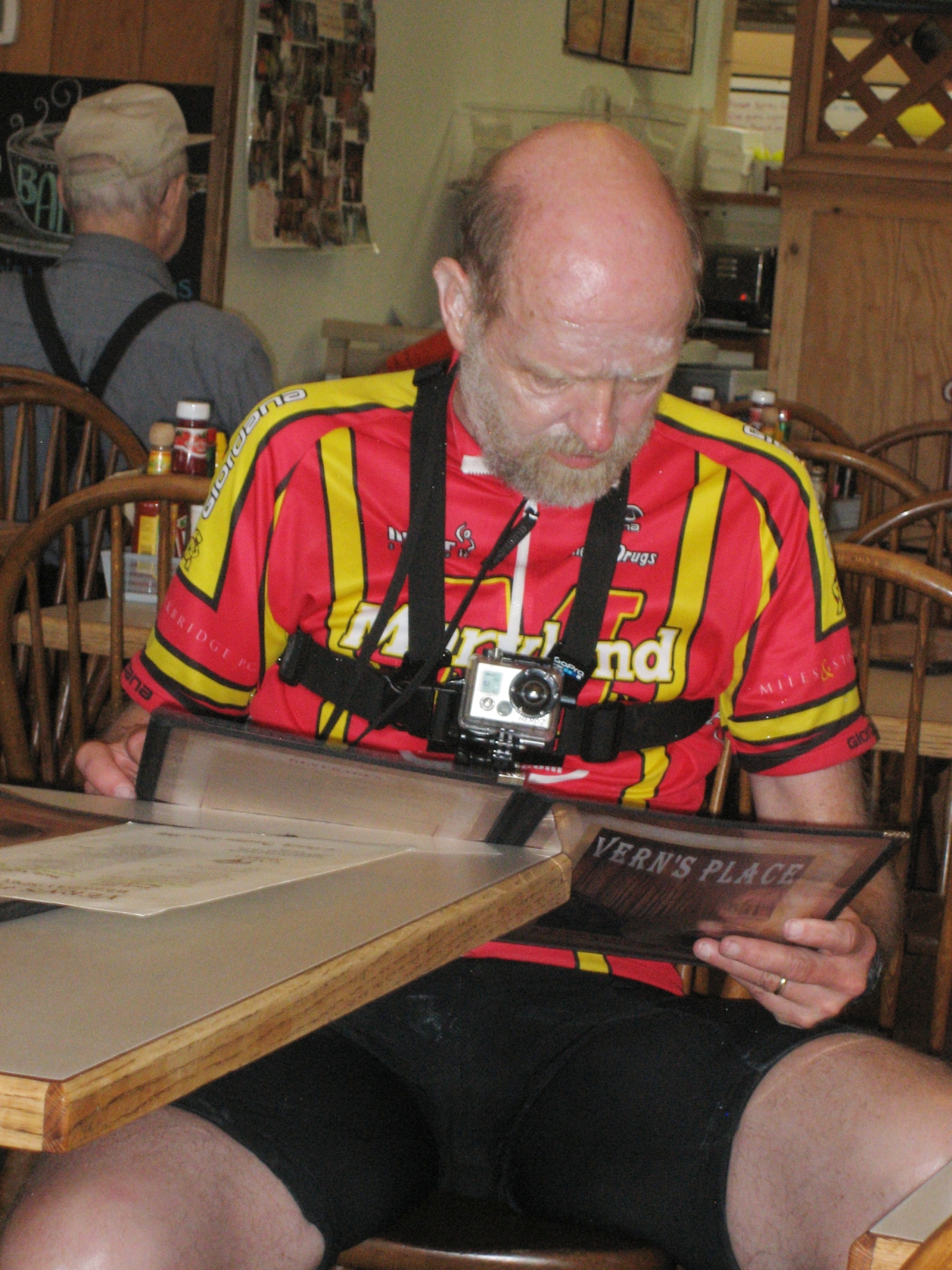
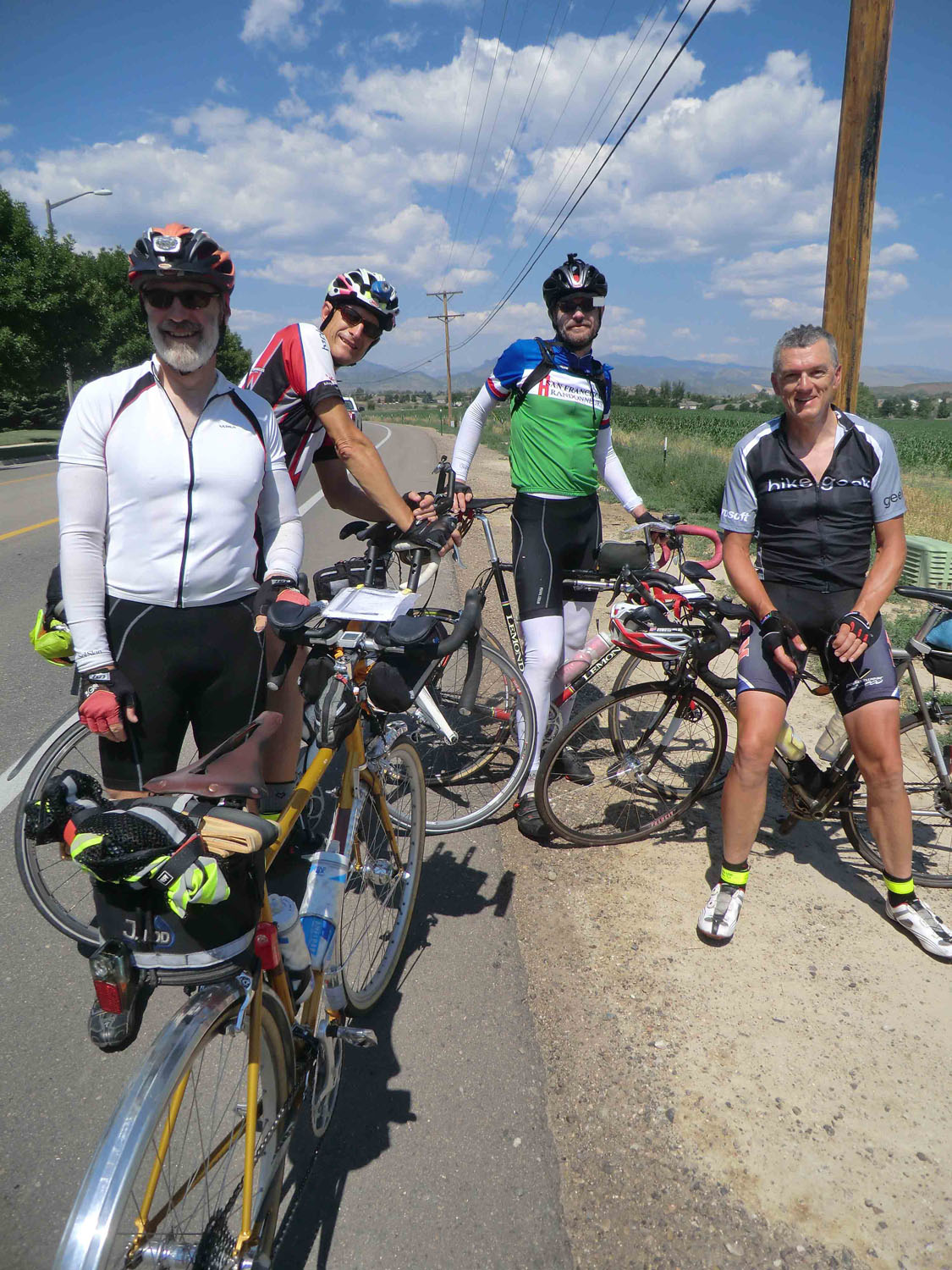
2012 Colorado High Country 1200km Grand Randonnée

Only 700 miles to go…

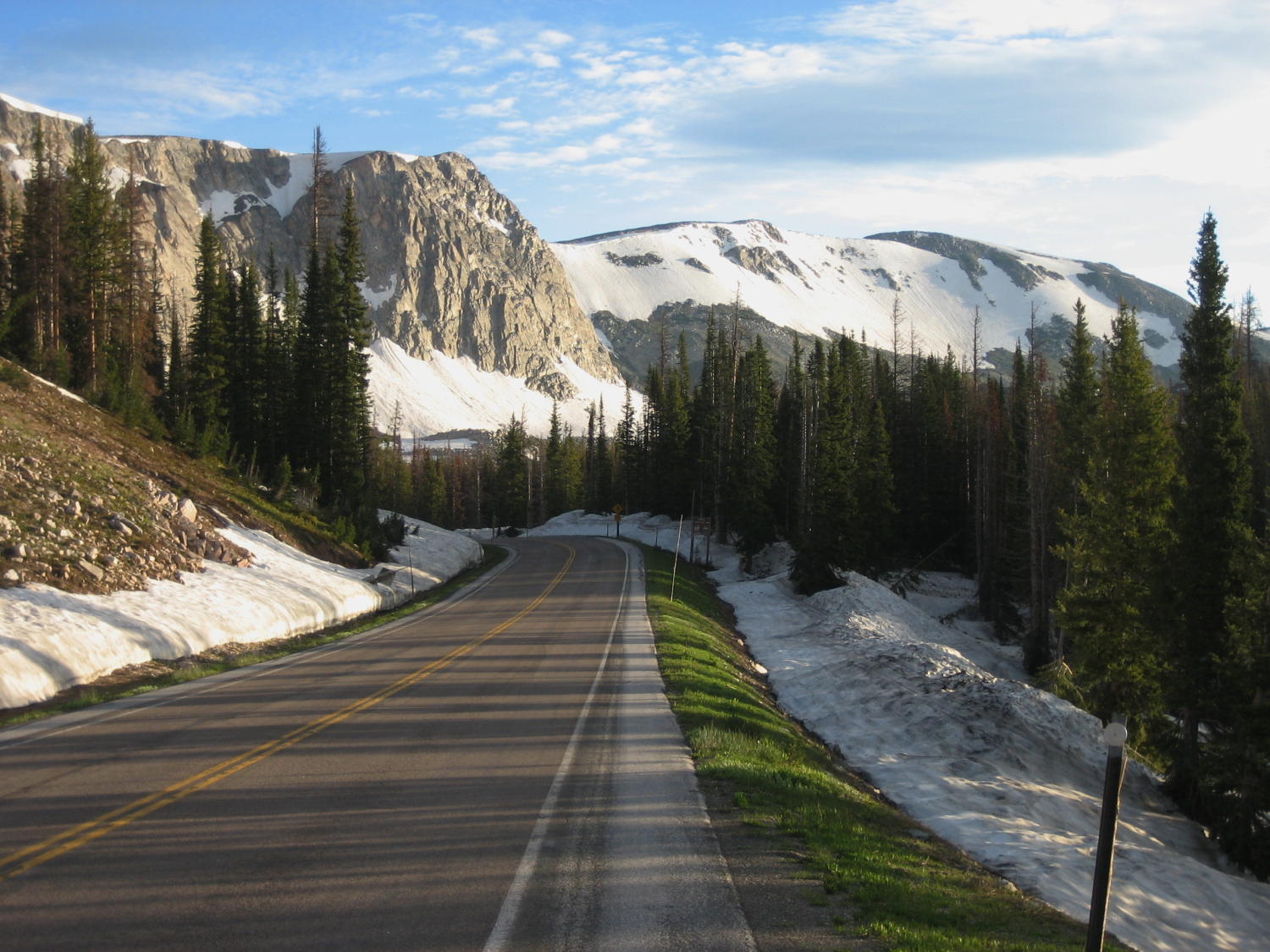
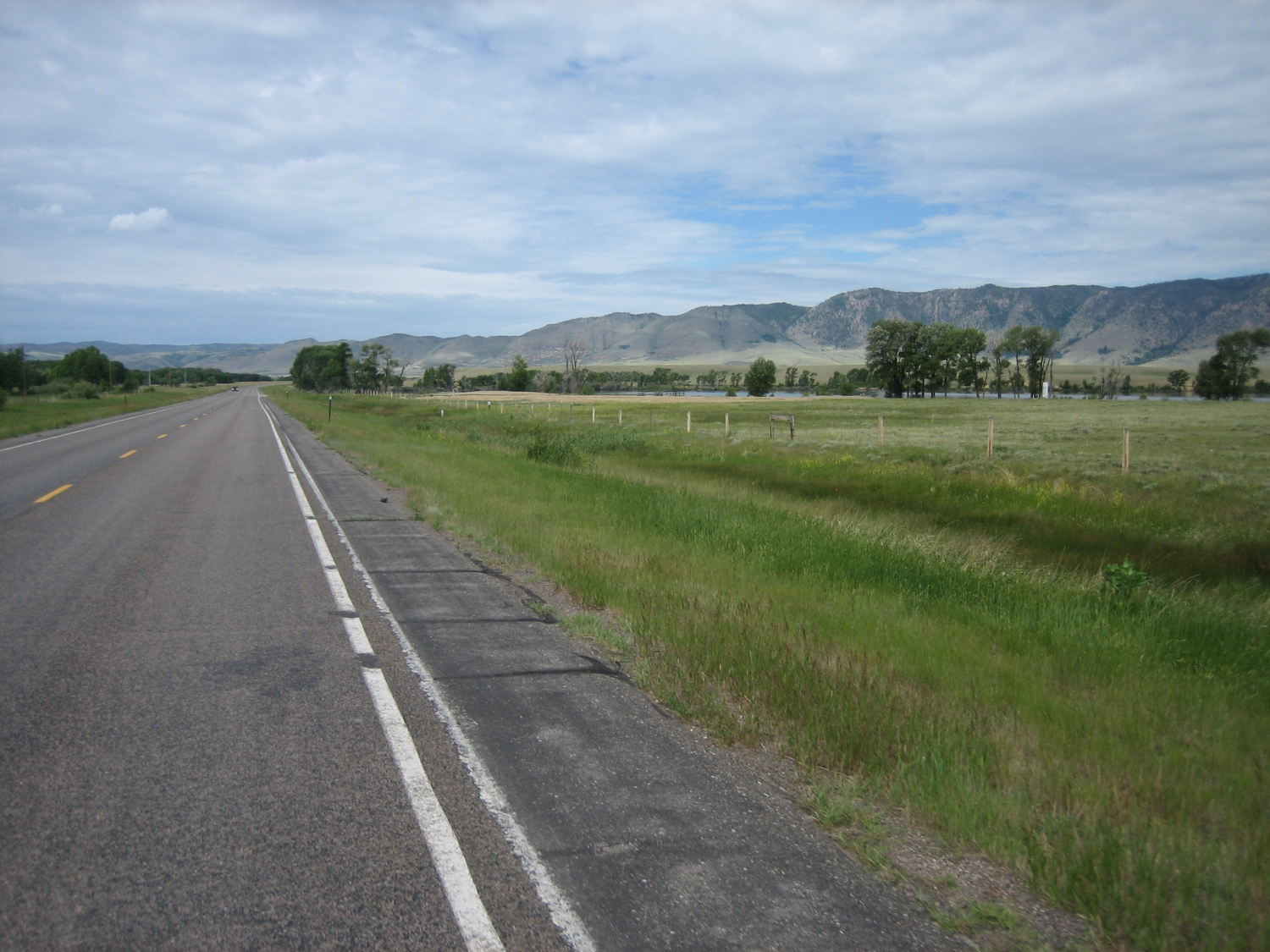
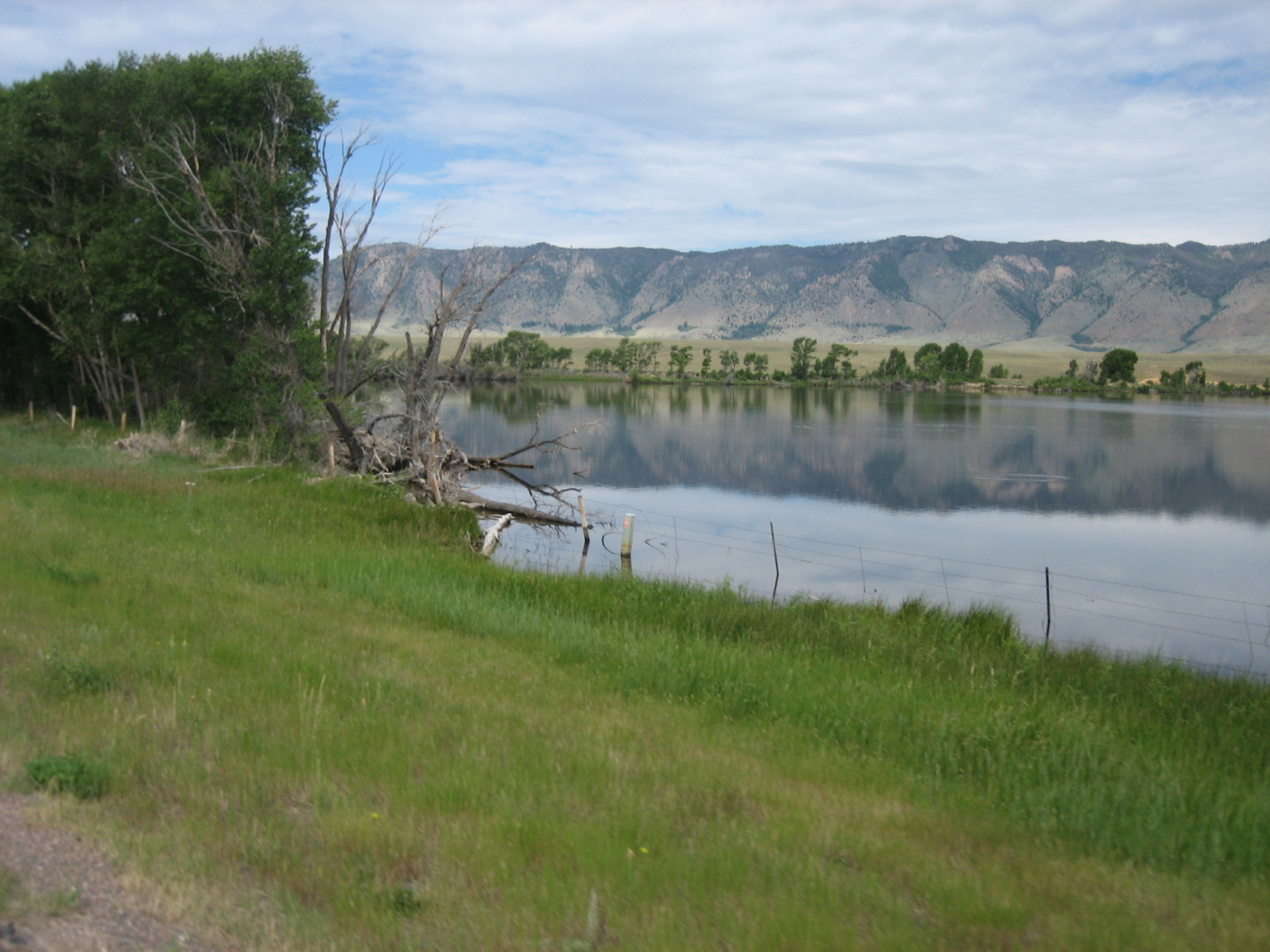
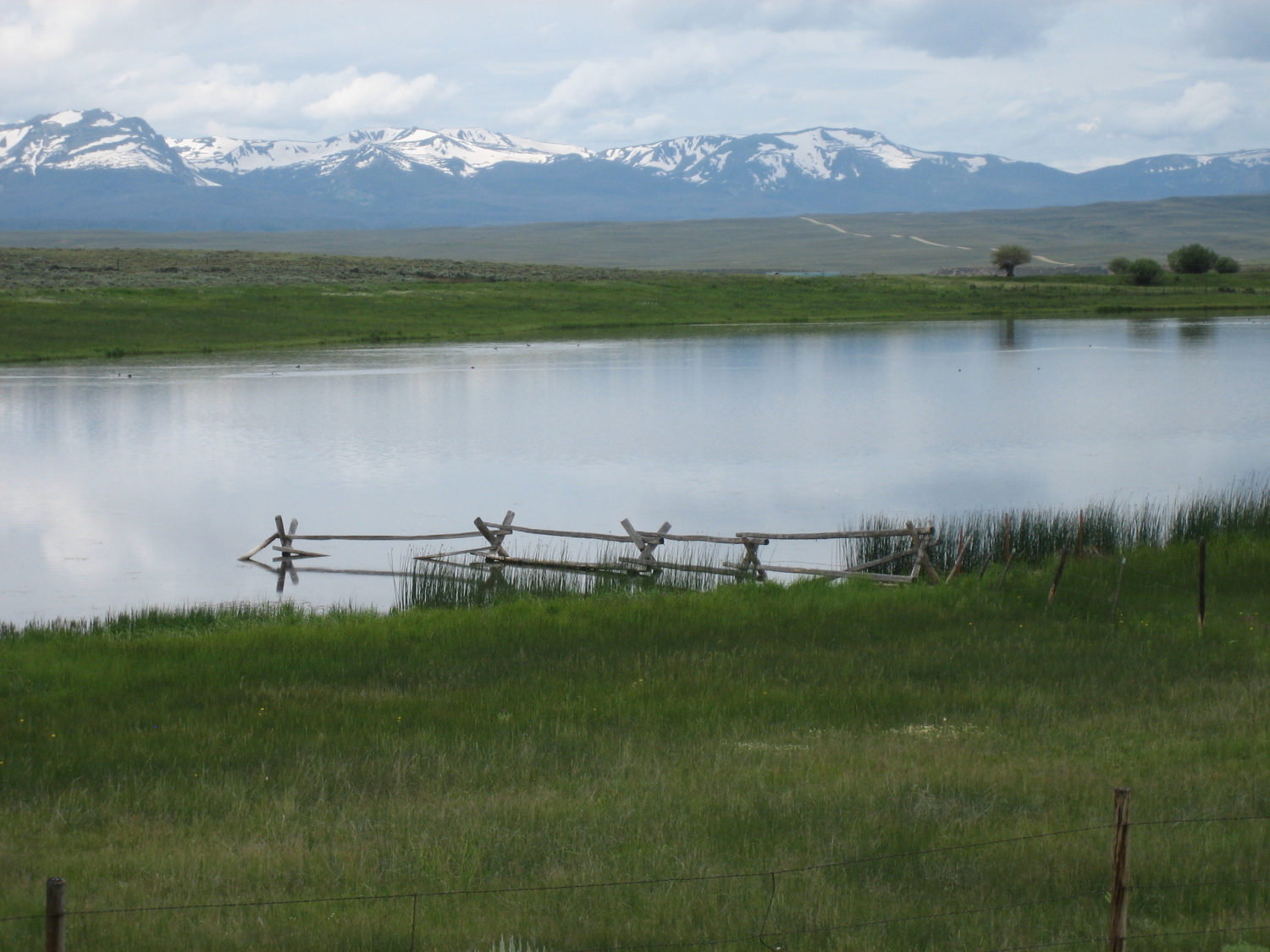
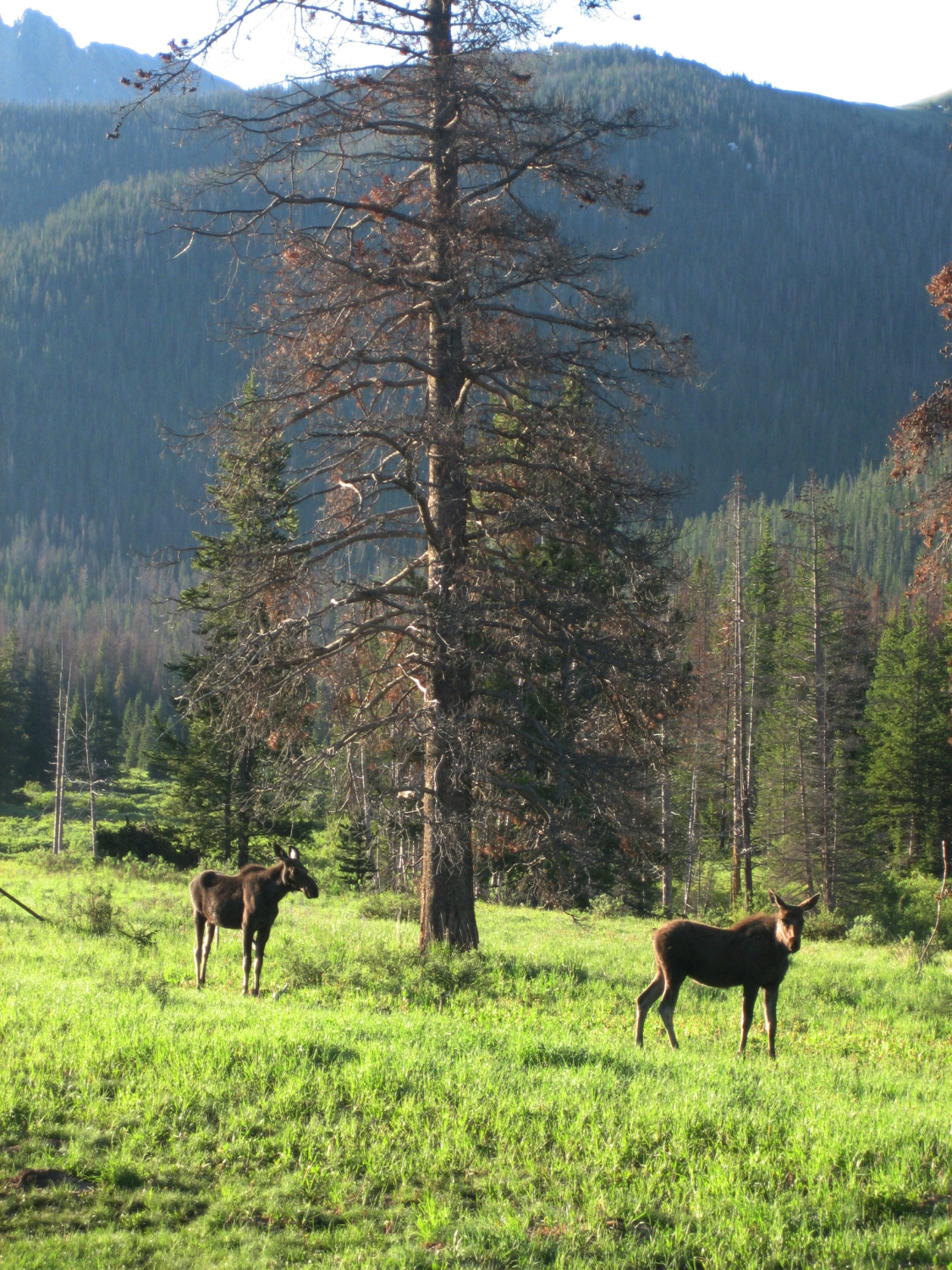
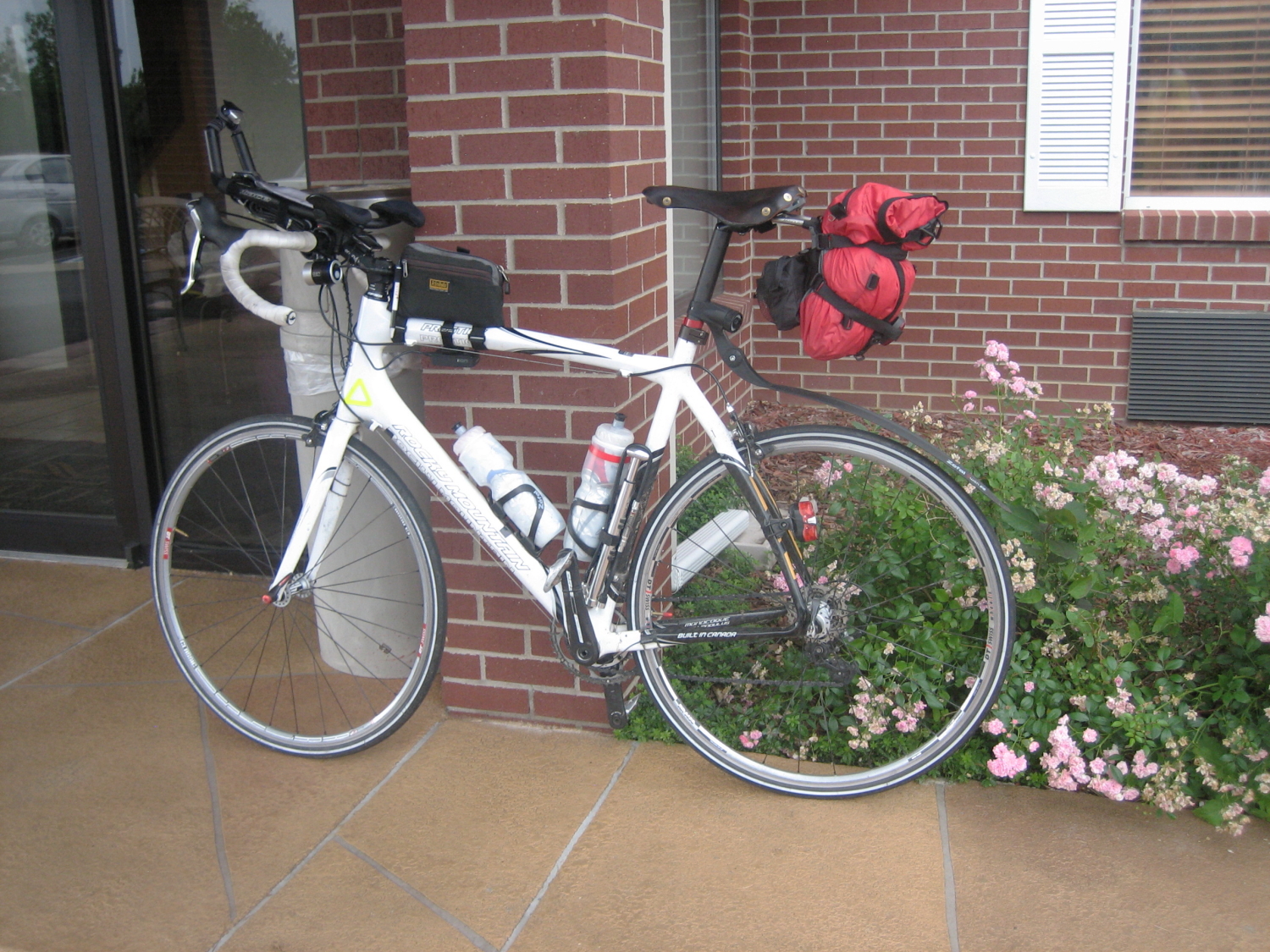
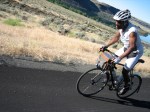
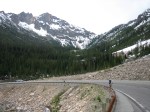
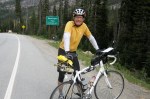
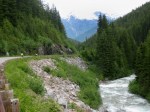
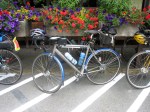
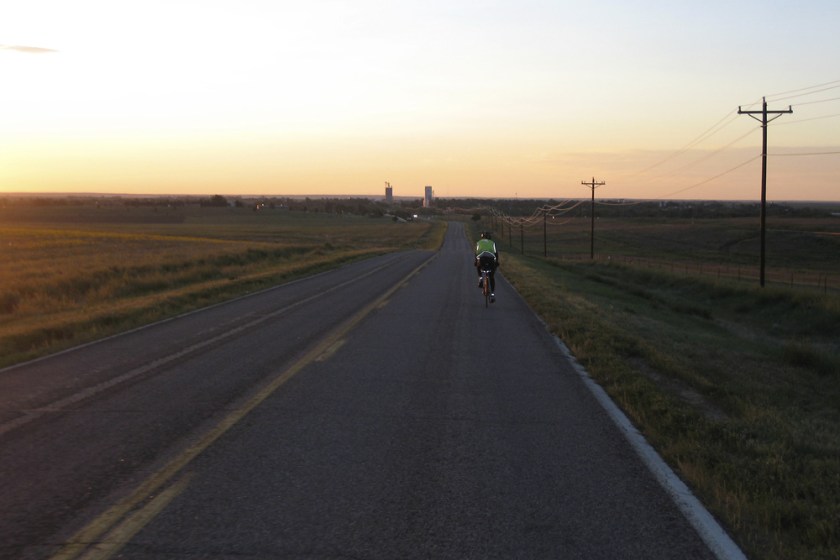
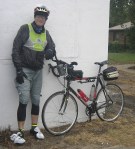
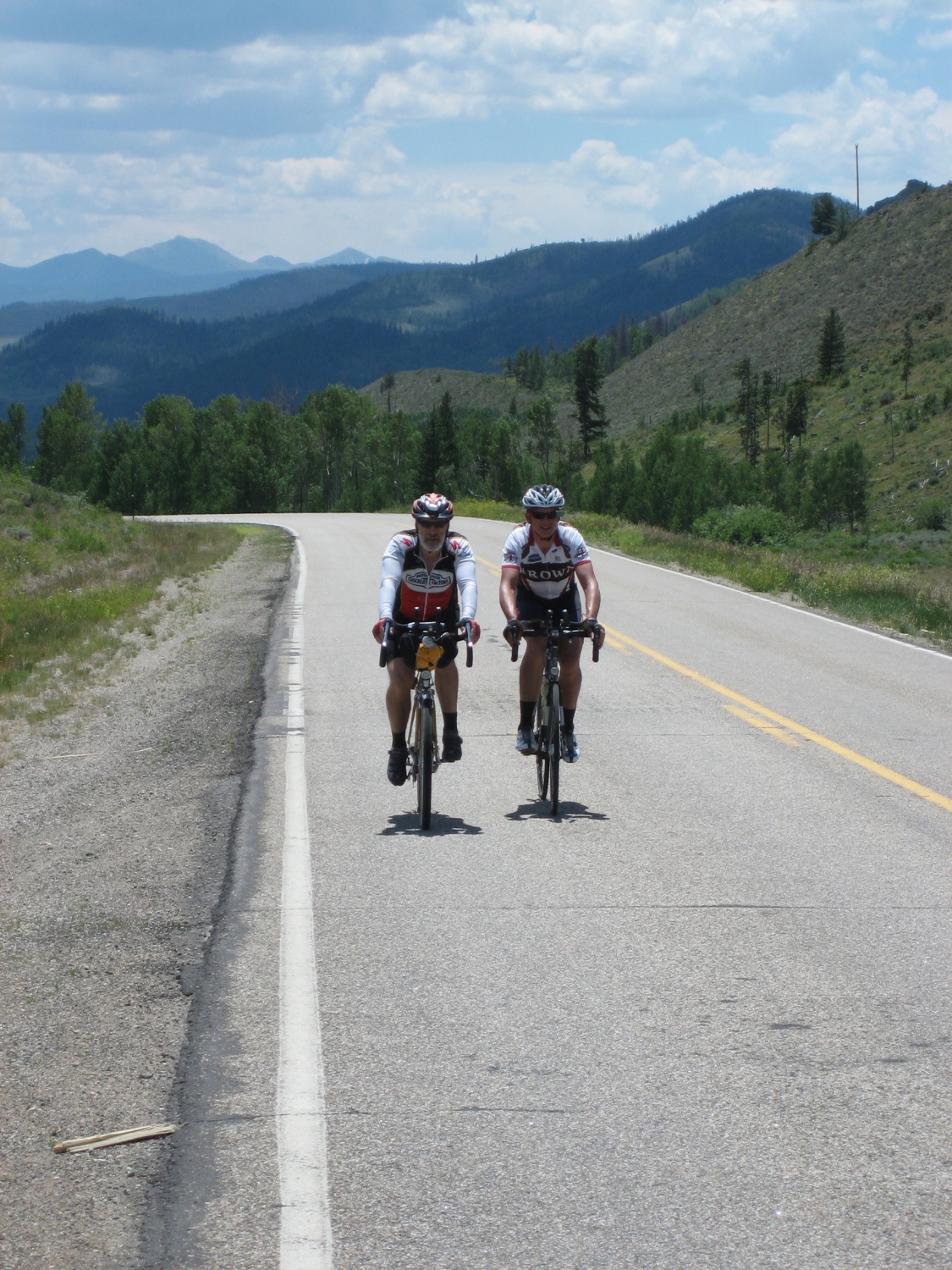
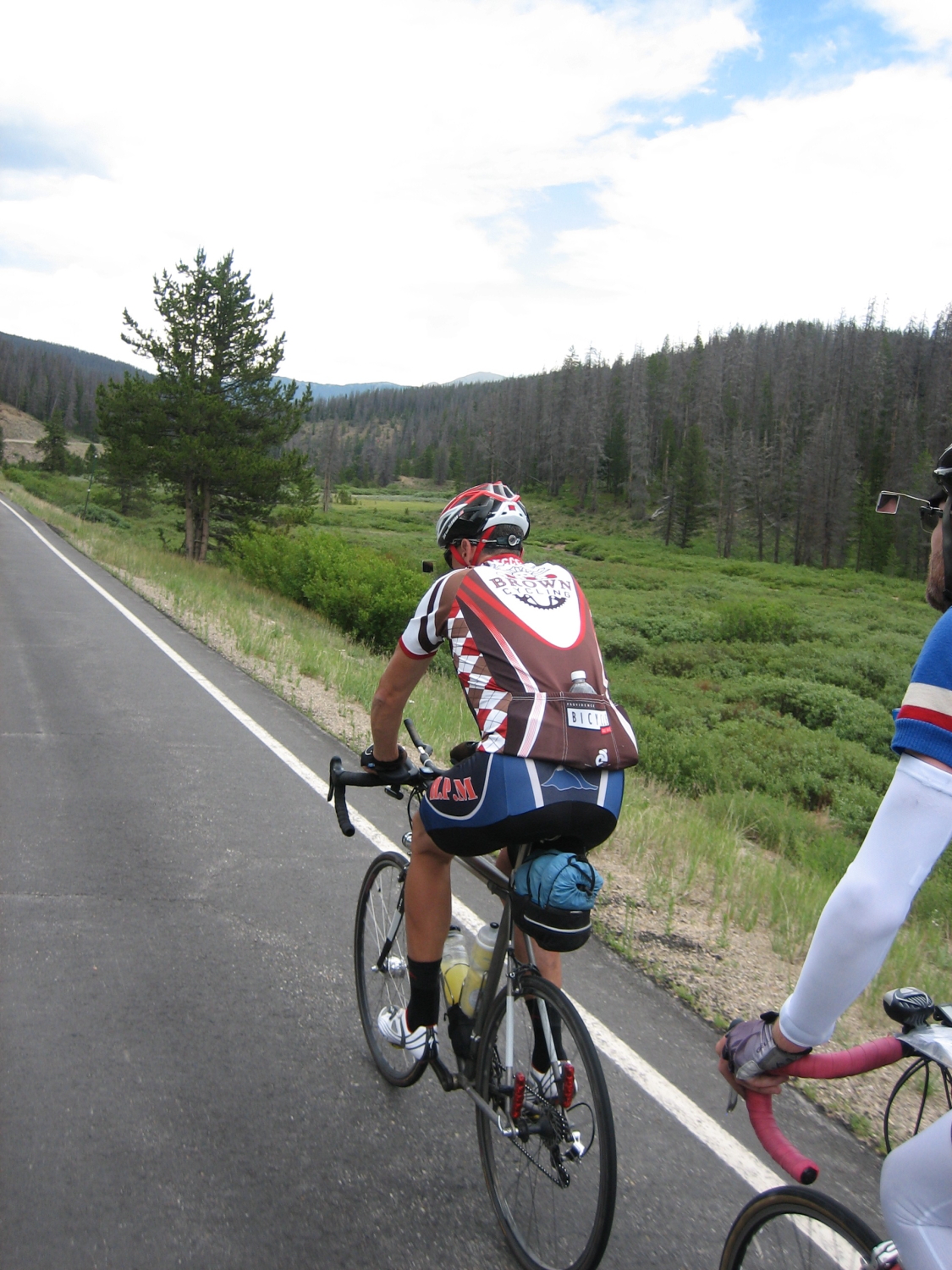
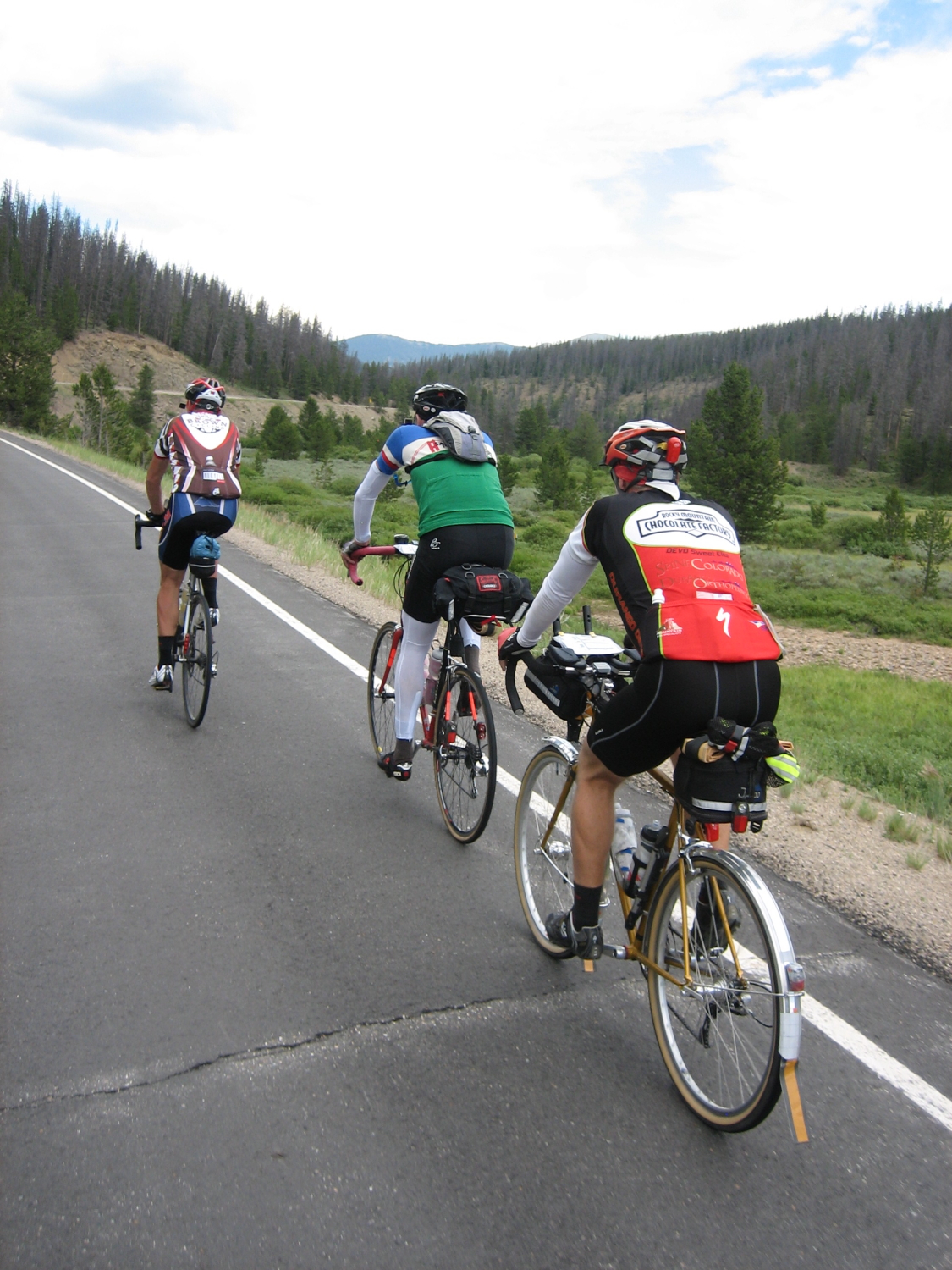
Above are the photos for my “long ride of the 2012 season.” It was the Colorado High Country Grand Randonnée (1200km or 750 miles in 3-1/2 days).

I was little apprehensive as my carbon fiber bike has developed some hairline fractures which I was worried about. It held together fine however. A new frame is coming (warranty replacement) but is not here yet. Also, my new/used titanium bike is not yet built up or I would consider taking it.

Day one (July 9th at 4:00 a.m.) started out with a very light drizzle as we left Louisville, heading north towards Laramie Wyoming. The temperature was fine, at about 50F as I recall. At about mile 47, Mark Thomas, who was riding right behind me, (current president of RUSA) made a rather memorable but short comment…“well only 700 miles to go!”

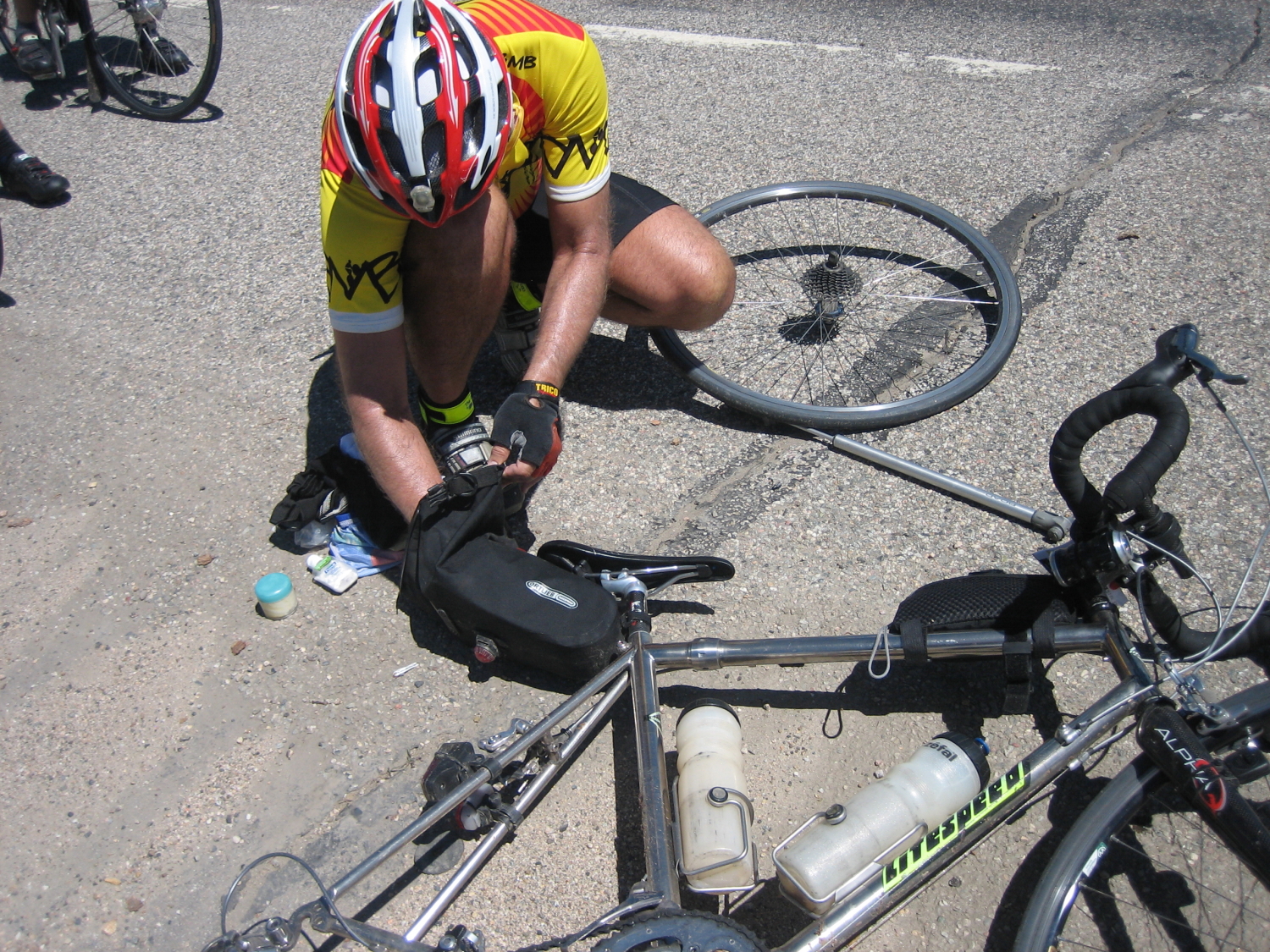
I stuck with the main group of riders and decided to try to stay near the front of the pack as we headed into the first checkpoint at mile 65 in LaPorte (Vern’s). Last year I got there a little late and got stuck waiting for restroom facilities. This year I got in and out and continued in a northerly direction. The rain had dissipated by then and it was getting warmer. As we started to climb I found myself with Foon Feldman and Bob Bruce near the very front of all the riders. There was one other rider up ahead, but out of site. We continued on through the checkpoint in Larmie and started the long, low-angle climb toward the base of the Snowy Range. As I was descending a roller my front tire flatted. I stopped to fix it and my both of my spare tubes leaked air, requiring me to patch one of them to continue on. I remember earlier in the day, in the darkness hitting some plastic debris. This tire has a small gash on the outside. Although it didn’t go all the way through the tire, I also booted it as a precaution. This tire was a brand new Conti 25mm 4000s.

While changing my flat, several other riders rode by and offered help, which I didn’t need. I finally got to Centennial Wyoming, at the base of the Snowy Range (best scenery of the whole trip). The next services were some 51 miles ahead including a long climb. Because of that I filled up my third water bottle that hung from my down tube. As I started the climb I passed 3 or 4 other riders but didn’t see any one else until I got to the other side of the mountain. I arrived at the overnight checkpoint in Saratoga, Wyoming (mile 220) at 7:15 p.m.

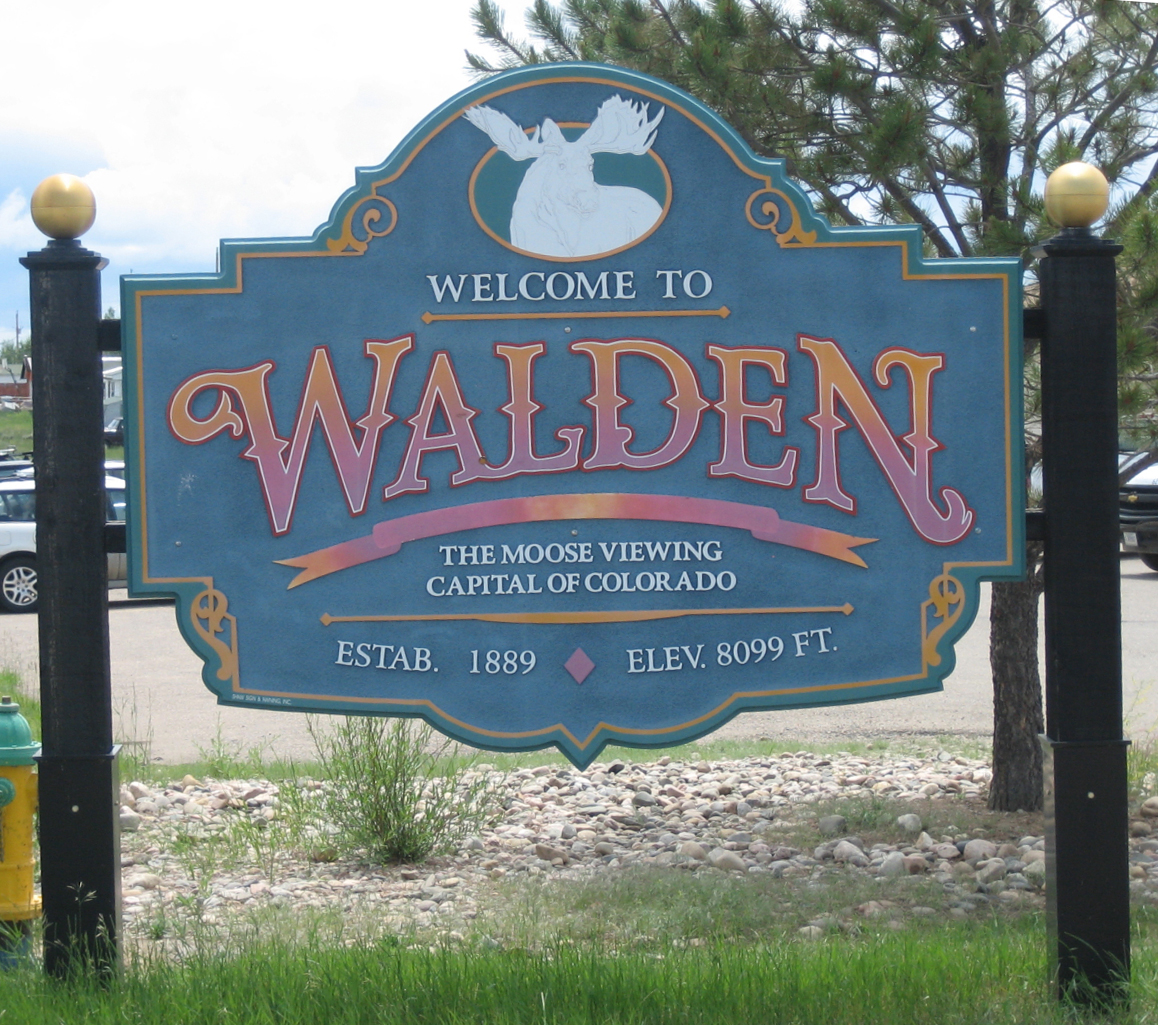
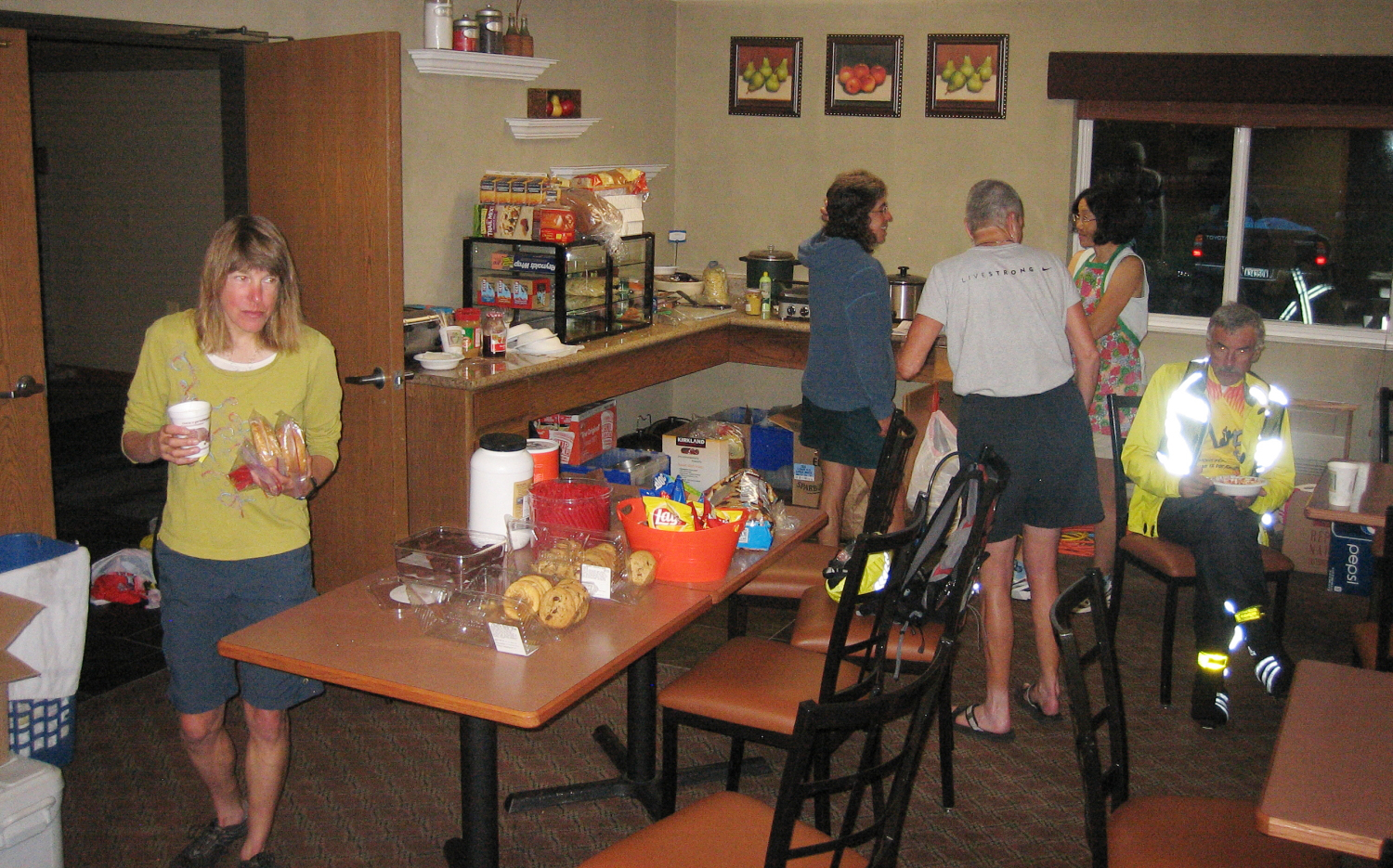
Day two began with a 1:50 a.m. departure. Bob Bruce and I rode together the whole day—well really, the balance of the ride. As the morning progressed we encountered a steady cross wind from the right. I ended up riding on the right side of the road with Bob to my left, providing some protection to him from this cold wind (I believe the temp was about 43F). I was wearing my rather skinny prescription glasses which provided little protection from the wind. My eyes, particularly my right eye was constantly watering because of the wind. Eventually I stopped and stuck some adhesive tape on the sides which helped very little. At times I had both eyes squinted trying to reduce the pain of the wind. As the sun finally rose, I was glad to switch to my prescription wrap-around sunglasses. At that point Foon Feldman, Dick Wiss and Vidas Placlakis joined us and we rode into Walden for a second breakfast or brunch. It was finally warming up. I had been a bit underdressed and it felt good to pause in the morning light at our host motel and eat a PBJ on a Blueberry bagel.

The five of us heading out of Walden and very shortly the pace quickened so Bob and I dropped off the back, waving off the other riders. We continued on as a team, but Bob was feeling kinda crappy so I did most of the pulling on Tuesday. After leaving Hayden we were both cursing the purpose of doing “mileage circles” just to get extra distance. The circle I speak of was 20-mile road, on the way to the town of Oak Creek. It had grades that seemed steeper than the long Snowy Range climb on day one. But due to recent fires and subsequent floods, the route was changed and we had to get more miles in to get to our minimum 1200 km. We finally arrived at the overnight checkpoint in Steamboat Springs at 6:45 p.m. I believe we were the 4th and 5th riders to arrive. We rode about 198 miles on Tuesday bringing the total to 418 miles thus far.

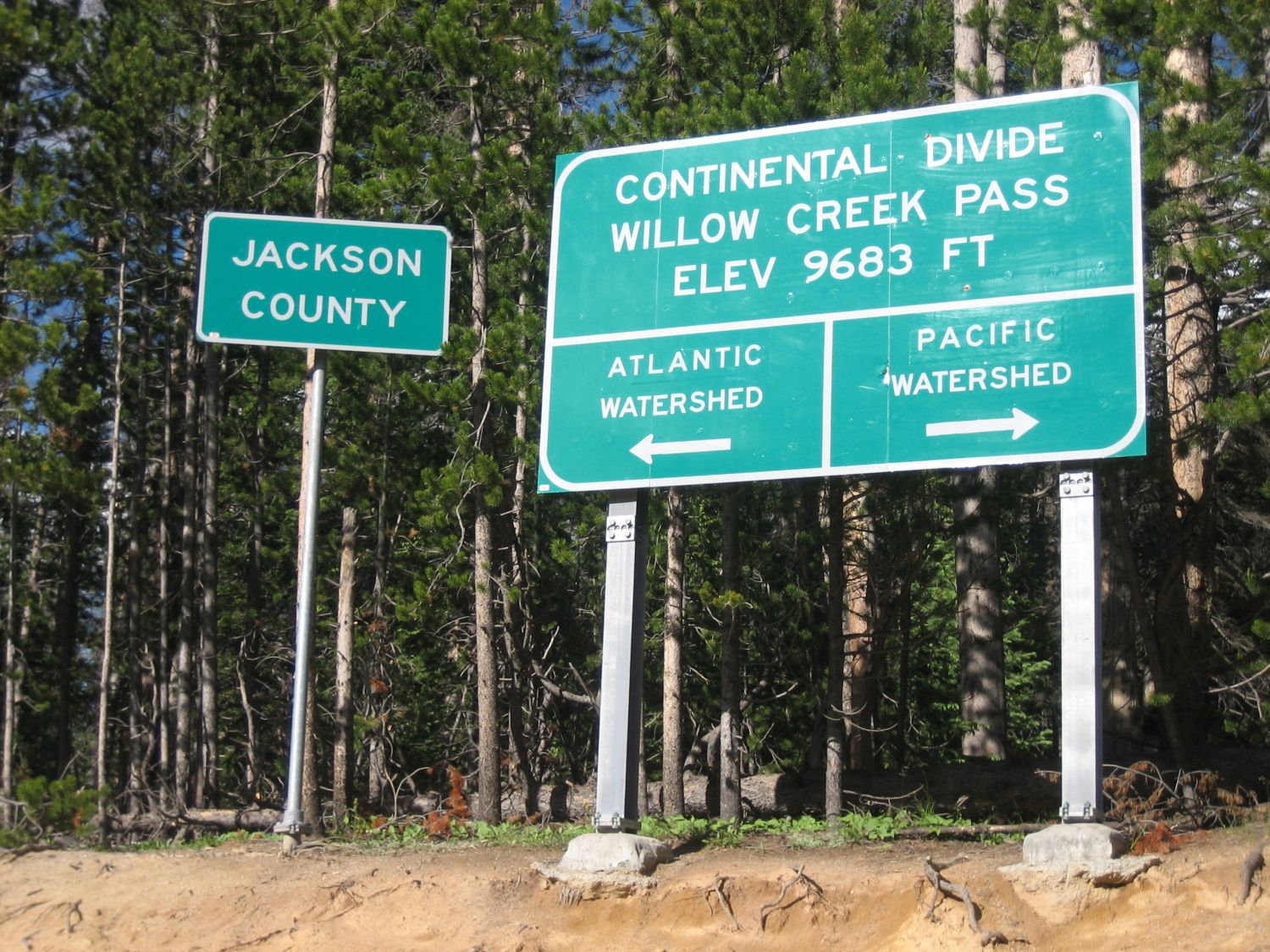
Day three began as four of us departed at 2:00 a.m. (Foon, Vidas, Bob & myself). We started early as we wanted to beat the heat on the Willow Creek Pass climb, later in the day. We made our way over Gore Pass just after sunrise. It had been a cold ride to that point, but with a cloudless morning, we began to warm up. Everything went according to plan and we arrived in Klemming at the Merc which has a great deli and grocery store. We had an early brunch and continued on our way. I was dragging and although I took a few turns pulling, they were short. Despite my slow pace, the three others stuck with me and we worked as a group of four. I really appreciated their patience in backing off the pace so I could hang with them. People say randonneuring is about comradeship. To date, I don’t recall seeing it to the degree that these three partners exhibited on this ride. Despite my slowness we made our way up and over Willow Creek Pass (John Lee Ellis, the RBA was on top to greet us and provide water) and arrive in a timely manner in Walden, our final overnight stop. We arrived at 4:50 p.m. with plenty of time to eat and get organized for the next day. Excepting one other cyclist, our group was the first to arrive at this checkpoint. Having only had about three hours sleep the last several nights I was very tired. After supper I prepared to sleep. I set the alarm on my cell phone. It said “alarm to go off in 7 hours and 23 minutes.” Wow, seven hours of sleep. I don’t recall ever getting that much sleep on a 1200km. NICE! With 181 miles done for the day, our total was now 599 miles, leaving “only” 148 miles left on day four.

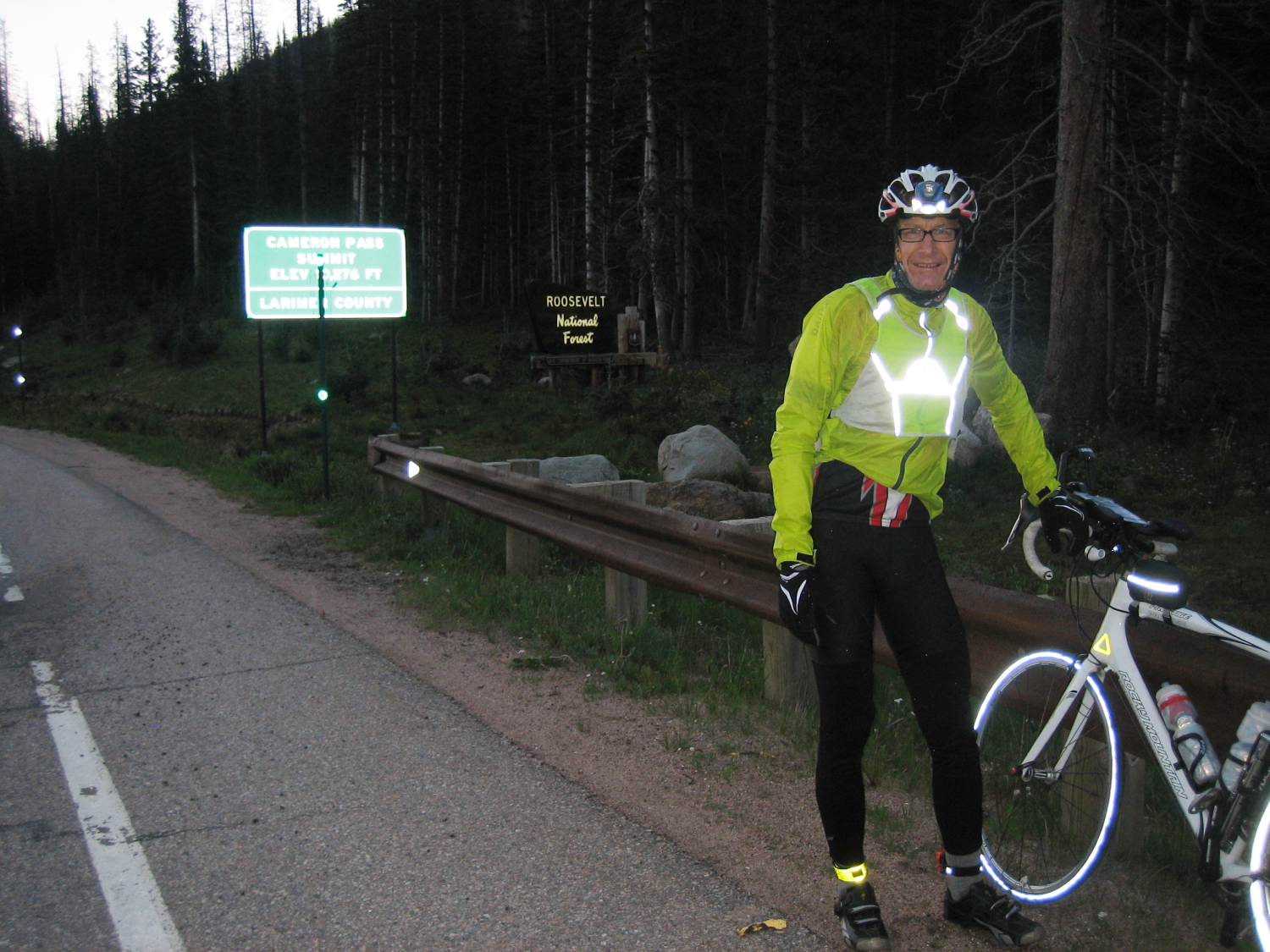
Day four began with a 2:00 a.m. alarm and a 3:00 a.m. departure. We didn’t want to leave too early, as we would miss the scenery on Cameron Pass (10,276 ft). Our timing was perfect as we arrived near the pass about a half hour after sunrise. It was a cool descent, but I brought extra clothing making it survivable. I also braked more on the upper part to keep from freezing. We made our way to the bottom of the canyon, once again working as a group on the gradual downhills drafting one another. We passed several others that left earlier that morning. That is the power in organized group riding (+ youthfulness). We stopped for a sit down breakfast at Vern’s at the base of the canyon. We then continued on towards Louisville finish, stopping only once in Hygiene for fluids. We finally arrived at the finish at 1:43 p.m. We were preceded by only two other riders and were greeted by several volunteers. I was a also surprised to be have several of my grandchildren (who are living in the Denver metro area) there to offer their support!

Many thanks to all the volunteers and for their sleepless nights helping us to the finish. The food was wonderful at each of the overnights. The weather was nearly flawless and this ride had very DNFs, compared to last year.

Gear tested for my roadie gear site, DistanceBiker.com:
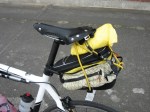
> eoGEAR RandoBag 8.0 liter saddlebag
> CygoLite 740 Turbo Xtra lighting system (during this ride, I determined in a side-by-side test, that the medium brightness setting of the 740 was as bright as a Schmidt dynamo and Edelux cruising at about 15 MPH).
> A prototype for a new reflective ankle-band that holds a blinky on your leg..the eoGEAR “leg-0-light!”

Specs
Total time: 81:43
Total mileage: 747
Average traveling speed: 15.2 MPH
Cumulative elevation gain (Ride With GPS): 28,000 (approx.)
Riding time: 49:18
Sleeping time (3 nights): 13.5 hours (approx.)

~ Richard

P.S. Except as noted, all photos are Copyright 2012, Richard Stum

2011 Colorado High Country 1200K

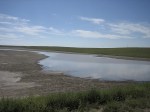
View of Mirror Lake, in the Snowy Range in Wyoming (day two). Unbelievable scenery on this ride!

Sane or Insane?

On day three, myself and three others left the motel in Steamboat Springs at 4:45 a.m. to begin another day in the saddle. The night before it had rained for several hours and the affects storm were still there — there was a dense, misty fog. I could barely see as a mist collected on my prescription glasses. Some of the others removed their clear protective spectacles for better visibility. There was little traffic, so three of us rode side by side in this midst of darkness. I was peddling with faith, hoping there were no hidden pot holes to ensnare my narrow 1-inch wide wheels. While we were moving along, a passenger in an approaching car with a window down, yelled out “Insane!”

So one might ask, is cycling 750 miles over a period of  four days, in darkness, in stiff winds, in temps ranging from freezing to 90-degree sunlight, in fog, hail, lightening, or descending curvy highways at night in the rain —  all without a support vehicle close by, a “sane” activity? Hmmm…..I’m beginning to wonder.

Introduction

My annual “big event” of the summer, was this new grand randonnée (or brevet), called the  Colorado High Country 1200.
I may add more narrative at a later date, but below are the various stages or “days” that most riders followed (some leap-frogged ahead, omitting a nights sleep). The total distance traveled was 1200 km or 750 miles. The total “claimed” vertical was 28,000 feet.

Stage Mileage Destination Climbing Max. Elev. High Points
1 219 Saratoga WY 8,053 ft. 10,276 ft. climb over Cameron Pass
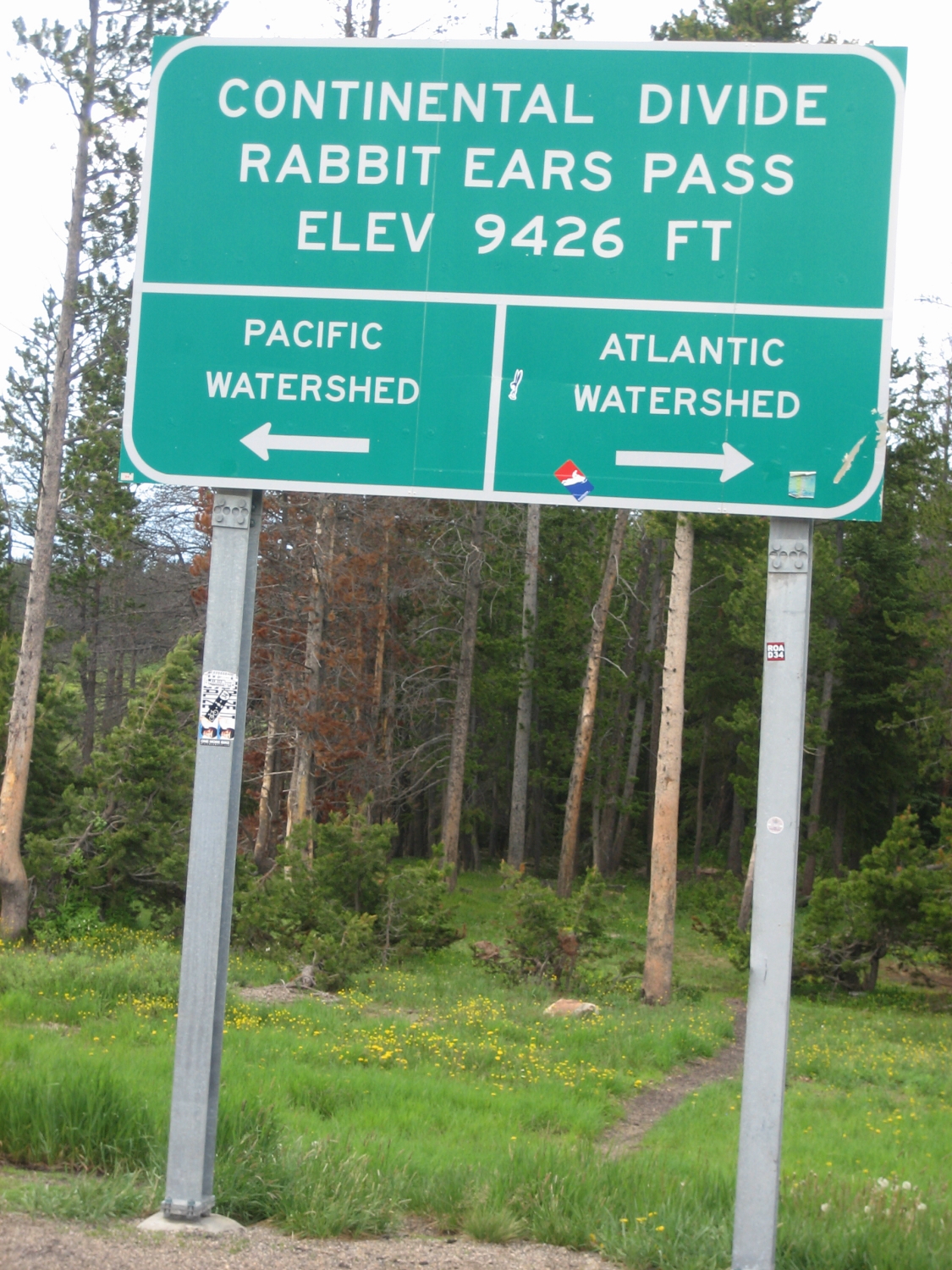
2 199 Steamboat Springs 9,079 ft. 10,700 ft. Snowy Range; Muddy and Rabbit Ears Passes
3 193 Walden 7,662 ft. 9,527 ft. climb over Willow Creek Pass
4 147 Louisville 4,157 ft. 10,276 ft return climb over Cameron Pass

The event was held from July 11th through the 14th, 2011. Because I spent 18 years in Colorado (prior to my conversion to cycling), I had a special interest in this new brevet. Aside from just finishing, I used my usual 1200 MO, which is to arrive at each overnight checkpoint before dark (usually around 7 p.m., finally retiring by 9), thereby providing me with the option for an early departure the next day if needed. I usually left the following morning between 3:00 to 5:00 a.m.

My CHC1200 Favorites List

Favorite climb: Snowy Range (stunning views at sunrise)
Favorite descent: Gore Pass (warm part of the day, very quick, nice asphalt & little traffic)
Least favorite descent: Rabbit Ears Pass (it was approaching dusk, raining heavily, several cars passing by keeping me near the slick white line)
Least favorite climb: The so-called “stiff climb” south of Laramie on day two (totally unexpected, almost 6 miles long & during the hot part of the day)
Favorite volunteer-provided supper: Cilantro Rice with Black Beans
Favorite volunteer-provided breakfast: Breakfast Burritos
Favorite flat section: The first 64 miles. (I was [barely] able to hang onto the lead group paceline, covering those miles quickly & also not having to worry about route-finding issues).
Least favorite flat section: The lead-in to Walden on day three, after descending Willow Creek Pass (a 21-mile section with many, many, many unsealed road cracks — oh yes, and also my encounter with the logging truck that nearly took me out).
Favorite checkpoint food: The grocery store in Kremmling, just as we entered town (a deli with nice selection of food, a soda fountain, outdoor shaded patio dining & large windows so we could keep an eye on our bikes).
Why this is my favorite 1200 to date: There was stunning views with every changing scenery. The opportunity to get more sleep than on previous 1200s (no hot gymnasiums floors — in fact I had a private room two nights). No flats or mechanical issues. A rather simply route and I (finally) had no route-finding errors. Little wind problems during the 4-day brevet.

Statistics

Overall finishing rate: 75%. 48 started and 36 finished. (This does not include staffers JLE & Foon that completed the pre-ride.)
My total time: 83:52 (90 hours was the cut off on this event)
My average traveling speed: 14.97 MPH
Maximum speed: 43.3 MPH
Average cadence: 74
Total cycling or “‘on bike” time: 49 hours, 52 minutes
Calories burned while riding: 15, 415 (seems low)
Heart rates: 103 average, with a max. of 154 (only 8% in the upper 20% zone, 12% in the middle and 60% in the lower zone). My maximum climbing or sustained heart rate on day one was approx. 140 BPM with a “sprinting” rate of 154 BPM. On day two, my climbing rate dropped to 115 with a maximum sprint rate of only 120 or so. On day three and four my maximum climbing rate was about 110 with maximum sprint rate of about 118.
Lowest temp recorded: 37F on the climb to Snowy Range (day two) & on the final climb to Cameron Pass (day four).
Highest temp: about 90F on day three.

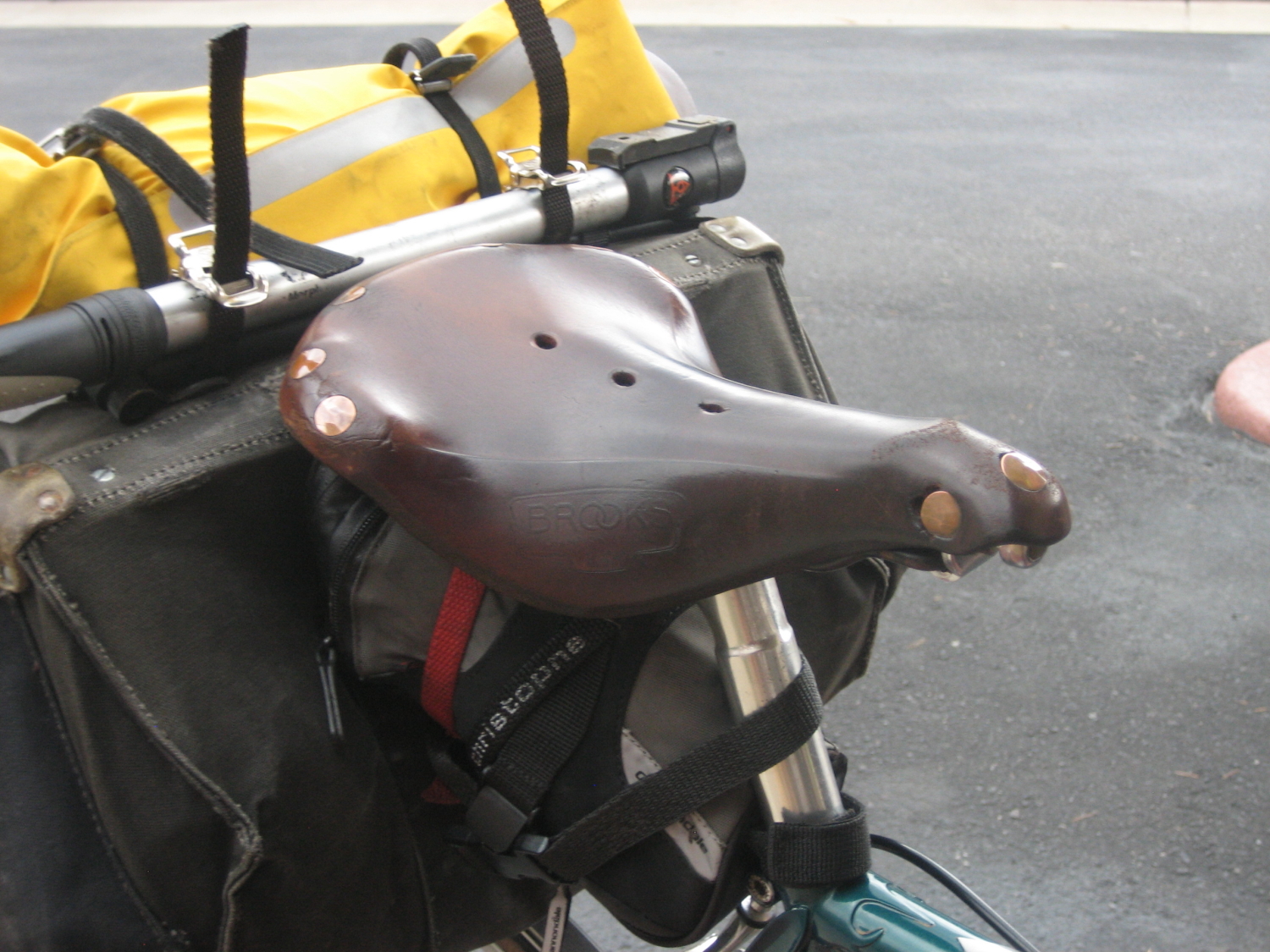
Also of note, new equipment which I was testing for my cycling gear site, Distance Biker: Sigma PowerLED EVO lighting system (just released this month in the US), Gilles Berthoud Aravis saddle (new to me), Craft Performance Rain Jacket, Lantiseptic Skin Protectant (chamois creme), Anti-Monkey Butt powder (post ride), Zefal Swan rear  fender and the Kinesis Ultralight Saddle-bag system (my own design).

Many thanks to John Lee Ellis and the various volunteers that helped out with this event
(Charlie, Jim, Rick, Sherrie, Irene, Kay, Foon, Dick & Catherine).

2010 Cascade 1200K Randonnée (770 miles in 3-1/2 days)

Day 4. Washington Pass, elevation 5477 feet, our high point of the ride.

This randonnee starts and finishes in Monroe, a town at the western base of the Cascades, some 40 miles N.E. of Seattle. The route essentially makes a gigantic counter-clockwise loop around Mount Rainer. This 1200km event is sponsored by one of the largest randonneuring groups in the U.S., the Seattle International Randonneurs or S.I.R. (This randonnee is actually 1240km or 770 miles with about 40 to 43,000 feet of climbing). Some 90+ riders took this challenge from June the 26th through the 30th.

Two years ago I attempted this ride — it was my first 1200K. I had been riding a road bike for less than a year then so I was rather new to the sport of randonneuring.  I dropped out after day three and 600 miles due to saddle sore issues. This event is held every other year, so this year I had a score to settle. We are allowed 93 hours to finish, which is almost four days and three nights. The ride started on 6:00 a.m. on a Saturday and we had to be in by 3:00 a.m. on Wednesday to qualify as a finisher. In the previous two times this event took place, the completion rate was between 68-71%. This time (primarily because of the nicer, not-so-hot weather), the completion rate was closer to 80 or 85% I believe.

Many thanks to the volunteers of S.I.R. for their hours of preparation and tireless service. Oh yeah, thanks also to those unnamed riders who pulled me along during various parts of this ride.

A few stats of the ride:
Day 1, Monroe to Naches: Mileage was 224 with an average moving speed for the day of 16.85 MPH (not taking into account breaks). I left Monroe at 6 a.m. and arrived at 8:35 p.m. Calories consumed during that time was 6365 with a maximum heart rate of 152 BPM (my absolute threshold is 163 on a bike, and 172 on skis). My heart rate during the two hour climb up to White Pass was essentially sustained at 137 BPM (which is the red zone or upper 20% for me) for that period of time.
Day 2, Naches to Quincy: Mileage was 206 with an 2-day accumulated average moving speed of 16.0 MPH. I left the overnight stop at approx. 3:30 a.m. and arrived at 8:49 p.m. I had less climbing that day, but due to the mechanical problem with my bag (as a result of a crash) I lost several hours of time. Calories consumed during that time was 3306 with a maximum heart rate of 132 BPM.
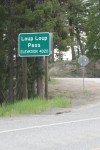
Day 3, Naches to Mazama: Mileage was 180 with an 3-day accumulated average moving speed (to date) of 15.5 MPH. I left the overnight stop at approx. 5:20 a.m. and arrived at 8:13 p.m. Calories consumed during that time was 2703 with a maximum heart rate of 129. My heart rate going up Loup Loup Pass was at a sustained rate of about 115 BPM.
Day 4, Mazama to Monroe: Mileage was 162 with a 4-day accumulated average (final) moving speed of 15.24 MPH. I left the overnight stop at approx. 5:45 a.m. and arrived at the finish at 7:39 p.m. My heart rate monitor watch got switched off as a result of wearing a jacket on the descent so I have no record of that day’s heart stats. I observed that my sustained heart rate while ascending Washington Pass was in the range of 110–115 BPM.
My Total time including riding, resting, sleeping and eating was 85 hours and 39 minutes. My pedaling or moving time (sometimes I coast the downhills which registers as movement with my cyclocomputer) was 51 hours, 17 minutes. My average cadence was 71. My maximum speed was 41.3 MPH. Please note that on the last morning of this brevet, a nice buffet breakfast is provided at Mazama at 5:00 a.m., which is a big deterrent for an early start to grab a good “finishing time.” I choose to stay for the breakfast and use that energy for the long climb that morning.
Notes About Sleep I have found that on 1200k’s I like to set a goal to arrive at each overnight stop by sunset, leaving at whatever time in the morning is needed. Sometimes, that means leaving at 3 or 4 a.m. and perhaps taking a nap along the way. One thing I have learned about 1200k’s…speed = sleep. The faster you can move on the bike, the more sleep you can obtain — this simple fact was a driving force during my spring training. As a solid eight-hour-a-night guy (plus occasional naps…I’m self employed and work at home), sleep was high on my list. The funny thing about this randonneé is that despite arriving at the overnight control by sunset each night, I only slept well one night. The first night, I didn’t have earplugs and it was too hot for me (I finally just got up and started down the road at about 3:30 a.m.). I procured some earplugs for night two (thanks Mike Sturgill) and slept OK in Quincy. Night three in Mazama I was too hot again and slept poorly. Perhaps my heart rate is not dropping down low enough at night and my body remained overheated? (My normal resting rate before climbing out of bed is 42 BPM). I took my heart rate monitor off at night. Next time I think I’ll leave it on and see what it says as I retire. Or next time maybe bring a foam pad and sleep outside where it is cooler?

Do two click-throughs to see the photos enlarged.

The photos are in chronological order, left to right.

All Photos Copyright 2010 Richard Stum

2009 Gold Rush 1200K Randonnée

This event happens every four years and is sponsored by the Davis Bike Club, which is located near Sacramento California. It is an out and back 1200K (750 mile) event with 90 hours allowed to finish (almost four days). The route goes up CA-395 and other less traveled highways and roads to Davis Creek near Goose Lake, Oregon.

I finished in just over 79 hours and 12 minutes (90 was the limit) with two primary overnight stops and a brief nap on the last night. This was my second 1200K completion.

2008 Last Chance Randonnée (part 2)

Signs and Scenes of Kansas


2008 Last Chance Randonnée (part 1)

Dawn on Day One

Introduction

All this for just a medal.

Earlier in 2008, I started to ride brevets in earnest as this was my first full summer of road cycling. January through May I traveled to Arizona for Susan Plonsky’s carefully planned 200k, 400k & 600k brevets. Later in the spring, I rode on several rides organized by Lonnie “Epic” Wolff and his Southern Utah RUSA chapter. Those brevets (literally diplomas or tests) qualified me to apply for the grand-daddy of randonneuring–a 1200km (750 mile) randonnée. (Randoneeuring is long-distance unsupported road endurance cycling events. The shorter events, from 200km up to 1000km, are called brevets [pronounced brah-VAY]. The longer, multi-day events are called a randonnées, and are typically 1200km.) In late June, I went to Seattle to ride the Cascade 1200 (actually 1240k) sponsored by the Seattle International Randonneurs. Despite all efforts by the excellent volunteers in the Seattle area, I was not able to finish this randonnée. I made it through day 3 of 4 and after 980 km (610 miles) had to call it quits — major saddle sores. There were only four 1200s in North America in 2008. The only other that would fit my schedule was the Colorado Last Chance (Sept. 10-13th, 2008) sponsored by the Rocky Mountain Cycling Club. I just couldn’t close out the season without finishing a 12, so I signed up, was put on a wait list, and was shortly accepted in. It is an out and back ride starting near Denver, Colorado, riding east onto the plains of Kansas and then back.
The starting point was the Comfort Inn in Louisville, Colorado which is near Boulder.

Preparation
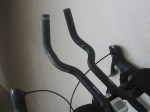
I replaced my prior “padded leather” Kobbi seat or saddle with an unpadded Selle An-Atomica per the recommendation of an RBA (regional brevet administrator) whom I trust. It took some fiddling to get the tension dialed in, but I finally got it to where it felt good — about two days before Last Chance! It was especially nice because I had almost NO sit bone issues with this saddle — from the beginning. I had also made some clothing adjustments since Cascade and rode a number of century and double-century (100- or 200-mile rides) rides with the new saddle without major problems. Addtionally, I had been experiementing with the use of aerobars and thought they might be a good addition, especially in light of all the wind we might expect. I felt I was ready!

John Lee Ellis and staff explaining a few items of interest at the start.

Day One (251 miles)
The experts say the most important night for sleep is two evenings before your ride or event begins. Many of us toss and turn the night before and besides, this randonnée started at 3:00 a.m. on Wednesday. Who gets sleep before a 3 a.m. ride? (I actually prefer this early start compared to the Cascade start of 6 o’clock which allows “average Joe” riders like me to get into the first overnight control by dusk). I did sleep well on Monday but as is typical with me, I tossed and turned on Tuesday night. I got to the start point motel with time to spare and dropped off my bags. There were 35 of us going for the 1200k distance and one going for 1000k. Most were on regular bicycles, but there was one recumbant and one tandems. The temperature was cool, yet comfortable, in the low 50’s.

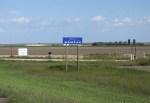
Crossing the state line on day one. Kansas has been very green this year, esp. for this late in the season.

I was a little concerned because there were no controls (stops or mini-marts) for fluids for the first 71 miles. John Lee Ellis, the event organizer, assured me that he had not received complaints before on this section and with the cool temperatures and general downhill attitude I would not need a lot of fluids. We all started off, and as is commonly the case at night, I didn’t draft too closely, but left a little distance between me and other riders. The aerobar is king for solo riding…in the tuck position and in flattish or slighly downhill terrain it just cuts through. We made it to the first control in good time with plenty fluids on board and I picked up some pastries at this stop.

I planned on taking the allowed three nights and four days to make this ride.

We are allowed 90 hours including sleeping and eating or we are DQed (disqualified). I hoped to finish with 6-10 hours to spare. My goal before the ride began was to try to arrive at the motel “overnight” stop before dark and get enough food and rest so I could start out early the following morning somewhat refreshed.
Later that afternoon the winds picked up from the south. We were traveling east, so there was little we could do. I rode with Roberta Trevisan and another guy from Canada until we arrived at St. Francis for lunch. All in all, the day went smoothly and I finally arrived at Atwood, Kansas at about 7:00 p.m. MDT just as the sun was setting. I wolfed down 6 or 8 pieces of pizza and a few cups of Coke (drinking Coke right before going to bed is a, well, a little dumb) and headed off to my room to shower, food & bike prep for tomorrow and try to get some sleep.

Despite how green it was, we saw few bodies of water or rivers along the way. Perhaps it is because this area is ground zero for the Ogallala Aquifer, which is the largest known source of underground water in the world.
Sign entering St. Francis. ”As Good as it Gets" means what?

I was assigned a roommate, John Kramer, a seasoned randoneeur from Washington state. I asked him when he planned on leaving the next morning and he replied “I rarely can sleep more than three hours on these rides, so I’ll probably leave around 11:00 p.m.” He got up at the appointed time and headed out the door. I hadn’t got much sleep up to that point — it was terribly hot, even with the window open–no A/C in this motel. There was a construction crew across the street using a jack hammer til almost 10 o’clock too! (See construction in lower left of sign photo at bottom of page.) After about another hour I also got up and proceeded on my way.
Day Two (219 miles)
I started off alone 12:30 in the morning on highway 36 heading towards the eventual turn-around point at Kensington Kansas.
It has now been two nights since I have slept more than three good hours. Hmmm, how safe is it to be on a bicycle in the middle of the night…alone? I’m basically a morning person, so I felt OK as I headed out into the dark. Later in the morning, at about 5:00 a.m. I rode into Norton and saw the first batch of riders returning from the turnaround point. I stopped at McDonald’s for breakfast and discovered that I had no cash or credit card. Oh, crap! I asked the clerk if I could make a transaction with a credit card number but without the card. She said “no way, McDonald’s policy.” I was starving, having not eaten much since midnight. I went across the street to a mini-mart and asked the clerk if she could accommodate me. She said she would try. I called me wife on my cell (and waking her up of course) requesting her to look up my VISA number. I wrote down and the clerk ran the card. It worked. I ate. Yahoo — minimart nutrition is good! (A few days later I discovered my ID in my street shorts pocket.) -It was very humid and my glasses had a thin layer of dew on them as I proceeded down the road. I pedaled up the grade of a tall RR viaduct and misjudge dthe space on the viaduct metal expansion joint and my wheel got caught in one of the groves. It quickly turned my wheel to the right and launched me towards the guardrail. With my outreached hand I placed it on the concrete guardrail for balance and redirected my bike straight, narrowly avoiding going over the edge. That was exciting — I’m awake now! This was turning out to be a bad morning, but I keep on moving. I had energy as the sun rises.

This is my favorite road sign and the only one I saw along US36. This one was just outside Kensington. Shouldn’t there be one of these EVERYWHERE in Kansas?

I soon gain another rider. It is Vincent, whom I rode with on day one. I explained my money plight and he said that his crew boss, Mels, could accomodate me with more cash as he would be wating at the next control in Kensington, our turnround point– just look for his Nissan truck. I continue riding past Vincent and finally arrive in Kensington. I mail my provided postcard (proof that I made it to the end) to John Lee Ellis and go and find Mels. He graciously loaned me some cash and I ate lunch at the grocery store/deli. I noticed that ever since the viaduct incident that my front tire was making a funny sound and appeared to be underinflated. I inflated the tire to 110 PSI (it was only at 70 or 80 PSI) and a large blister shows. Wow. I deflated it and tried it again — same problem (once again thanks to Mels for the floor pump). I deflated the tire and replaced both the tire and the tube. I tossed the tire. It was brand new, of course. (I had an extra tire with me). Vincent and others arrived and I finally left as they enjoyed their lunch. I spent an hour at that stop borrowing money, eating and reparing. That is lot of time at one stop. I hurried on down the road.
I traveled the return trip to Atwood pretty much alone but I saw other riders now coming towards me as they were pedaling towards Kensignton. It is nice to be ahead of others! I made it back to our Atwood motel exactly the same time as the prior night…6:50 p.m. MDT. Second day goal met. The weather was cooler (it was overcast most of the day) which means I finally got some sleep in the motel (and no construction noise too).

I’m a morning person. That means that I sometimes get tired in the afternoons as I did on the return trip to Atwood at about mile 400. I stopped right off the shoulder of the highway and took a power nap in the lush grass (rattle snakes anyone?).
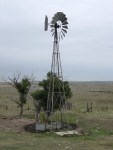
With all the wind that Kansas is famous for, I only saw agri wind mills but no electric-producing wind turnbines.

Day Three (180 miles)
After a good night’s sleep (i.e. 3-4 hours) I followed my usual schedule of departing at around midnight. The prior night I called my wife on the cell and had her look up the NOAA online forecast. 80% chance of rain. This is VERY unsual for a Colorado or Western Kansas September. I prepared accordingly and brought a little extra clothing including some full-fingered neoprene gloves. At St. Francis (mile 512) it began to sprinkle. I waited in a public covered rest area, hoping it would stop. It didn’t, so I headed out into the dark and wet night. It was about 3 a.m. and my next stop was 28 miles with nothing in-between. Throughout the day it rained, fequently with blowing wind. I did have a bit of a tail wind coming into Cope where I was greeted by by one of favorite volunteers — ERIC! His wife is a trained chef so he always had great goodies to eat. This time he had both pasta salad and a delicious soup called which he called Italian Wedding Soup. I had a serving of each and kept on moving.

At the last stop there were four Canadian riders (or three Canadians and one US) that gained me. Some of them were a little ill prepared and were using garbage bags for rain protection. I was thankful for my fully seam-taped REI shell and lightweight but effective Rainlegs. They kept me warm and dry as the temps were in the low 50s. I wanted to stay ahead of them so I quickly left before they arrived. I took a ZipLoc bag of the pasta salad with me as it would be 52 miles before I would see any services. The wind changed and I was faced with rollies AND a headwind. I was really struggling, wishing I was with a paceline or group of riders so we could each take a turn in front battling the wind. Finally, the four riders started to pass me, one by one. I was exhausted and stopped to eat the pasta. Rejuvinated, I continuted on to my final stop of the day in Byers, once again passing through Last Chance, Colorado. I arrived at Byers at 3:15 p.m. in the afternoon just behind the four riders that passed me earlier. Three of those guys stopped at Byers for supper and then just kept going without sleep. One of them was trying to qualify for RAAM (Race Across America) and needed a quick finish time. Not for me. I’m an eight-hour a night guy (when possible). I checked into my room and proceeded to get some some decent beauty sleep.

Full rain gear which makes me look fat. Note the homemade plastic bag toe covers — courtesy Idalia Grocery store.
Mile 525 at about 4:30 a.m in the rain.

Day Four (103 miles)
The nicest thing about this ride is that the worst is NOT saved for the last. With only 103 miles to finish and over 15 hours to do it (9 p.m. is the 90-hour cut off), this makes the last day of the ride a breeze. I actually got four hours sleep and was set to go at about 1:30 a.m. but hestitated because my primarly light was acting funny due to all the rain. I waited until another rider was ready and proceeded to go with him (Robert Sauve of Lakewood Colo.) at 3:20 a.m. We rode together until the sun came up (it was VERY cold — perhaps in the low 40s). The forecasted high was for 70s and 80s in Denver so I knew it would warm up, which it quickly did. He stopped for breakfast at a cafe and I wanted to move on. I continued on alone, weaving my way through the maze of farm roads outside the metro area and finally arrived at John Lee’s home at about 1 p.m. in the afternoon.

The rollies and head wind on the afternoon of day three that nearly killed me (east of Byers, Colo. near Last Chance).

Summary
Wow, my first 1200 finished with and NO saddle sore issues! My quads felt pretty hammered, but that was to be expected after 750 miles of cycling. My neck was OK for the first three days of the ride (I had been doing some excercises) but for some reason it only hurt on day four (this is always a concern with using aerobars for distance riding). My bike computer showed that my total elapsed time (including sleeping and stopping) was 82 hours and 37 minutes. It also indicated that my actual cycling time was 50 hours and 19 minutes with an average speed of only 15.38 MPH — pretty slow, but then I did nearly all of it solo without drafting much (perhaps 50 miles drafted total) and unlike century rides, I was carrying more backup gear and clothing. According to John Lee, the total vertical gain on this ride was 20,000 feet (mostly in up and down rollies). By comparison, the Cascade 1200 had about 40,000 feet and the famed Paris-Brest-Paris (PBP) has a reported 30,000 feet. Of the 35 Last Chance riders doing the full 1200k, only 3 DNFed (did not finish). That is a 91% completion rate. 2008 Cascade 1200 had 40 out of 59 completions for a rate of 68%.

Afterwards, my cyclometer read 774 miles, which is more than the 752 miles which most traveled. This is because of a wrong turn or two, plus when I replaced my front tire I neglected to recalibrate my cyclometer for the different brand of tire.
Note all the sand bags holding down this sign — the locals KNOW what kind of wind Kansas gets!

That ride had scorching heat (95-105F for two days) which most certainly took it’s toll.
Many thanks to John Lee Ellis and the volunteers of the Rocky Mountain Cycling Club and other riders for making this possible. My goal is to complete, in the next few years, at least one 1200 per year.
Cheers, and maybe I’ll see you at the California Gold Rush next year.
— Richard Stum. Mount Pleasant, Utah

P.S. Please this brief photo essay of this ride on page two on this site.