Constantly Getting Dropped? Maybe you need more iron.

Screen Shot 2015-10-14 at 5.45.42 PM

Since 2007, when I started cycling, I have been training pretty diligently. Frequently, when riding with others my same age (or older than I), I get dropped. Earlier this summer, while getting some blood tests for a bladder infection/prostate problem, it showed my iron (Ferritin) was low. It was at 32, whereas normal is 22-275. For about eight weeks, I was taking one tablet a day (Nature Made 65 mg), along with 500 mg of vitamin C at night, before going to bed. That was ineffective, perhaps because I also snacked shortly beforehand (iron supplements are best taken on an empty stomach). So I starting take a liquid supplement called Floradix. I took 20 mg, three times daily. After eight weeks of that, it brought my levels up to 103. One medical professional suggested that for males, it should ideally be even higher, at 130.

After supplementation, my average speeds on the bike have also increased slightly. Also, I don’t feel compelled to always take afternoon naps (easy to do when you are self-employed with a house and office next to each other). If you are feeling like your endurance is suffering, it might be this problem. The $64,000 question is why does this happen? I have a read a few reports online, but nothing is conclusive as to why endurance athletes suffer with poor iron. Some speculate that runners have low iron, due to the pounding their body takes, but for cyclists?


Diagnosis

The Mayo Clinic says [my additions]:

To diagnose iron deficiency anemia, your doctor may run tests to look for:

  • Red blood cell size and color. With iron deficiency anemia, red blood cells are smaller and paler in color than normal.
  • Hematocrit. This is the percentage of your blood volume made up by red blood cells. Normal levels are generally between 34.9 and 44.5 percent for adult women and 38.8 to 50 percent for adult men. These values may change depending on your age.
  • Hemoglobin. [A protein found in blood that aids in the transportation of oxygen to various tissues.] Lower than normal hemoglobin levels indicate anemia. The normal hemoglobin range is generally defined as 13.5 to 17.5 grams (g) of hemoglobin per deciliter (dL) of blood for men and 12.0 to 15.5 g/dL for women. The normal ranges for children vary depending on the child’s age and sex.
  • Ferritin. This protein helps store iron in your body, and a low level of ferritin usually indicates a low level of stored iron.

If your bloodwork indicates iron deficiency anemia, your doctor may order additional tests to identify an underlying cause, such as:

  • Endoscopy. Doctors often check for bleeding from a hiatal hernia [a problem of mine, which may or may not be bleeding], an ulcer or the stomach with the aid of endoscopy. In this procedure, a thin, lighted tube equipped with a video camera is passed down your throat to your stomach. This allows your doctor to view the tube that runs from your mouth to your stomach (esophagus) and your stomach to look for sources of bleeding.
    (For much of 2017 I was on a cardiaolgist-prescribed daily Asprin (325 mg). Sometimes I took it on an empty stomach [opps!] which contributed to a bleeding ulcer which apparently was the underlying cause of my anemia. Consequently I went from 325 mg a day to 81 mg and took it with food. Time will tell how this pans out.)
  • Colonoscopy. To rule out lower intestinal sources of bleeding, your doctor may recommend a procedure called a colonoscopy. A thin, flexible tube equipped with a video camera is inserted into the rectum and guided to your colon. You’re usually sedated during this test. A colonoscopy allows your doctor to view inside some or all of your colon and rectum to look for internal bleeding.
  • Ultrasound. Women may also have a pelvic ultrasound to look for the cause of excess menstrual bleeding, such as uterine fibroids.

These articles on the Training Peaks site are most helpful: Iron and the Endurance Athlete (best) or Iron Deficiency, Anemia and Endurance Athletes. The first link states (published in 2009, italics added):

If iron is the reason for the low hemoglobin (which is most often) then you have iron deficiency anemia [IDA].  However, if you have a low ferritin, but your hemoglobin is still normal, you only have iron deficiency [ID]. The difference is important as anemia is certainly more severe, but research clearly shows that having iron deficiency without anemia can lead to fatigue, lower productivity, and ultimately could lead to reduced endurance. In athletes, Iron Deficiency Anemia can lead to dramatic and measurable decrease in athletic performance, work capacity, reduced VO2max—and this effect is reversed when iron supplements are taken. The article goes on to say… If you are going to get your iron checked, remember to ask your doctor to check the ferritin along with your hemoglobin. There are a couple of problems with ferritin—first, it goes up, falsely, when you are under stress (i.e. sick, asthma, surgery, injury, infection, etc…), so make sure you are relatively healthy when you get it checked. Second, there is no “agreed” upon definition for a “low-ferritin” in endurance athletes…essentially, a good bet is if ferritin is less than 30-35  ng/mL then Iron Deficiency treatment needs to be discussed and if it’s between 35-60 ng/mL  increasing iron in your diet is a prudent step.


Also see this article on Active.com. WebMD does mention (in passing) that a cause of iron deficiency is those doing endurance training. This article, as found on LiveStrong site, talks about both B-12 and iron.


From this seemingly credible source (Sports Med Today):

An athlete with low ferritin and iron levels, and normal hemoglobin and hematocrit, is considered to have ID [iron deficiency), but not IDA [iron deficiency anemia]. If the athlete also has low hemoglobin and hematocrit levels, then he or she has IDA. For athletes with IDA, the evidence is clear that a daily oral iron supplement is beneficial in improving athletic performance. However, there is controversy about whether iron supplementation in athletes with ID alone is helpful.  The decision to start iron supplementation in ID should be shared between the athlete, physician, and potentially, a dietician. Iron supplementation without knowing iron levels is not recommended.


The Iron Disorders Institute says:

Other nutrients, however, such as vitamins C and B12, folate or zinc can facilitate sufficient non-heme iron absorption. Consuming certain foods and medications can interfere with the absorption of iron. These include dairy products, coffee, tea, chocolate, eggs, and fiber…Men are rarely iron deficient; but when they are, it is generally due to blood loss from the digestive tract (sometimes indicating disease), diseases that affect iron absorption, and in some cases, alcohol abuse. Except for those who are strict vegetarians, men rarely have dietary iron deficiency.


This 2013 article, as found on The First Endurance site, says quite simply “More hemoglobin = More oxygen delivery.” It says hemoglobin is “…the protein used by red blood cells to deliver oxygen and remove carbon dioxide from and athlete’s exercising muscles.” This article suggests tests which include a complete blood count (CBC) with differential, and an iron panel which includes: serum iron, total iron binding capacity (TIBC), iron saturation, and Ferritin.  They suggest “Living and training at altitude should stimulate red blood cell production to the high end of the normal range…in the above example the low % saturation and the normal TIBC tell us that this athlete’s body has the capacity to deal more iron.” With me, since I train at altitude (6000 feet), if my hematocrit and Ferritin levels are on the low end of the so-called “normal” range, that means they are actually well below the recommended value. (This is consistent with advice from the HealthLine.com which says “If you live at a high altitude, your hematocrit levels tend to be higher due to reduced amounts of oxygen in the air.”).


Causes of Low Iron

  • Inadequate diet
  • Strenuous endurance training, which can increase iron loss through sweat, gastrointestinal bleeding, and decrease iron absorption 1
  • Frequent use of aspirin or non-steroidal anti-inflammatory medications, causing increased GI blood loss 1
  • Running! Foot strikes (in runners/triathletes) can develop broken red blood cells called hemolysis1
  • Training at higher altitudes 1
  • Slow, chronic blood loss within the body — such as from a peptic ulcer, a hiatal hernia, a colon polyp or colorectal cancer — can cause iron deficiency anemia. Gastrointestinal bleeding can result from regular use of some over-the-counter pain relievers, especially aspirin. 2
  • An inability to absorb iron. Iron from food is absorbed into your bloodstream in your small intestine. An intestinal disorder, such as celiac disease, which affects your intestine’s ability to absorb nutrients from digested food, can lead to iron deficiency anemia. If part of your small intestine has been bypassed or removed surgically, that may affect your ability to absorb iron and other nutrients.  2
  • Vegetarians. People who don’t eat meat may have a greater risk of iron deficiency anemia if they don’t eat other iron-rich foods.
  • Healthline.com states that low hematocrit levels may be because of  “deficiencies in nutrients such as ironfolate, or vitamin B-12.”

1 = Ironman.com

2 = Mayo Clinic


A more recent CTS article, released in late 2017 says:

“ID [Iron Deficiency Anemia] is alarmingly prevalent in endurance athletes, with nearly 60% of all female athletes and 4 to 50% (Hinton, 2014) of all male athletes experiencing some form of iron deficiency in any given year.”


The classic 2002 book Serious Cycling, by Edmund R. Burke (p. 135): “Iron stores can be reduced in several ways. Periods of heavy sweating, for example, can decrease iron stores. Cyclists who sweat two to three liters per day may double their loss or iron…Cyclists who are vegetarians should be conscious of their iron consumption and make an extra effort to eat plenty of whole grains, nuts dried fruits, and other iron-rich foods…Female cyclists also need to be concerned with iron loss. Women lose an additional 15 to 45 mg each time they menstruate and stool.” He also suggests to eat foods rich in vitamin C and avoid drinking coffee at meals as it reduces iron absorption by up to 40%.


How Much Supplemental Dosage?

Unlike some supplements, like Vitamin C or D, too much can be harmful or even fatal. Consequently, a series of blood tests or “labs” are recommended first, i.e. complete blood count (CBC), which normally includes hemoglobin and hematocrit and then a separate draw for Ferritin. Iron supplements, if taken with some foods, like calcium or dairy, are not as effective. Most sources say it is best taken on an empty stomach, spread throughout the day. However I found that taking iron supplements with acidic additives like Vitamin C or an orange accelerated my ulcer, which in turn caused internal bleeding and made my condition worse!

In 2015, when I was first diagnosed with low iron, I started using liquid “Floradix Liquid Iron & Vitamin Formula,” a product developed in Germany. I took it in doses of 60 ml Floradix daily (20 ml liquid 3x day, or 60 mg of iron). I found it to be cheaper at Vitacost.com or ukhealthsupplies.com, instead of Amazon. The Floradix help-line person said that it can take two months to bring your iron up when taking the max. amount, which is 60 ml a day. She said that a 300 mg of regular iron pills (Ferrous Sulfate) only contains about 65 ml of Elemental Iron, whereas their product is full strength. Floradix is available in tablet form and takes longer to absorb but are just as good. The tablets are much cheaper. Too much iron can make one constipated.


In 2017 I visited with a DO “Sports & Orthopedic Medicine” physician and he suggested that for an endurance athlete like me, Ferritin should be the key indicator. It should be in the range of 250 to 350. Please note that in 2015 & 2016 the normal range was 22–275, but in 2017 it was adjusted upward to 37–400.


RaceReady Coaching suggests the following (2015): “The normal limits for the general population ARE NOT the same as the normal limits for athletes. Athletes should have a ferritin above 30 and the lower level of Hgb [hemoglobin] is 15.7 for males and 14.0 for females.
Here is where things can get tricky. You can have a completely normal hemoglobin and hematocrit, but, if your ferritin (i.e. the amount of iron stores in the body) is low, you may have symptoms of malaise and a decline in performance. A high TIBC is also indicative of low iron, because there is “room” for more iron to bind. Each of these parameters tells its own story which is why it is important to look at all factors rather than just a few.


This site (NYU) suggests: “a single ferrous sulfate 325mg tablet contains 60mg of elemental iron, so thrice daily dosing provides 180mg of elemental iron per day, well within the recommended daily range of 150-200mg for iron-deficient patients.”


This Triathlon site suggest the following:

How to Supplement Iron. An iron supplement should be paired with a significant source of organic vitamin C (non-synthetic). Organic vitamin C greatly enhances iron absorption. The key is that it must be “organic”. Synthetic vitamin C, such as that found in supplements does not have nearly the iron absorption enhancement effect as organic. Iron should not be taken with dairy products, anti-acids or within 1 1/2 to 2 hours of drinking coffee or soda (this includes diet soda).
The ideal method for supplementing iron is to take it with a fruit smoothie. Vitamin C and protein containing lactoferrin increase absorption of the iron. Interestingly, dairy products, specifically cow’s milk have been shown to decrease iron absorption, while whey protein supplements containing lactoferrin increase absorption. The following recipe tastes delicious:
1 banana
1 scoop vanilla whey protein
1 cup frozen mixed berries
1 cup frozen strawberries
Coconut milk
(optional: 1 tbsp peanut butter or 1/3 cup rolled oats)
While supplementing iron, you should also supplement zinc, as iron supplementation decreases zinc absorption rates.

WikiPedia says: “Since iron stores in the body are generally depleted, and there is a limit to what the body can process (about 2–6 mg/kg of body mass per day; i.e. for a 100 kg/220 lb man this is equal to a maximum dose of 200–600 mg/per day) without iron poisoning, this is a chronic therapy which may take 3–6 months.


Livestrong suggests

The Centers for Disease Control and Prevention recommends that adults with iron deficiency anemia who are not pregnant take one 300 milligram tablet of ferrous sulfate, containing 50 to 60 milligrams of elemental iron, twice per day for three months. Elemental iron is the iron in the supplement that is readily available for absorption.


This site (not as credible as others) suggests, for runners in particular, that a minimum dosage of 120-200 mg of iron daily, after getting a Ferritin test. (They also endorse the cheap, but good NatureMade Iron supplements which are available through Costco).


Livestrong.com says maybe you need B-12 instead or in addition to iron… “Given the body requires vitamin B-12 to produce red blood cells, a deficiency in vitamin B-12 can directly lead to a deficiency in iron. In this way, the onset of anemia could be the result of a B-12 deficiency rather than an iron deficiency, although the relationship is indirect. This could result to confusion between the two, although they are completely different.”


This tri site discusses hemoglobin levels and suggests B-12 and other supplements: “As an endurance athlete, your dietary requirements of certain micronutrients are increased. Regarding oxygen delivery to the muscles, iron, folate, vitamins B9 and B12, vitamin C, copper, and vitamin A are critical to optimizing hemoglobin levels.”


First Endurance suggests a rather radical method to bring up one’s hematocrit levels and states (italics added): “The point here is that it takes years to improve total body iron stores with oral supplements, and may not even be possible at all.  The body has a difficult time absorbing enough iron to keep up with the depletion caused by high volumes of intense exercise. Intravenous (IV) therapy [of iron] is required to make any real, meaningful change.”  When finished with this 5-weeks series of infusions, you will be good to go for many years to come.
This is consistent with Wikipedia which says: “Additionally, pseudoanemia can be observed in athletes with adequate haemoglobin due to an increase in blood plasma in athletes that dilutes their haemoglobin concentration, making it appear as if they are anemic when they actually have an adequate amount of total haemoglobin.”


Read this post about when to take iron and about what foods inhibit the absorption of iron. “In most cases, the best time to take iron supplements is about one hour before or two hours after meals. Iron supplements are best taken with water on an empty stomach [along with Vit. C and/or a citrus drink].”


This credible source, i.e. CTS, written by ultrarunner coach Corrine Malcolm, says the following (Nov. 2017):

    • When hepcidin levels increase [inflammation caused by exercise], iron absorption decreases. Hepcidin levels peak 3-6 hours after exercise, which means taking an iron supplement on an empty stomach, or consuming an iron-rich meal immediately after a workout, is not likely the best plan. If you are a morning exerciser, focus on iron after lunch or before dinner. If you exercise in the afternoon, focus on taking your iron when you wake up.
    • Take your iron supplement every other day. Research suggests you’ll see a rise in your hepcidin levels for up to 24 hours after ingesting an iron supplement. The thought is that spacing your supplement intake to every other day increases your potential for iron absorption.

This technical report (from UpToDate) also says “However, the best way to administer oral iron is an area of active study, with increasing evidence suggesting that alternate-day dosing (taking the iron every other day rather than every day) may result in better iron absorption than daily dosing.”

 

Saddle Sores — Prevention & Treatment with Ointments

This page deals primarily with ointments and medicated powders as we deals with our “undercarriage” while cycling. For saddle issues, visit this page.

ChamoisCreamsEtcA

Ointments for Use Prior To or During a Ride

During May of 2011, I  had a small cyst or boil near my sit bone. It was a week before I was going to do the Grand Canyon 600K. A doc looked at it and thought I needed an anti-fungal cream (I think he was just guessing), which I started to apply per his recommendation. I used that cream instead of my chamois lube on that ride and didn’t add anything more until the half-way point. Big mistake. The cream was too runny and didn’t stay put. I got some major sores and had to use two pair of shorts to get through to the end. It got me thinking that perhaps the chamois creams I use are not anti-fungal and I need to change.

There are many creams out there, aside from the common U.S. selection which is Chamois BUTT’r. Thy include Assos Cream, 2 Toms, DZ Nuts from Dave Zabriskie (U.S. pro racer), Hammer, Okole Stuff, Sportique (European company) etc. Many claim to be natural with little or no “petro” or oil-based products.
But yet according to Andy Pruitt’s Complete Medical Guide for Cyclists, he says (p. 90) “Petroleum-based lubricants have more staying power, especially in wet conditions. I recommend petroleum-based products that contain antibiotics.” Another interested fact is that most marathon open water swimmers use lanolin as a body grease (i.e. those swimming the English Channel and the like). Some of them mix lanolin with petroleum jelly, which is sometimes referred to as channel grease. According to the book Open Water Swimming (p. 65) it says  Lanolin “is a thick, greasy, sticky substance that appears white on the skin and stays on much longer than petroleum jelly.”
Bag Balm would be considered oil based. Chamois BUTT’r is primarily water based, although it has a little bit of lanolin oil (the main ingredient in Lantiseptic) and mineral oil. In 2012 I got a very long e-mail from them regarding this matter. Basically they said their product is designed for the average Joe, who cycles maybe three to five hours. Their product will not stain or rot clothing and is easy to wash out. Here it what they said about anti-fungal and antibacterial properties…
“We do not make antibacterial or antifungal claims, as it is our understanding that the FDA does not allow those claims to be made by “cosmetic” products…We don’t advertise our products to be “antibacterial or antifungal” (claims made by medications), but you can say they have antibacterial and antifungal ingredients.”

Here is an informative article (with photos) referred to me by a cycling customer who practices orthopedic sports medicine. He said regarding folliculitis or inflammation of hair follicles: “Ointments are usually petroleum based, non-water soluble, like Vaseline and Bag Balm. They last longer while riding, may plug hair follicles and predispose people to folliculitis (infected hair follicles and saddle sores). To treat follicultis you need to use a non-petroleum, water soluble cream. Abraded and irritated skin predisposes one to infections including boil and abscess formation. So I learned that Neosporin cream worked better than Neosporin ointment to heal and stay healed from saddle irritation. I apply the cream 2X a day to the affected areas if there is any skin irritation.  Ointment based topicals to use between rides for skin irritation may last longer and lube the skin better, but they do not deal with the underlying problem of bacterial growth within the plugged  the hair follicles.”
Despite his statement about not using petro-based creams, the above-mentioned cyclist uses Okole Stuff for longer rides because it is not very water soluble and lasts long.

As a general rule I apply my chamois cream on both my chamois and my skin before the ride. Apply not only to your private parts, but also to your sit bones — anywhere where there might be pressure from the saddle or chafing caused by the repetitious movement of your legs. Sometimes I wonder if what matters most is not what is in the creme, but that the viscosity is thick enough to stay put.

In summary, after several seasons of testing various types of creams I have settled onto two products: Lantiseptic Skin Protectant (not Lantiseptic Skin Cream, which has less lanolin and is not as thick) or Okole Stuff, which I sell on my site eoGEAR. The Lantispetic product is designed for treating folks in care centers for incontinence and diaper dermatitis. The Okole Stuff is designed for athletes and is the thickest anti-chafe specific ointment I could find. It comes in a jar, not a tube. It contains lanolin, aloe vera oil, tea tree oil, all of which not only lubricate, but also prevent infections (they claim). With Lantiseptic, since it is SO STICKY, I now carry disposable vinyl gloves, which I use when applying, which helps in clean up.

Dealing with Saddle Sores During a Ride

For use during a ride, I sometimes pack a stick of Body Glide Chamois Glide as it rolls on like deodorant and is quick and easy to apply while in a c-store restroom. Other times I will pack a small container of Okole Stuff in my saddlebag for touch up during long rides.

Let me quote Susan Otcenas (owner of the huge women’s site Team Estrogen, which is now offline, & long distance cyclist) from an email on a cycling forum in 2014 [square brackets are my comments]:

  1. Stop at a grocery store or drug store.
  2. Head directly to the first aid section of the store. Purchase something with a numbing agent in it. [Anything with 20%  Benzocaine.] Some options include Vagisil (5% benzocaine. Vagisil is marketed as a women’s anti-itch product, but let’s face it: if it’s delicate enough for a woman’s genitalia, it’s certainly going to be safe enough on your butt, male OR female. Vagisil has a creamy consistency that will go on easily and wash off your hands quickly.), Preparation H (Pramoxine HCI 1%. Also has glycerin & petroleum jelly, which are a little greasy, but will “protect and lubricate” the affected area.), Orajel (yeah, it’s for toothaches, but it has 20% benzocaine, which will numb that spot right up. And if it’s safe to ingest by mouth, it can’t be too harmful on your @ss, now can it?).
  3. Head to the restroom. Grab two wads of paper towels. Saturate one with water, and leave the other dry. Use the wet wad to thoroughly wipe down the affected areas. Sweat is full of salts that irritate open/chafed skin, so clean the entire area. Pat dry with the dry wad. Now carefully apply whatever you purchased in step 2. Take the time to do it right, covering whatever tender spots you have. Pull up your shorts completely and firmly seat the chamois against your skin. Droopy/loose shorts are just asking for trouble/chafing.
  4. Go ride your bike.  🙂  The numbing agents seem to wear off after 30 minutes or so but by then, maybe something else will hurt more…
  5. Re-apply at controls [aid stations] or as necessary.
  6. Post-ride, consider using something to help you heal faster. Desitin is surprisingly effective. It’s gentle on the skin (it’s diaper rash cream, after all), and it’s designed to reduce inflammation and irritation. After a really rough ride, you many find you need a weekend off to fully heal.
  7. For the NEXT ride, consider taking extra care to lube that spot well, with something like Lantiseptic. Once chafed, certain spots seem to be more prone in the future.

Treatment of Problems After a Ride

I think I have had more saddle sores than flat tires. I have tried many post-ride solutions, but let me share my techniques.

  • If you have open sores, particularly ones that are oozing, I would first (after showering) consider covering the whole area with a topical antiseptic/antimicrobial cleanser like Hibiclens or Betadine Solution. Let it dry and then apply Neosporin Cream. Get the pain relief kind if possible. Since it is hard to apply a bandage to your tush (as I experienced flying back from a DNFed 1200K in Seattle due to saddle sores…), apply a medicated powder over the ointment, so the ointment doesn’t stick to your underclothing. I recommend Anti Monkey Butt (as sold on my site eoGEAR), because it contains Calamine. Ammens Medicated Powder is similar and also does the job.
  • After some seven years of riding, in 2015 I had my first “under-the-skin bacterial infection” saddle sore. This was different that the topical chafing or open sore problems I experienced before. It started with some tiny welts, like acne, eventually developing a bump under the skin. This happened shortly after swapping out saddles. Perhaps I had the post too tall, causing chafing. Or maybe my interacted with the mink oil which I slather on my leather saddles. I went ahead on a 1000K the following week, but on the last day of this long brevet, in order to finish, I had to consume a ton of ibuprofen and wear two pair of shorts due to the pain. I could feel a big lump near my left sit bone. Afterwards, despite not riding for several days after this event, it didn’t disappear. After seeing my family doctor, he indicated that I had an abscess or pocket of pus and prescribed some antibiotics, along with the use of a warm compress. It eventually went away after about seven to nine days, and I was able to finally get back on the bike. Lately, during the course of my regular training rides, if I discover those strawberry, zit-like welts, I immediately apply acne medication such as Clean & Clear Perso-Gel 10 or Clearasil two to three times a day. These products contain 10% Benzoyl Peroxide, which “works by reducing the amount of acne-causing bacteria and by causing the skin to dry and peel.” I also apply a light coating of Anti Monkey Butt powder (or another medicated powder) so the ointment doesn’t transfer into the fabric of my underwear. Another possibility is the use of Betadine Solution (commonly used as an antiseptic prior to surgery), which also dries out the skin and kills bacteria on the surface. I also apply a heating pad to that area two to three times daily as that helps bring to the surface any pus or other “gunk.” The following warning comes with those acne products: “Because excessive drying of the skin may occur, start with one application daily, then gradually increase to two or three times daily if needed… If bothersome dryness or peeling occurs, reduce application.”The problem is that if one has redness or soreness caused by chafing or pressure of the saddle, then the typical solution is to apply an moisturizer or ointment (i.e. Bag Balm, Desitin, zinc oixide etc.) to reduce friction, but it can be problematic, as moisture invites bacteria which causes acne or abscess! Consequently, one needs to determine which is the greater problem, superficial skin irritation or bacterial infection, both of which require opposite treatments.
  • If you do not have open sores, but “only” redness or soreness caused by chafing or pressure, then I generally put on a thin layer of Bag Balm, or the more sticky Lantiseptic CaldaZinc Ointment, which contains a lot of zinc oxide, and some lanolin & beeswax too (it is designed for diaper rash, chafing & relieves itching). Top that off with some a medicated powder so it doesn’t stick to your underwear. Re-apply a few times a day as needed. Other cyclists have recommended Preparation H or any hemorrhoidal ointment cream with 10-20% Benzocaine — I keep them in my arsenal of creams, and finally used one (in 2017) while in the midst of a 1000K when I was having slight soreness with a newish saddle. Cetaphil is a nice medicated soap/lotion that you also might consider.
    On multi-day rides, like a 1000K or 1200K brevet, I usually use the above treatment “just to be sure,” right before going to sleep. Keeping the area slightly moist with an ointment enables the skin to repair itself, so you can start out the next day with a better chance of being comfortable (although ironically, as I said in the prior paragraph, too much moisture become a breeding ground for infections!).

Calibrating non-GPS Cyclocomputers

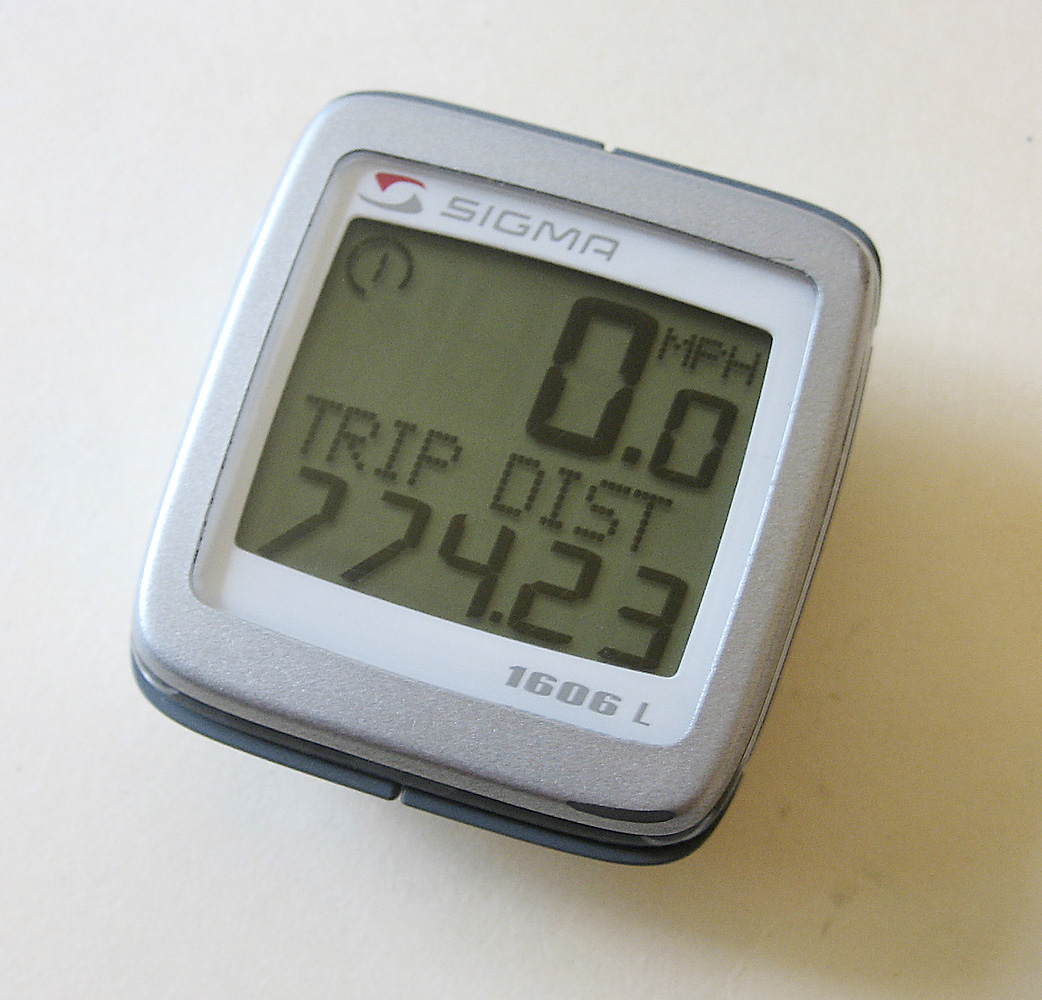
My Sigma 1606L at the end of 4 days on ”Last Chance.“ Thats a lot of miles for one ride!

Calibrate your bike computer (or cyclocomputer) so it is accurate—unless you have a GPS-based model. On my first brevet, my computer was so far off, that it was a major factor in my DNF (darkness, rain, sleet and a tiny bit of snow didn’t help either). To calibrate it you must know how to change the wheel size in the computer. Not all wheels are the exact same circumference. A 700 x 25c tire between brands can vary enough that during a 125-mile brevet you might be a mile or two off at the end of the day. Use a GPS to calibrate. Borrow one from a friend if you need to. I have a Garmin designed for hiking and generally don’t use it for cycling (too heavy & eats batteries like crazy). Don’t use an automobile odometer—they are all over the map.
Here’s how: Zero out the mileage on the computer & GPS. If necessary, put the GPS in your back pocket so it gets a clear shot of the sky for accuracy. Ride for 4 or 5 miles and compare the two. If the bike computer reads high, then you need to reduce the wheel size. Or visa-versa. Then ride several more miles and check it again. It may take several calibration attempts. It is simply trial and error. Finally, ride for 10–20 miles and check. I try to get mine to read within 0.1 mile accuracy for a 15 mile distance.
Don’t do this in mountainous terrain or a steep climb as some GPS models have trouble there. I have found that with my Sigma computer, I use 2110mm for Maxxis 700 x 25 ReFuse tires and 2113mm for Conti. 700 x 25 Gatorskins.

Saints to Sinners Race — My Longest Ever No-Sleep Ride

In 2014 I rode in my first-ever supported long-distance race, called Salt to Saint (Salt Lake City to Saint George). It was primarily a 420-mile relay race, but there were a handful of solo riders, like myself, that rode. It went OK and I finished well before the designated cut-off time. That ride had a lot less climbing and was shorter than this event, which goes from Salt Lake City to Las Vegas.

Early in 2015 I started looking at the stats for the Saints to Sinners. Only one solo person, Mike Conti from Park City, had finished this ride. The allotted time was similar to Salt to Saint, but it had 100 more miles and lots more climbing. I knew I would be hard-pressed to finish in the normal 36-hour cut-off. Early in the year, while at an outdoor expo, I asked Steven Tew, the organizer, if he would be willing to extend the 36-hours for solo riders. He agreed and I later decided that I would start three hours earlier than the relay riders or solo riders. I extended an invite to several of the other solo guys to join me at 2:00 a.m. but they declined and wanted to start with everyone else at 5:00 a.m.

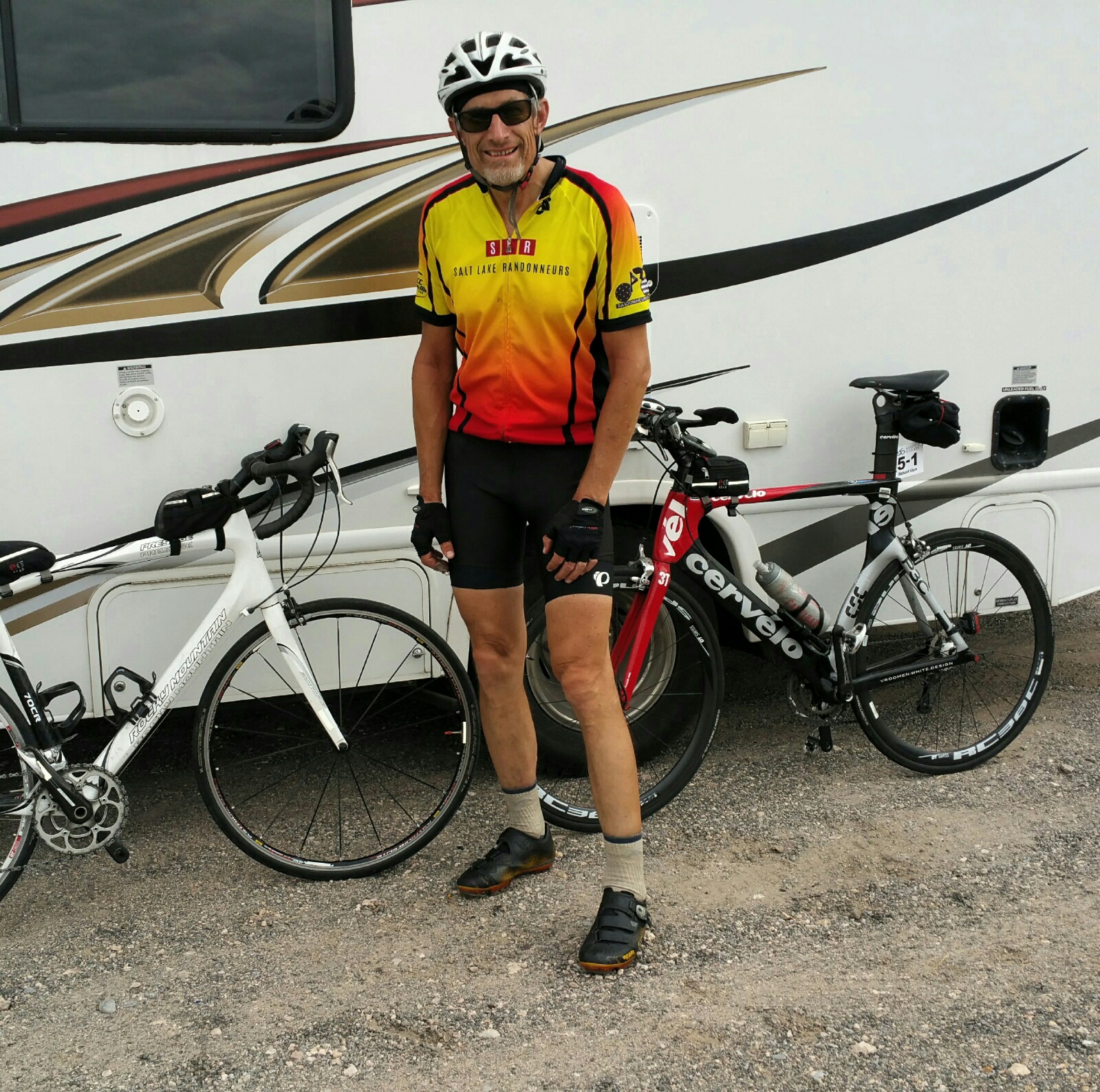
This race mandates a crew and I was lucky to have two friends help me: Jim Halay of Eden, Utah and Frits Tessers of Mount Pleasant (my home town). On the evening of July 30th my crew camped out in Jim’s RV at the start line. I had with me three carbon-fiber bicycles: a Cervélo P3C time trial bike with aerobars, a Trek Domane, also with aerobars, and a Rocky Mountain Prestige without aerobars. The idea was to use the TT bike on the rollers and less-steep terrain and then switch to the Rocky on the climbs. The Trek was a back up.

On Friday morning we got up at about 1:15 a.m. and were able to get me moving by 02:00. The first 214 miles to Panguitch are rollers with little climbing, so I started on the TT bike with the other two bikes stowed away inside or attached to the RV. It was a nice temperature of about 60F. Heading south out of the Salt Lake Valley there was little wind until I hit Saratoga Springs and along the shore of Utah Lake, at which point, I had a slight headwind. It was breezy all the way until the sun came up and then the wind tapered off. I was able to make it to Panguitch with an average moving speed of 17.45 MPH, which I was pretty happy for. I was deliberately keeping my heart rate low (70-75% of my max.), as with such a distance, I didn’t want to “burn up any matches.”


2015-07-31 15.16.00
GPS at Panguitch some 214 miles in.


2015-07-31 15.18.34
Jim and I at the Panguitch rest stop.


Upon arriving in Panguitch I slammed down some serious calories and switched bikes, as the biggest climbs of the trip were right ahead. Having a crew with an RV was wonderful as they could prepare food in advance and have it ready, so I can eat and run. Jim and Frits were most helpful throughout this event.

2015-07-31 16.45.19
Killer scenery, on the way out of Panguitch.

I started the climb out of Panguitch. At that point, with a three-hour head start, no one had passed me yet, but I knew, sooner or later, the fast relay guys and some of the solo guys would. About half way up the Cedar Breaks climb a relay cyclist finally passed me (like I was standing still!). This was the middle of the day and it was slightly overcast, which was wonderful as it was not too hot. I worked my up the first major climb, descended and then made the final ascent to the Cedar Breaks summit. It was well before dark. I took little time off the bike during this section. I just wanted to get it over with. It was nice to descend down into Cedar City in daylight. Upon arriving there I laid down in the grass next to the RV (with my feet up on a chair to get some of the blood to drain back down) and ate a bagel sandwich, macaroni salad etc. My crew in their RV would leap frog me constantly throughout the trip. It must have been fatiguing for them as they had to do a lot of waiting around.

It was just starting to get dark as I left Cedar City and many other cyclists were coming and going now. My crew switched my main light back to the TT bike and I headed out west toward Enterprise. I ended up riding this bike all the way into Moapa Nevada. In hindsight, I perhaps should have switched back to my “climbing” bike in Enterprise, but my pedaling cadence seemed OK with this bike, despite it having slightly higher gearing, so I just kept on it. Climbing on a bike is weird at night because most of the time (unless their is a full moon) you cannot see the hill or judge the grade. I had done this climb once before, but it had been a few years. I just turning the pedals and made a moderately fast descent down from Vejo into Santa Clara, near Saint George. From there it was a long and gradual climb up Utah Hill, which was the old highway to Las Vegas, before they put in the interstate. It seemed to never end. I saw were few other cyclists and I couldn’t see the summit as the road was curved. Along this section I finally gave it and consumed some caffeine gum to keep me alert as I rode through the night. Although I could have taken a power nap in the RV, I wanted to push on without one, to save time. The descent off Utah Hill is a very long and rather steep one, but since it was still slightly dark (dawn was breaking), I was fearful of “outrunning” my lights, so I kept my speed to under 35 MPH. A bit frustrating in a race!


2015-08-01 08.10.24
Jim’s RV: Our home for 3 days.


2015-08-01 17.57.35_resized
Closer shot, showing my two primary bikes used on this event. Yes, 25mm-wide tires on both. A “plastic” Prologo saddle on the Rocky and a narrow Fizik TT saddle on the Cervelo.


2015-08-01 17.53.13_resized
My crew didn’t shoot any photos until the very end, hence I was on the black Trek “back up bike.”


2015-08-01 17.56.05_resized
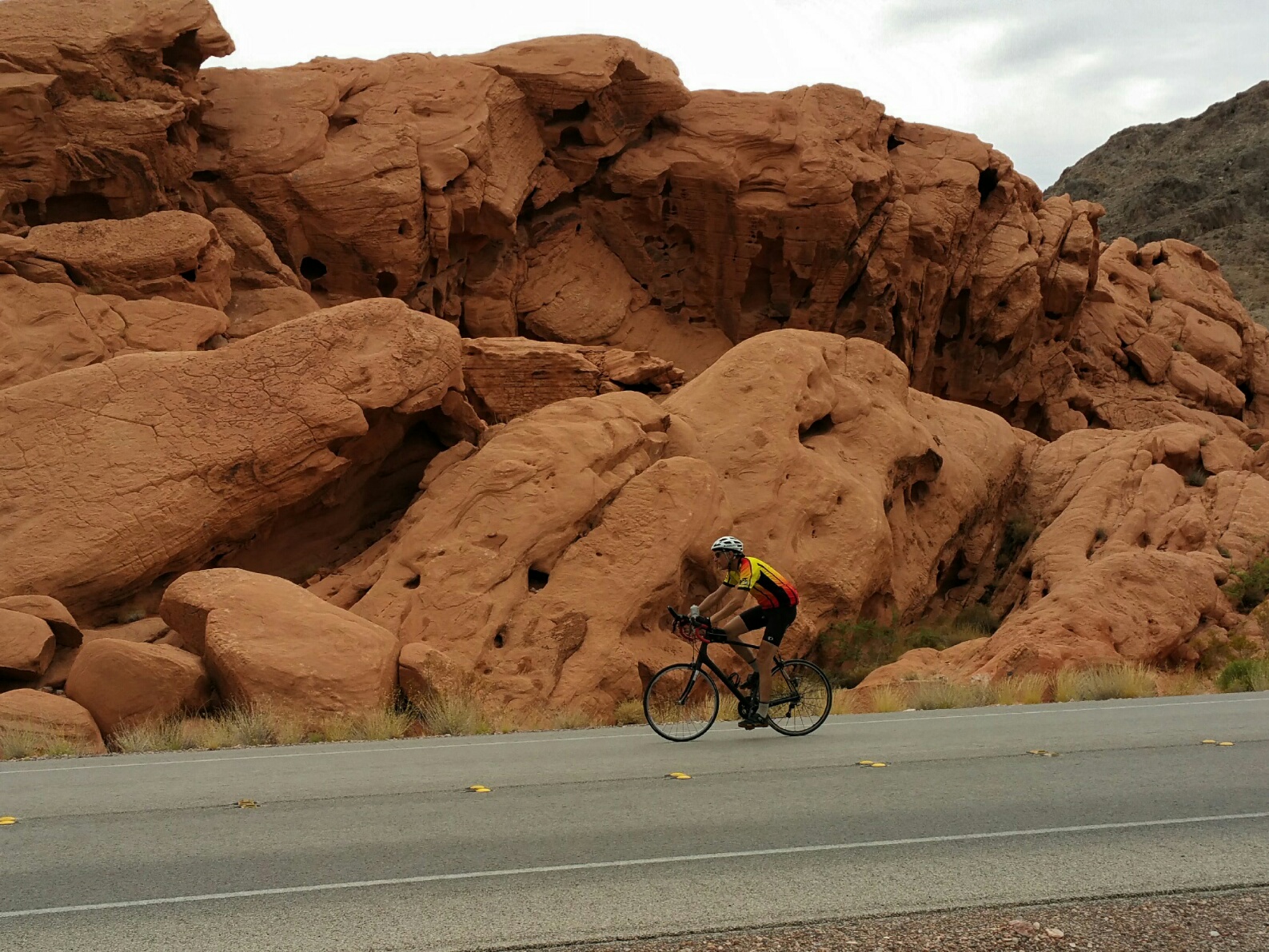
Entering red rock country in Neveda.


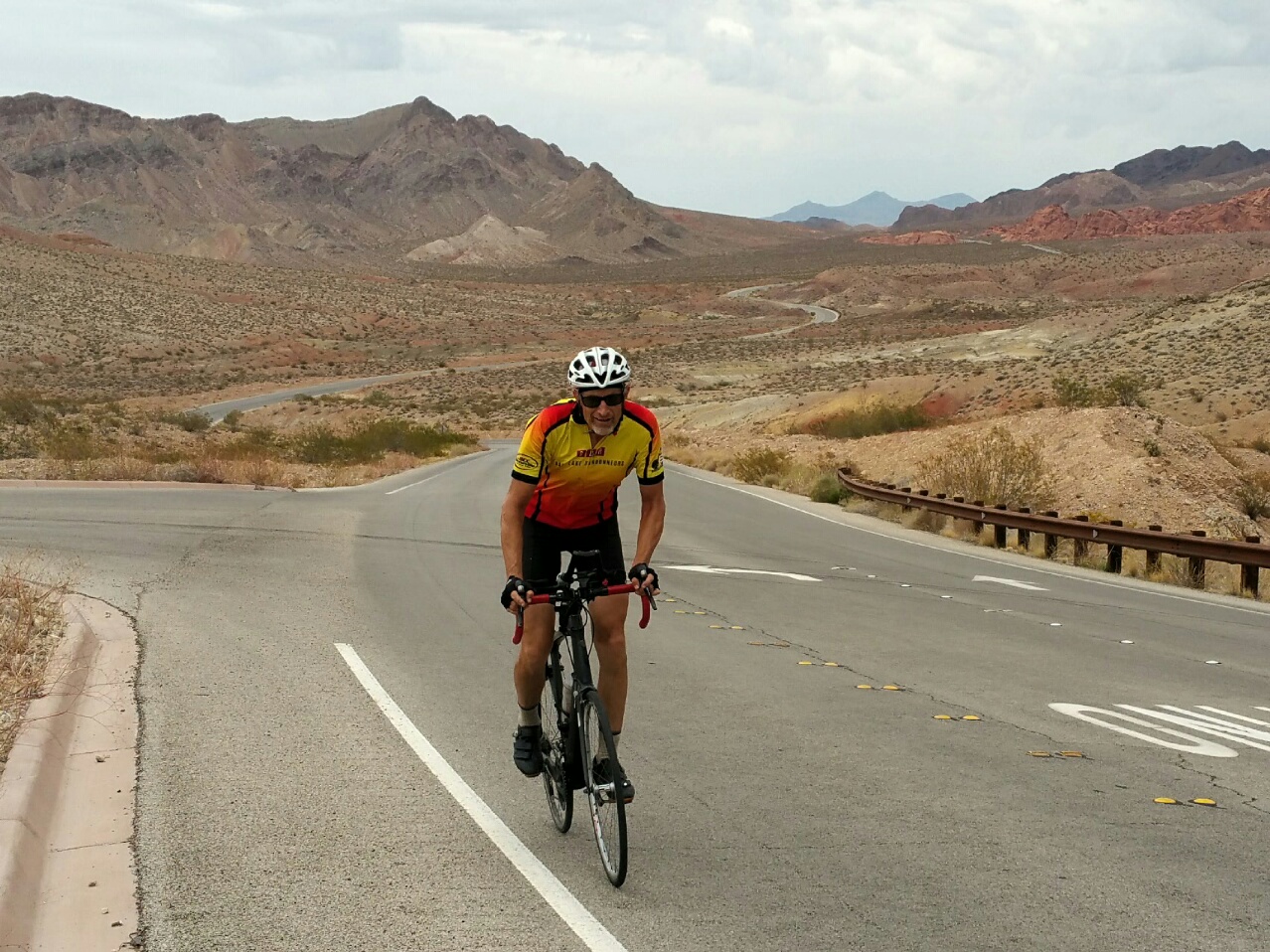
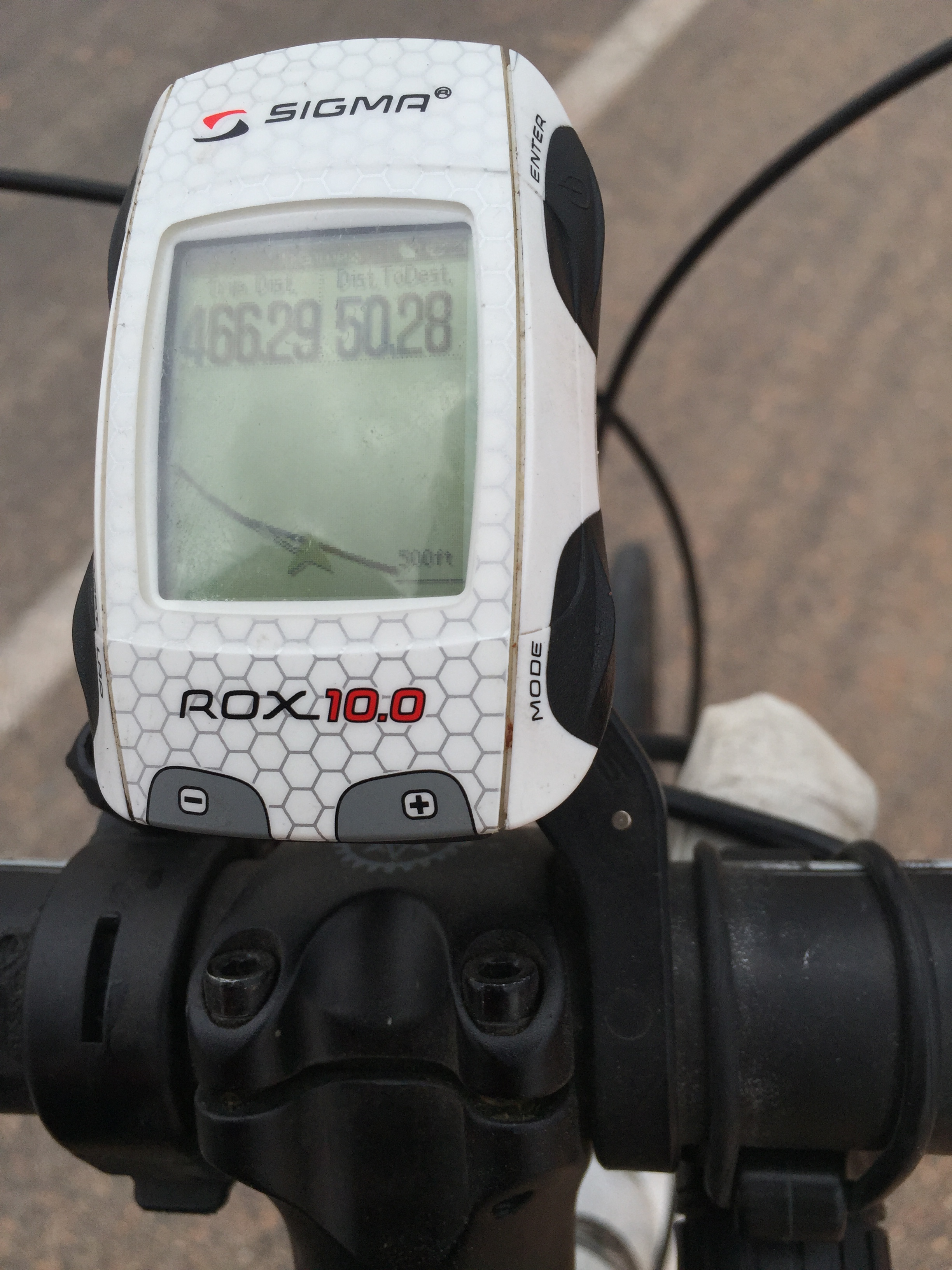
Throughout the morning, I rode along a highway and side roads near I-15 until arriving in Moapa Nevada, where I switched back to my climbing bike. At this point, my maximum heart was topping out at only 65% of my maximum. I was moving pretty slow, but it was consistent. After a series of climbs I arrived to the entrance of Valley of Fire state park. My GPS indicated that I had traveled some 466.29 miles and I only had 50.28 miles left. That seemed OK, except that my GPS indicated that I had only climbed about 14,500 feet so far. The entire route, according to the online maps, indicated 22,000 feet total. Others that have ridden this route said that their GPS indicated it was closer to 20,000 feet, depending on your GPS model. Regardless, that meant that the last 50 miles had approximately 4,000 to 6,000 feet of climbing. I was NOT a happy camper! This last 50 miles is on a road that seems to go nowhere, except that it had repeated climbs and descents, with seemingly little purpose, as it worked it’s way southwest towards Las Vegas. It sits a few miles off from the shore of Lake Mead, but most of the time one cannot see the lake. It was a death march.

At one point, when I had just passed my support vehicle, my rear derailleur cable snapped. I waved down my crew and we made a quick switch to the back-up bike, which I used for last 35 miles. Fortunately, it had the same low gearing as my climbing bike (50-33 in front and 12-30 in the rear). I was worried about excessive heat here during the last 60 or 70 miles as one approaches Las Vegas in the middle of the day in August. But it turned out to be overcast with some light sprinkles no less. THANK GOODNESS.

2015-08-01 09.50.48
GPS at the entrance to Valley of Fire state park. 466 miles down and “only” 50.28 to go.


2015-08-01 17.57.01_resized
Near Lake Mead


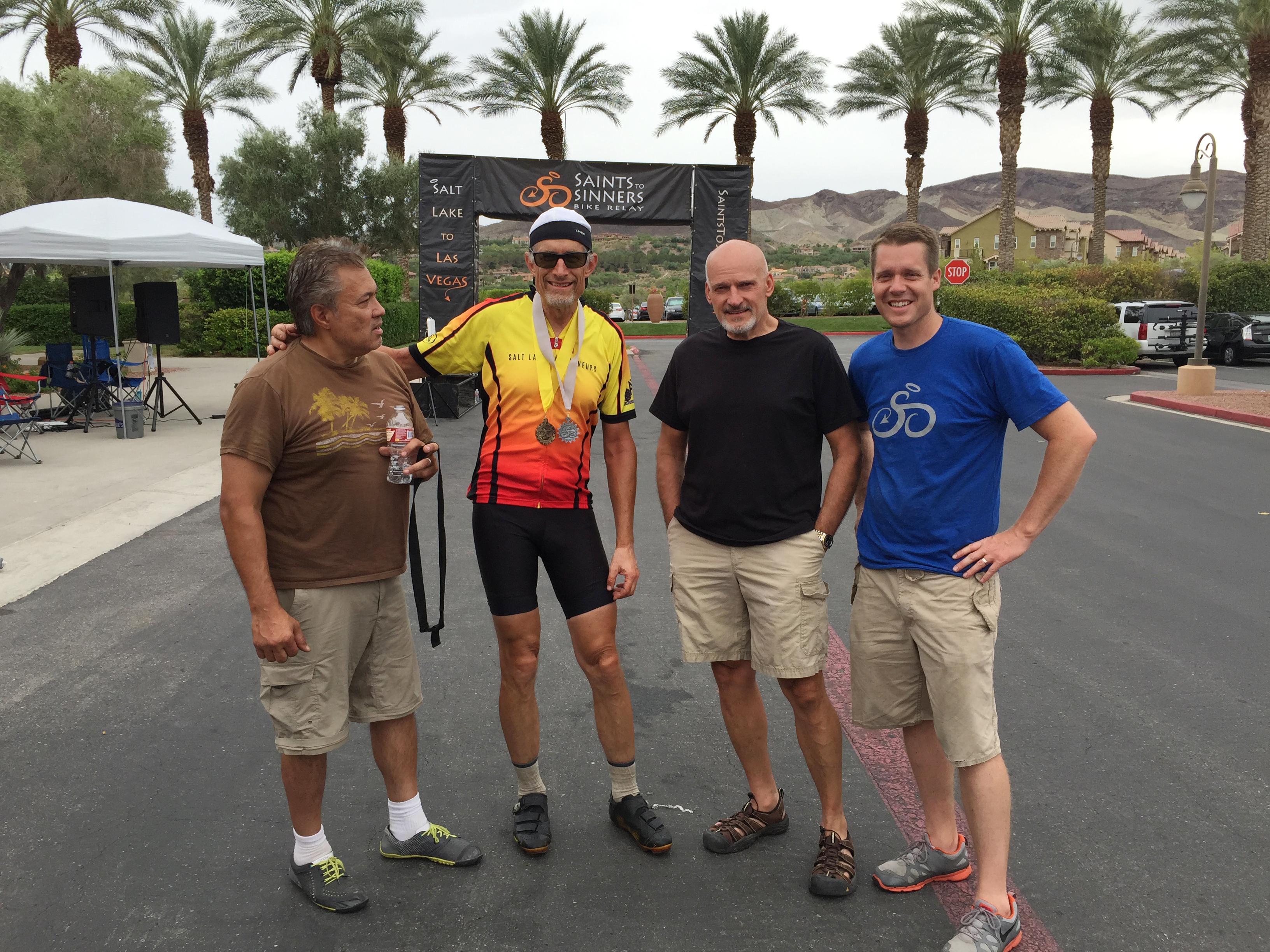
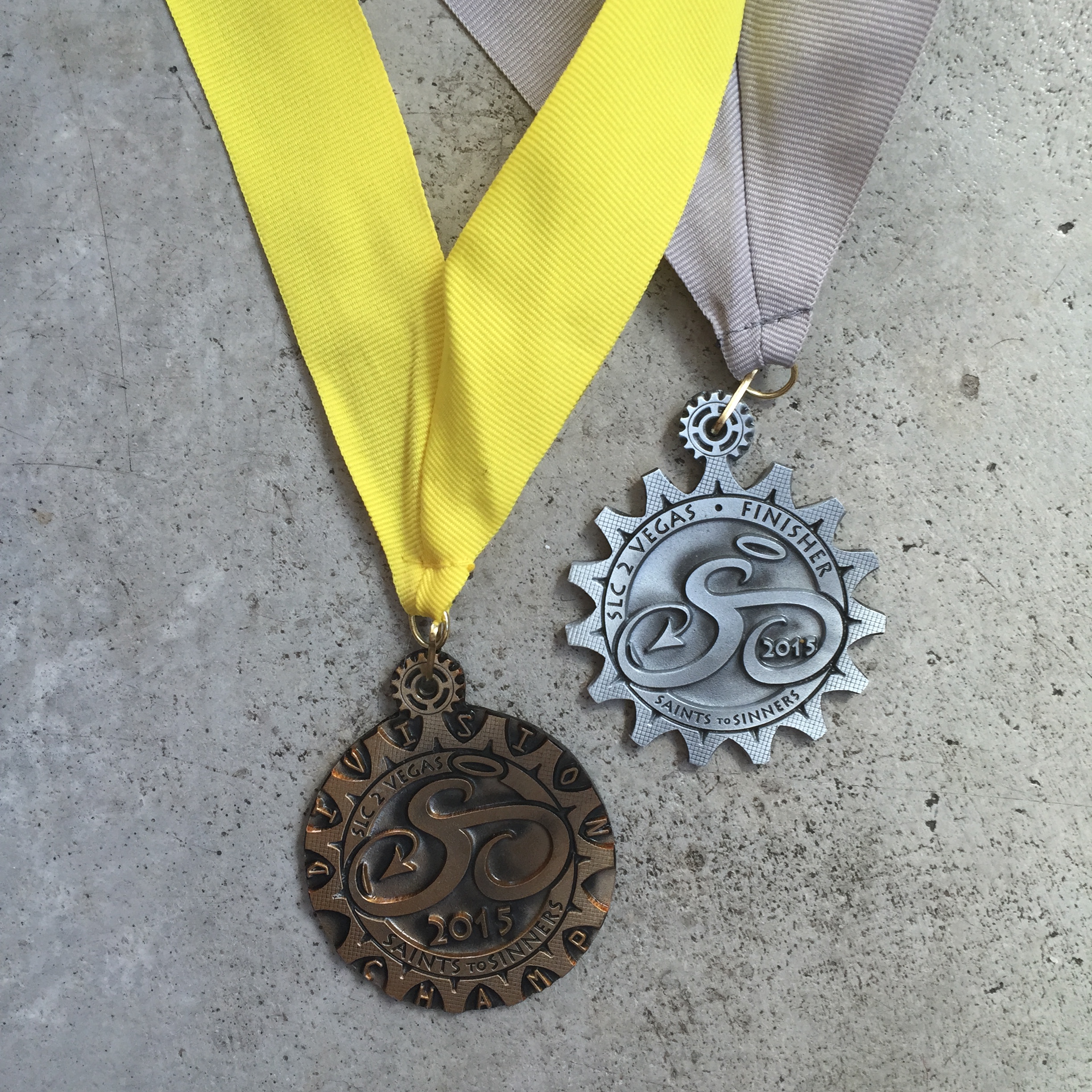
After hours of hill climbing and descending, I finally made it to the finish line. The awards ceremony had just finished and their were folks still there taking pictures in front of the finish-line banner. They informed that I was the only solo finisher and gave me two ribbons: one for finishing and one for taking first in my category. This was later proven wrong as there was one other solo rider, Russel Mason, who was still in transit. Some volunteer had received information that he had quit, but this turned out not to be the case. He left at 5:00 a.m. and later arrive at the finish line, with a faster time than I. As it turned out, Russel and I were the only solo riders to finish this year, making us two of only three to have finished this event as solo riders.

So would I do this event again? Personally, I would like to try a similar event as a “rando” self-supported style ride, but it would take me several more hours, so I am not sure that is feasible for my age (61) and fitness level. Also, the last 50 miles, with all the climbing, was just too much uphill packed into end of such a long event. The relay riders were more fresh, so for them, this last segment was not as brutal. After the event, I kept looking at the online maps, wondering how the organizer could change the route so it entered Las Vegas without taking on this last onerous climbing section — I couldn’t find anything, other than the interstate or a very busy trucking highway (with little shoulder).

Many thanks for Jim Halay for the use of his RV and for the ever encouraging words, help and advice of himself and Frits.


2015-08-01 15.01.58
Frits, myself, Jim and Steven, the organizer, at the finish line.


2015-08-02 10.47.55
Ribbons. The gold one was awarded by mistake.

Stats:

Ride with GPS Online Map (entire route)

Ride with GPS Online Map (last 50 miles only)

My Strava Upload (what my GPS recorded)

GPS recorded total mileage: 517.20 miles

GPS recorded total vertical gain: 20,687 feet

Total time: 37:51. Moving time was 33:58, which means I was off the bike 3:53…seems like a lot of time of the bike!.
That was 2nd place to Russell Mason, who had a time of 36:32.

Lezyne Pumps — Beware of this Problem

leyyne_580x580

I really like Lezyne products. Their use of extension use aluminum (instead of plastic) and CNC machining is wonderful. I also think the aesthetics of their round symmetrical design on their products, including their lights. I prefer their mini-pumps to the Topeak models as it is more durable.

But, buyer beware, their screw-on pump chucks can be problematic with certain types of Presta valves or stems. Last year, while at an overnight stop on a tough 600K brevet in Southern Utah, my cycling partner only had the Lezyne CNC Travel Drive floor pump which had a thread-on chuck. The Presta valves in all my Kenda tubes are removable. Because of that, after topping off my tire, upon removing it, the valve came out, letting all the air out of the tire. After several panic-striken attempts, we finally found a pair of pliers and tightened down the valve and were finally able to fill my tire.

The same problem applies to their portable hand or frame pumps. I upgraded my Micro Floor Drive HP (shown in the lower left with the gold end) with their ABS (Air Bleed System) pump head, as this pump was unusable without it. This unit now comes standard with the ABS.

Yesterday, while on a solo 200K (127-mile) training ride, my front tire was suffering from a slow leak. I was on a different bike than I normally use for long distance riding, and had mounted on it a Lezyne Pressure Drive CFH mini frame pump. It is both a mini-pump and a CO2 inflator combined. After repeated tries using this pump, I finally gave up. Fortunately, I also had my my trusty Lezyne Trigger Speed Drive CO2 and was able to fill my tire up enough to finish my ride. The Speed Drive CO2 has a press-fit chuck end and NOT the threaded style…thank goodness.

Also shown in the photo (just left of the Presta valve) is my my off-brand floor pump hose end, which has been upgraded with the Lezyne Dual Valve Head which has a press-fit non-threaded chuck. It works great on all Presta and Schrader valves.

Summary: If your Presta valves are removable, don’t buy any Lezyne pump or CO2 inflator with a threaded chuck end unless it comes with ABS (pressure relief valve). Lezyne, in their product literature, suggests using LOC-TITE to secure removable Presta valves, but seriously, who has time for that?


Fasting Working Outs For Fat Loss, Ketosis + LoCarbs Diets

Introduction

Last March I read this article about fasted workouts and thought it made sense. I tried it a few times, but no consistently. Then more recently, in 2016, I have been hearing about intermittent fasting, which ties into those attempting to implement Ketosis into their nutrition regimen. Ketosis is different than than the so-called Paleo Diet, because it endorses the use of high fat, moderate protein and little, if any, carbohydrates including fruit. The idea is that you purge your body of most carbs and thus allowing your workouts and metabolism to “burn away” your fat and not your muscle or remaining carbs. The Paleo Diet, as I understand it, encourages a more even balance of protein and fats, and once again, consumption of few carbs in the form of grains. Fruits are OK with the Paleo plan.

Below are varying opinions on both intermittent fasting and  high carb vs. low carb plans.

Screen Shot 2015-07-05 at 10.22.14 PM


Cycling Weekly

This article from Cycling Weekly endorses fasted training, something I have not done much of, but believe could be a benefit.

Among other things, this author says:

  1. Keep intensity low
  2. Try fasted riding
  3. Perform intervals if time is short
  4. Get your recovery routine sorted

I don’t understand as point #1 and #3 are in conflict. When I do intervals, my intensity is high—isn’t that the whole point of doing them?

Otherwise, I link this article is very useful.

Dr. Mike Video

April 2016 Update: Here is an interesting video by Dr. Mike VanDerschelden, a chiropractor working for this firm in California about intermittent fasting. Essentially he says to stop eating at 8:00 p.m. at night and then in the morning only consume Bullet-proof Coffee (coffee with coconut oil and butter added). Shortly before noon do a fasted workout for 20-30 minutes (high intensity interval training or HIIT preferred; at the end of your fast). Then, immediately after your workout, eat your lunch at noon, skipping a formal breakfast. This provides a fasting period of 16 hours. He claims this should bring body into a state of ketosis, i.e. it burns fat and not glycogen.
In the past I have always snacked throughout the day, but that means I was not giving my body a chance to “eat away” fat stores. I have also heard that we might consider eating our last meal four hours before sleeping. In my case, that would mean eating no later than 7:00 p.m. and retiring at 11:00 p.m.

Ben Greenfield Podcast

This podcast by Ben Greenfield (Dec. 2015) is worth listening to (or read the transcript) as he is a big supported of the Ketosis movement (which includes intermittent fasting), not just for body-builders, but for all athletes including endurance types.

The Keto Diet Blog on Intermittent Fasting

This is one of the best sites regarding Ketosis which I have seen. This page endorses the fasting concept.

A French Study Endorses Hi-Carb
Before Workouts & Lo-Carb Afterwards

This new study as found on the Road Bike Rider website, was published in April of 2016. It says “They suggest that athletes should eat their carbohydrates during the day and then restrict carbohydrate intake after their intense training session in the afternoon and before they go to bed at night.” They also suggest that the following morning, after a hard cardio workout, to do a morning recovery workout at an easy pace: “Before your morning recovery workout, drink only water, black coffee or tea (no cream or sugar) and, if your muscles feel heavy and tired, you can eat a single fruit such as an orange. Do not drink fruit juice…An overnight carbohydrate fast after your alternate-day intense workout keeps your muscles low in their stored sugar. Then exercising muscles depleted of their stored sugar teaches your muscles to burn more fat and less sugar, so you keep sugar in your muscles longer, and that makes you faster and stronger and gives you greater endurance.”

Personally, the above regimen sounds very logical to me and I plan to try it for a few weeks.

CTS / Train Right

This page of the respected Train Right site has a contrary view to working out on an empty stomach to lose weight!
Also review this article on the same site about low carb training. It says “This somewhat logical consequence of training with low CHO (carbohydrate) availability has led to the idea of Train Low/Race High and subsequently Train Low/Train High methods where you do lower-intensity endurance rides with low CHO and prepare to perform interval workouts or race with high CHO availability.”

Eric Heiden, M.D. Recommends Well-rounded Diet

(Five-time Olympic gold medalist)

From the 2008 book Faster Better Stronger: “Modern civilization, your work schedule, and your other obligations artificially dictate that you divide your food intake into three meals a day, but biologically, your body does better when you eat more often—about every three to four hours.” ( p.80) “Studies show that if you wait longer  than five or six hours to eat, you consume disproportionately larger meals.” (p. 81) Speaking of supper, he says “….divide you plate in quarters, two-quarters should be dedicated to vegetables, one-quarter to lean protein and one-quarter to carbohydrates. Your carbs should be whole grain and roughly a half to one cup in size. A serving of protein for the average adult is about the size of a deck of cards—about three ounces of meat.” (p. 86)

The Book Racing Weight Does Not Endorse
Low Carb Diets or Fasted Workouts for Endurance Athletes

This soon-to-be classic book, published in 2009 by Matt Fitzgerald, is designed for any endurance athlete, whether it be a cyclist, rower, skier or runner. It discusses how to get your optimum weight based on your particular sport.
He says “Atkins advocated a carbohydrate intake of no more than 40 grams per day, which is equivalent to less than 10 percent of total calories of most people. That’s extreme when you consider than mainstream nutrition experts believe that the nervous and immune systems of the average person cannot function properly on a diet that provides fewer than 150 grams of carbohydrate per day.” “The rationale for adopting a high-protein diet is that protein is the most satiating macro-nutrient, so people tend to eat less overall when they eat a lot of protein.” (p. 112) “My own view is that the evidence indicates that carbohydrate intake should be proportional to the individual athlete’s training load.” (p. 116) “The typical endurance athlete gets 30 to 35 percent of her daily calories from fat—substantially more than the minimum.” (p. 120) On page 127 he has a chart that indicates that the optimal macronutrient range for an endurance athlete should be in the range of 40–80% of carbohydrates, 20–40% of fat and 10–25% of protein.

“There is abundant research showing that endurance performance is compromised in the fasted state (more than 12 hours after the last meal). ( p. 145) “There is a need for more formal studies of the effects of intermittent fasting on competitive endurance athletes. The findings of these studies are not likely to make you see conversion to intermittent fasting of any kind! Sure, athletes do lose weight and body fat during Ramadan…In addition to impairing endurance performance by reducing muscle and liver glycogen and blood glucose levels, intermittent fasting is likely to sabotage performance further by interfering with recovery from training.” (p. 146)

Summary

I have only tried the full-on intermittent fasting and Ketosis regimen for about a week so far (April 2016) and did not lose much, if any weight. I do believe that not eating much after 7 or 8:00 p.m. is beneficial for weight management though and practice that today, including a late breakfast or brunch at 10 or 11:00 a.m. (unless a early morning workout is scheduled and then I eat breakfast earlier). Perhaps I have not given the Ketosis concept enough time to know if it is feasible for me. Most of my friends and family that are using this concept are body-builders and do little endurance training. I have tried some fasted interval (HIIT) workouts (as per the Dr. Mike video above) on a mostly empty stomach and have had lackluster results. I just felt super weak and could not get my heart rate up. The book Racing Weights says “When you wake up in the morning your liver is approximately 50 percent glycogen depleted due to having powered your nervous system as you slept.” (p. 134) I wonder if the Ketosis concept, which is NOT the same as the Atkins high-protein diet (it is high-fat, moderate to low protein) is too new and most experts have not had time to give it a fair evaluation. Or perhaps it more suited to the body-builder type person and not for aerobic-based endurance athletes.

For me, the best way to lose weight is to eat very lightly in the evening after a hard cardio day. I still consume a protein smoothie right afterwards and some 60 minutes or so later eat a very light supper. I have tried to replace all the grain carbs in my diet with more some fruit, more vegetables and lean proteins such as poultry, plain no-sugar-added Greek Yogurt, cottage cheese, aged sharp cheddar cheese and a lots of nuts. (This is largely due to the fact I recently read the very compelling 2011 book entitled Wheat Belly, by William Davis, M.D.)

Red Rock Randonnee 1000K — And a New Kind of Saddle Sore

On June 8, I rode one of my annual long rides of the summer. This is one that I facilitated and is a 1000 km ride out of Kanab Utah. I will be doing occasional posts during the ride on our Facebook group: Facebook.com/groups/saltlakerandos

The route has some 28,000 vertical and the finish time is 5:30 AM on Thursday morning. The mileage is about 620.

Brief summary: Eight riders doing the 1000K, one doing the 600K and four doing the 400K, all starting at the same time (02:30).

Day1: Joe Edwards went off the front, so Kerin Huber (whom I have ridden with in the past on long events) and I went with him. We had a bit of a tail wind as we traveled west to the Saint George area, arriving at our first checkpoint at around 6 a.m. From there we did an out-and-back to Zion National Park and then climbed our way up through Cedar City and through the Parowon Gap, a BLM site with petroglyphs. We had some support on this day, i.e. water at key points along the way. We arrived in Panguitch, our overnight at dusk or about 9 p.m.

Day 2: At approx. 4 a.m. I sent off, in pursuit of Kerin, who had already left earlier in the morning. I caught her on the climb to Bryce Canyon and stayed with her most of the day. My favorite spot there was Fairyland Point, which looked great in the early morning light. From there we went north to the small town of Junction and then made the long ride south on U.S. 89 back to Kanab. I drafted off Kerin during much of the headwind as I was feeling a little bloated from a heavy sit-down breakfast earlier in the day. I also started feeling some saddle pain. After another stop in Panguitch, her stomach started feeling crappy, so she ordered me ahead and not to wait for her…which I did. I saw her later in the evening near Coral Pink Sand Dunes state park. I arrived back in Kanab at about 10:00 p.m. She rolled in about an hour later. The rest of the group, which had stayed together, came in about 2 a.m.

Day3: After a decent night’s sleep, my butt was really feeling it. I was ready to call it quits, but Spencer Klaussen said “it is only 160 miles to glory…tough it out.” So I slapped on an extra pair of shorts for more padding and started taking doses 600 mg of Ibuprofen. I left at about 7 a.m. Once again Kerin was ahead of me and I caught her on the climb and went by. Shortly thereafter I flatted. It was raining. I was in a hurry — faster cycling meant “less painful hours in the saddle.” Anyway, I made it to the North Rim of the Grand Canyon, but the view was obscured by heavy rain and clouds. Eventually, I made my way back to Kanab, arriving at about 9 p.m.

After this ride, I ending up with a new kind of saddle sore — a lump under the skin near my left sit bone. After a few days of it not going away, I started taking some Amoxicillin (left over from a dental visit which I never used). But it didn’t seem to be doing much, so about a week later I paid a visit to my local physician. He prescribed Cleocin and a heavy dosage of Amoxicillin, both antibiotics. Unlike previous saddle sores that were more superficial, this one was lumb or abcess, well under the surface of the skin. Meanwhile, I am off the bike for a bit until this heals completely.

Photos coming??


Pfifferhorn Peak SkiMo — via a Different Route

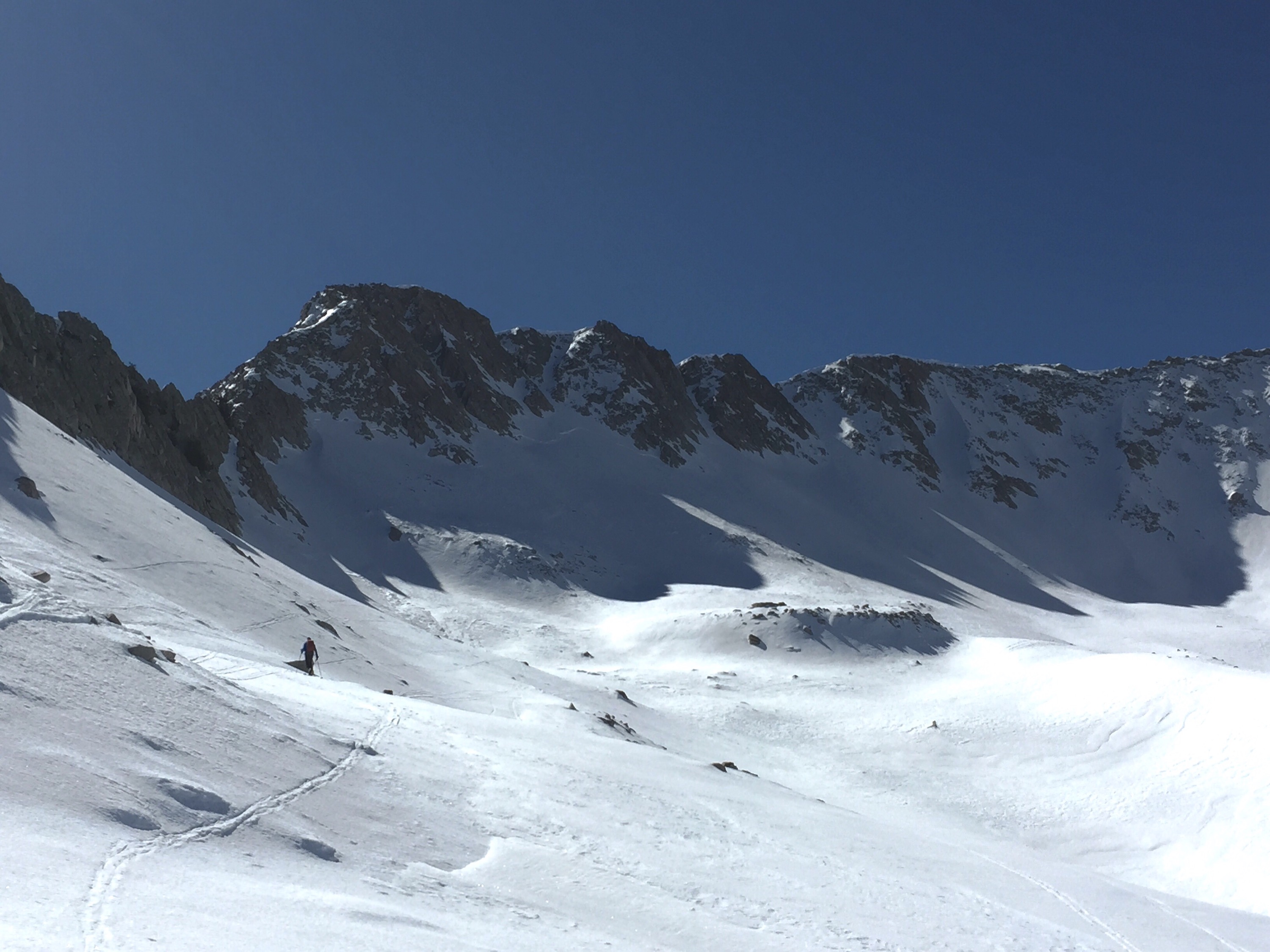
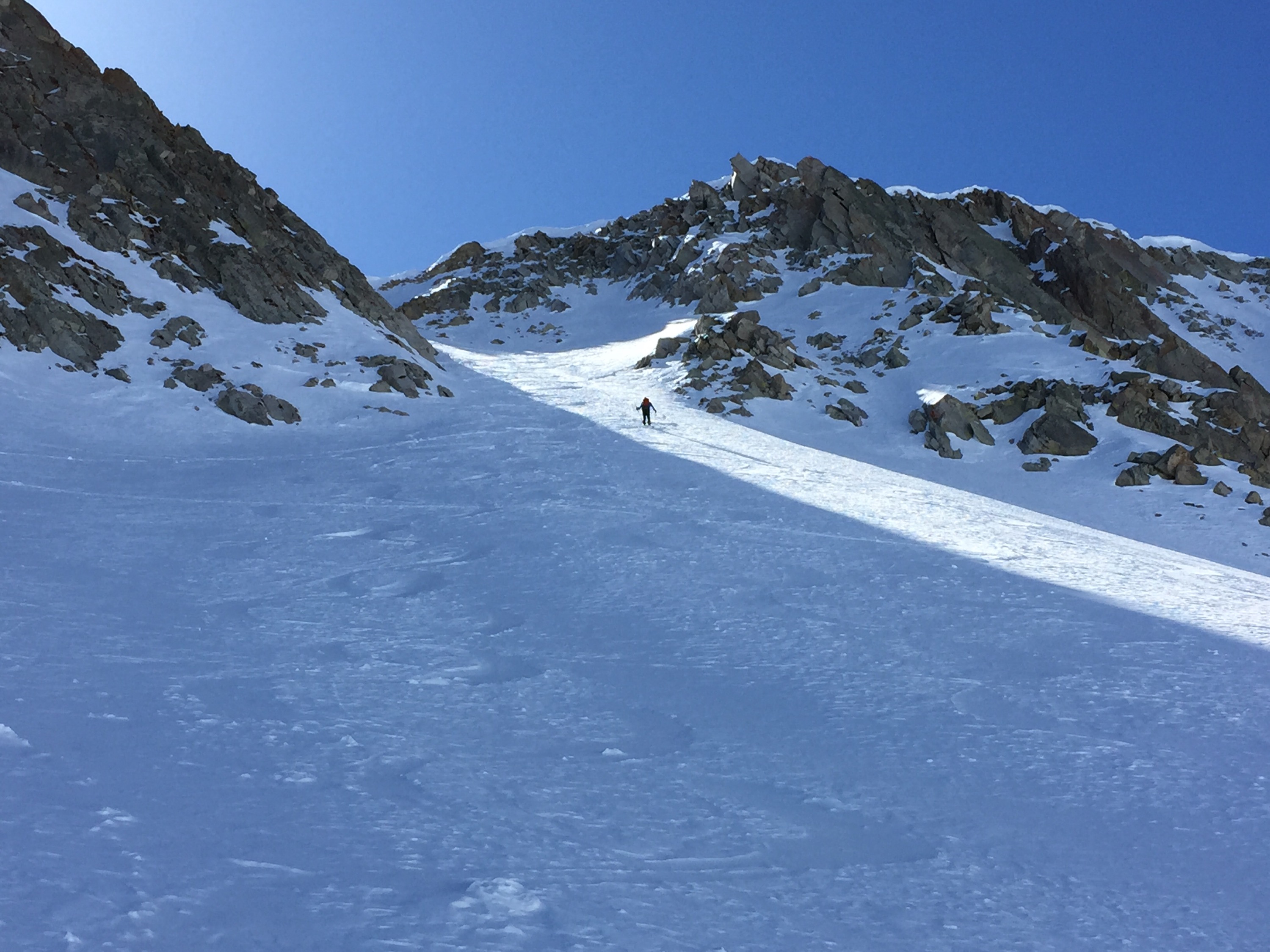
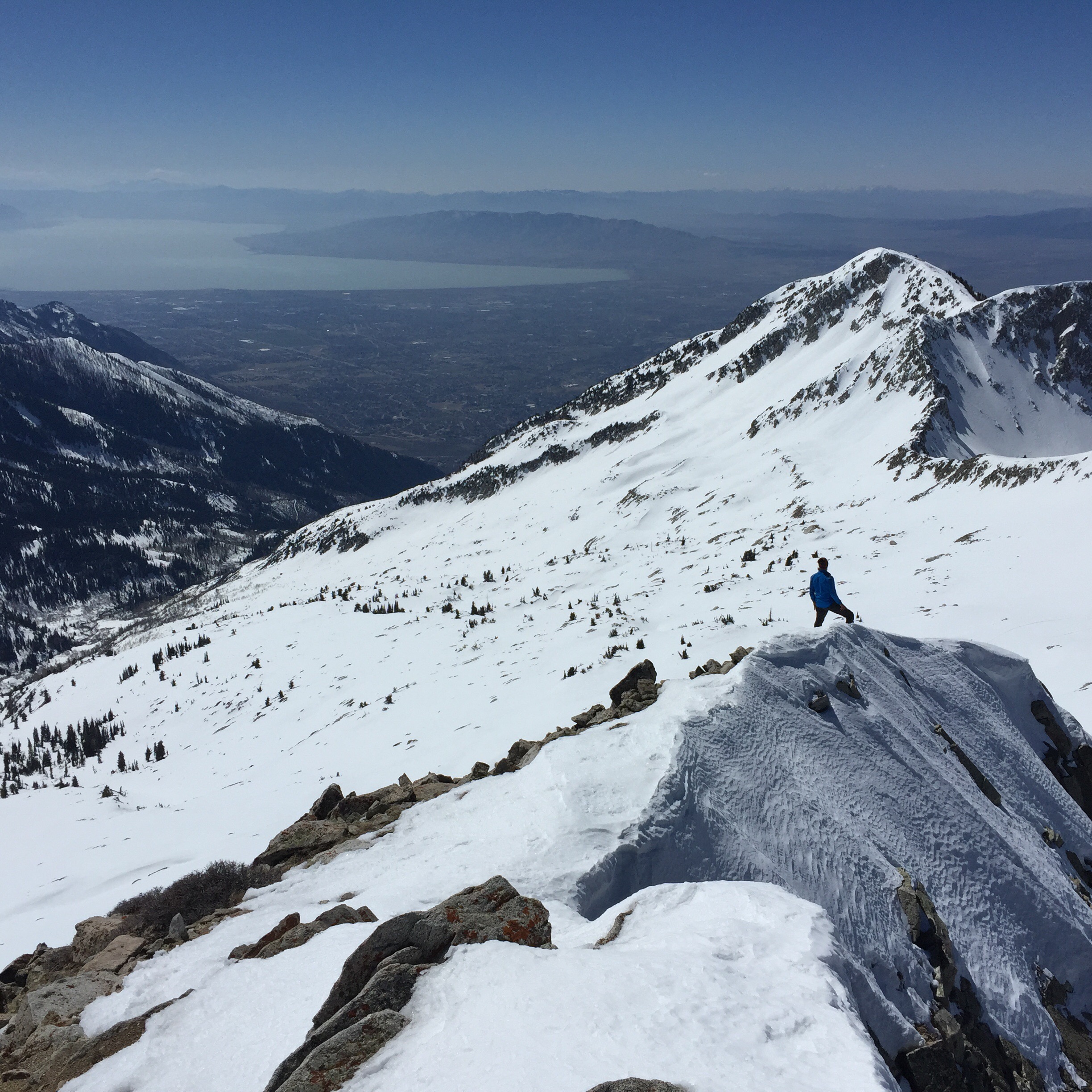
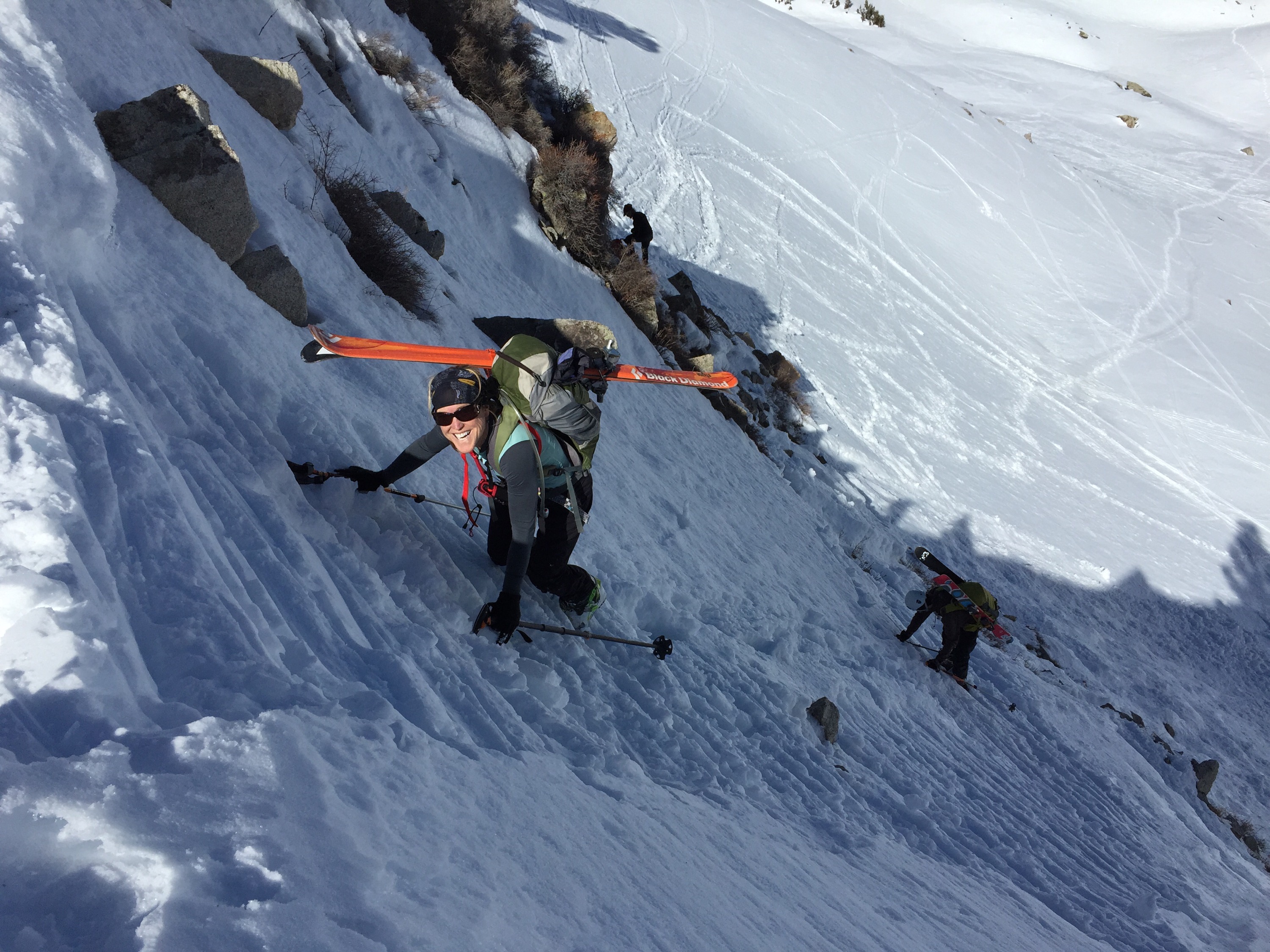
In mid-March (2014), four of us made the ascent up to the top of Pfeifferhorn via slightly route different route than I normally do; that is up Maybird Gulch. This is an 11,000+ foot peak near Snowbird ski resort just east of Salt Lake City Utah. Here is my Strava upload. As I recall, it took us about 4.5 hours from the car to the top.


A New PR on Skis — 10,000′ of Uphill

Strava Data Screen Shot

In December there was a vertical challenge at Sundance Ski Resort. The objective was to do multiple uphill (& downhill) laps on skis until you get in 10,000 ft of vertical gain. I was unable to attend, but decided to do it on my own at Brighton on Feb. 19th, 2015.

I removed the tongues and two additional buckles of from my La Sportiva Spectre boots to save weight. I took my lightest skis which are the carbon fiber G3 101 Synapse (101 mm wide x 180 cm long). I started out at 7:40 a.m. doing laps on the far east side of the resort going up near the Great Western lift (~ 1800 ft). The lifts open at 9:00 so I got a lap and half in before I started getting downhill traffic. Eventually, the ski patrol requested I relocate my efforts to the Wren Hollow run, which I did for the balance of the day. Several times through my workout I stopped at my car or the lodge to resupply food stuffs and fluids. I was only carrying a single 750 ml water bottle and a narrow waist belt. I opted to go without a backpack to save weight.

I ended up doing eight uphill climbs until I hit my goal and then finally skied back to my car for the last time. For the downhill, I specifically stayed on groomed runs so as to not wear out my quads. They actually felt a lot better than most ski races despite doing much more climbing. But, most ski races go down more technical terrain that I did on this day, which takes it toll on my quads, especially for me, as I am such a crummy downhill skier.

My total time was 8:43 with an average speed of 3.2 MPH, topping out at 32 MPH (moving time was 8:02). For the climbs I tried to keep my heart “down” to about 80-85% of my max (in a race, I push it to 90-93%). Towards the end of this effort I was only pushing about 75% due to fatigue. In the future, if I do this again, it should would be nice to have some lighter race skis (65 mm wide x 160 cm long) instead, esp. since I stayed all on easy groomed slopes.

This is the link to my GPS/Strava upload.

My First 24-hour Time-trial Race (2014)

IMG_1889-0.JPG
Teams could ride together and draft if they wanted.


IMG_1885-0.JPG
Willie and his full-faired machine.


IMG_1884-0.JPG
My support man: “JB Harward.”


IMG_1879-0.JPG
The start and finish line.

Most of my cycling is randonneuring/self-supported ultra-distance events. But towards the end of the summer of 2014 I ended up doing some non-rando races, which included LoToJa (206 mile sanctioned road race) and Salt to Saint (420-mile relay race, which I did solo). It was kinda fun doing these events as they are supported, enabling me to travel with less gear and a lighter bike, which translates to faster overall speeds.

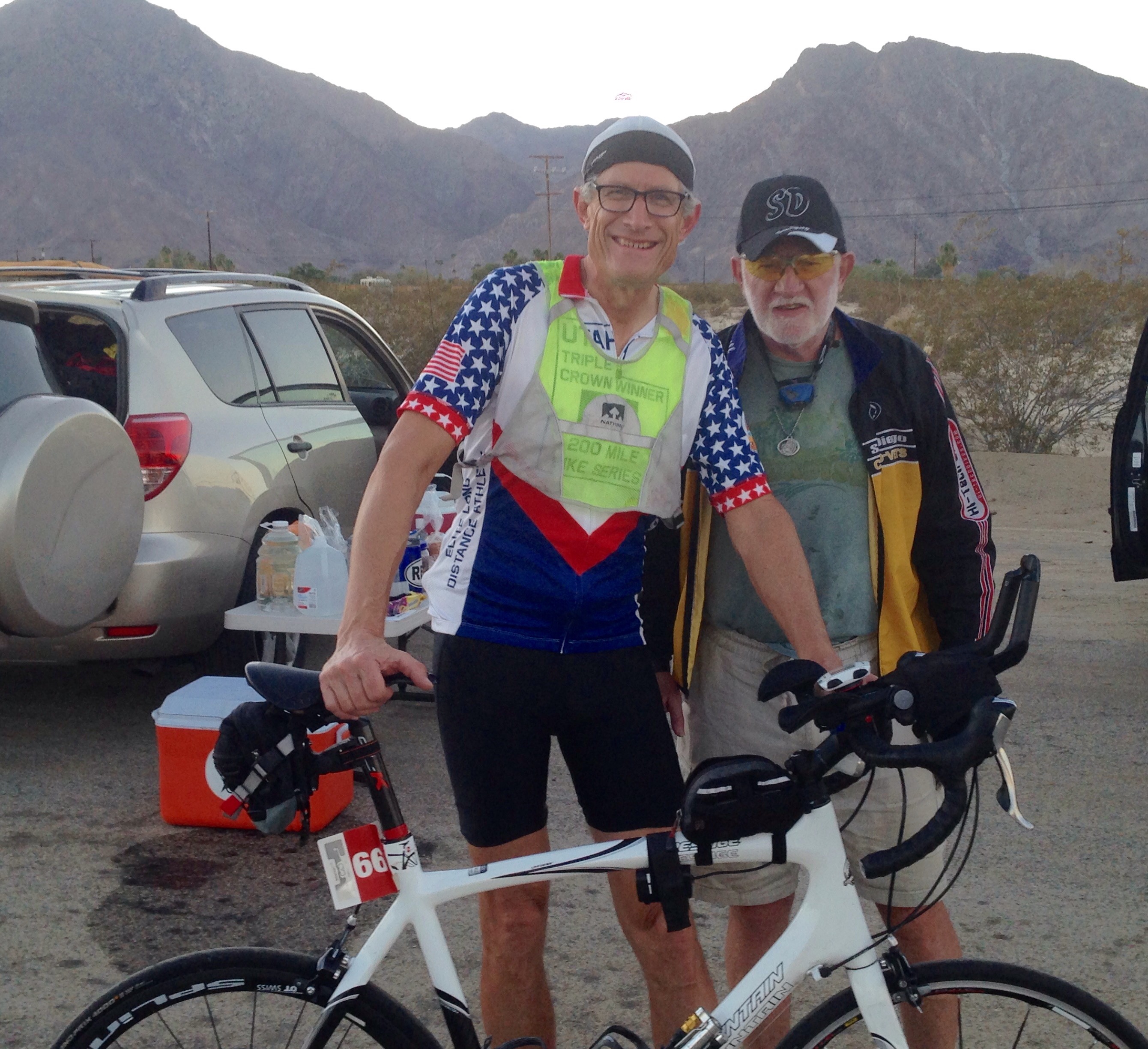
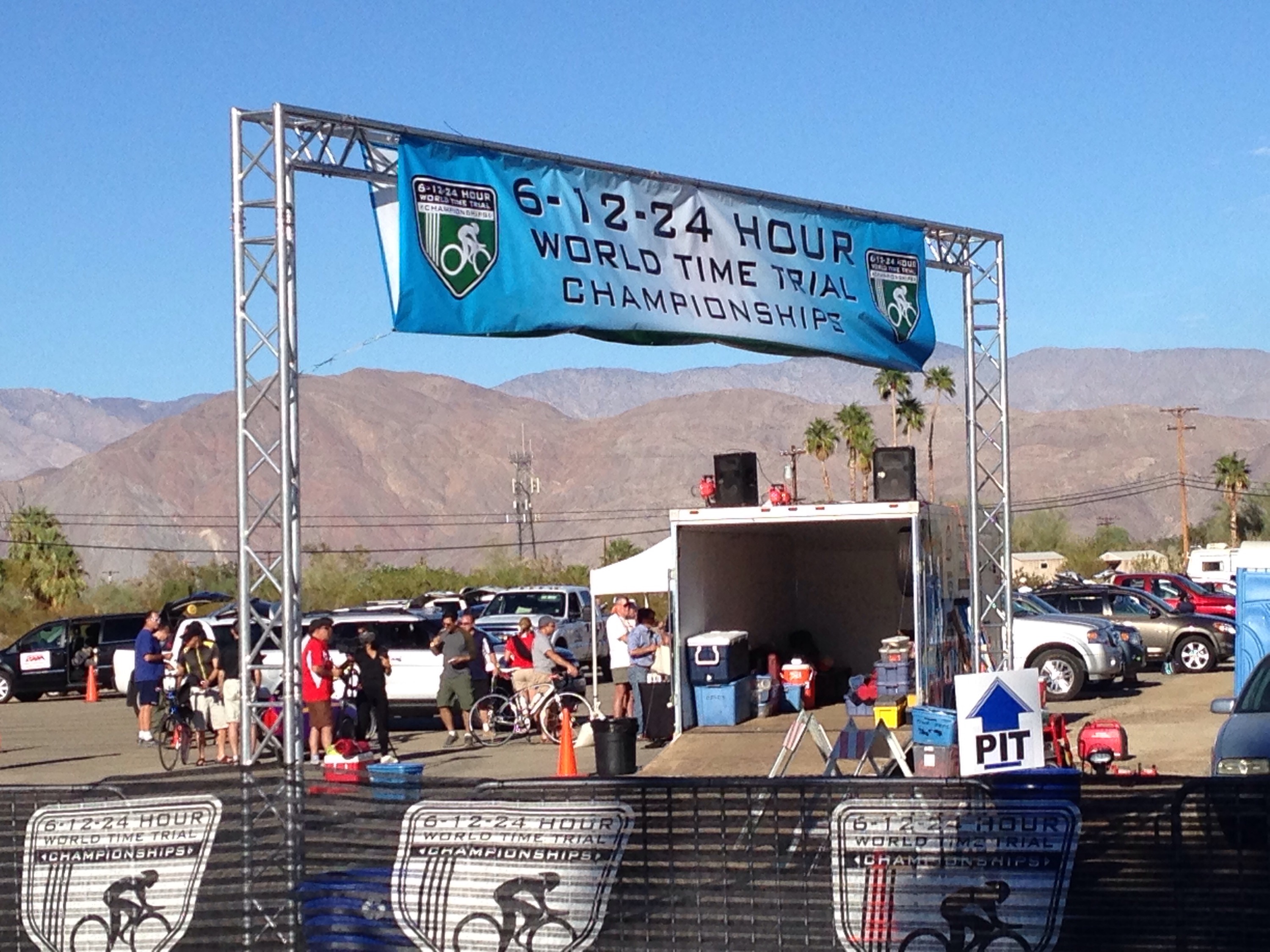
In November of 2014 I participated in my first 24-hour race, which was called the 6-12-24 Hour World Championships. It was a time-trial race where the individual riders could not draft. The objective was to ride as many loops as possible within a given time time period. Everyone started out doing the big loop, which was 18 miles and with about 300 vertical feet. Then, during the last few hours, the organizers switched everyone over to a smaller loop, which was 4.75 mile each.

Next to the start/finish line was a parking lot where everyone provided support “tail gate style” for the duration. Most riders had family members or friends provide support, but one rider, who self-supported, ending up placing 2nd in his category— he just had having everything carefully laid out on a table. Many thanks to my friend JB, which helped keep my bottles filled and food ready. I stopped in only when I ran out of fluids, which was after four or five laps. I stuffed as much nutrition in my jersey pockets and top tube bag as good—at a recent event, I ran out of solid foods before running out of fluid, so I made a point of stocking up here.

My goal was to maintain an average speed of 17 MPH, but at the end of the day, I wasn’t even close, partially due to stiff winds during the last 3 to 5 hours of this event. The event started in the dark, at 6:00 p.m. Friday evening and continued until 6:00 p.m. on Saturday. I used my carbon bike (Rocky Mountain Prestige) with clip-on aerobars (as opposed to my Ti frame). I used the Fizik Kurve Bull saddle, which I had used earlier in the season for some 10 to 12-hour events without issues.

There were five riders in my age group (doing 24-hour). My average speed was only 15.4 MPH, with a total of 361 miles (my Strava link). My moving speed was 16.3 MPH with a top speed of only 30.6 MPH (a rather flat course). That placed me 2nd (60-69) behind the legendary Valerio Zamboni, who logged in some 397 miles. I ended up with 82 minutes off the bike, taking food breaks and switching out clothing—way more than I had hoped. Valerio, by comparison, was off the bike only 38 minutes. On this day, my Fizik saddle starting hurting me (soft tissue, not sit bone problems) about 18 hours in. I had prepared another saddle, already mounted up on a post, in the event I decided to change, but I never took the time to swap them out. Instead, I just kept on suffering, until about 23.5 hours, at which point I had enough, as I was doing a LOT of standing due to the pain. I quit the race with 30 minutes left on the clock. I ended up doing 19 of the main laps and 4 of the shorter laps. The temperature range for this day was about 48 to 75F—perfect cycling temps.

Here is a nice blog report as found on the UltraRaceNews.com site.

I was surprised how many riders were using full-on time-trial bikes instead of a regular road bike with clip-on’s like I had. Many of these same riders do RAAM, but during this event, most do not use TT bikes. I am guessing that is due to all the climbing involved with RAAM. I am interested in doing more of these events and have acquired a used TT bike frame for this purpose next season. I just wish these events weren’t so far to travel as there are none in Utah or neighboring states.