Cycling Jacket Review

Craft Bike Light Jacket

I recently set up a wholesale account with Craft, an apparel company out of Sweden. Aside from their nifty stretchy chamois’ (one, if not the only company with this unique design), I thought I would try their Performance Bike Light Jacket. Bicycling magazine had a decent review on this product a year or so back. This jacket is dubbed as a lightweight, wind protective jacket and not a “rain or insulative” piece of clothing. The Craft website said the product would have a nice tight fit, something I thought was possible only with much heavier “soft shell” jackets. Upon receiving the product I was just amazed at the ingenuity in this product.

1) The back of the sleeves and armpits are constructed with a stretchy mesh that gives the jacket a VERY tight, flap-free fit. When I first put this jacket on and felt the snug fit on the sleeves due to this design feature, I thought “those Swedes are just dang smart, this is a really well-designed jacket.” This also serves as an exit point for perspiration, something I dread on cool off-season rides. Unlike summer rides, I used to really smell after a mere two-hour winter workout as I had to wear enough wind proof layers to stay warm.
2) The fabric is super lightweight so the jackets wads up small to about the size of a baseball, and fits into one of the back pockets of my jersey. The problem with most jackets, is that people tend to leave them at home because they can take up so much space — yet if the one is doing an all-day ride, the weather or temperature can change later in the day or evening, especially on the downhills where wind chill can be a factor.
3) I’m 6-4 and wear 37″ long sleeves. Most jacket sleeves are way too short for me. Especially when I’m hunched over on a road bike. The sleeves on the XL model are adequate and yet the body of the jacket still fits me without a lot of extra play in the torso area.

Look for this product soon on my gear site, B&B Gear. List price $ 99.00.

Why Tall Cyclists (like me) Suck On Climbs

This confirms why sometimes I get blown away on the climbs by cyclists, usually much shorter than I (I’m 6-3). This all has to do with the fabled power to weight ratio (or strength to weight ratio) for those of us that participate in anti-gravity endurance sports like trail running, mountaineering, cycling and backcountry (rando) skiing.
I just reviewed the 2010 photos of the solo winners of a tough 500+ mile race in Utah, called the HooDoo 500 (thinking of entering it this year). Sure enough, the winner (by a landslide) was a short, little thin guy.
From the 1/2/7/2011 issue of RoadBikeRider.com

2. COACH FRED

Why Can’t Climbers Go Faster on the Flats?

Q:  Why is there such a separation between riders who can climb well and those who are strong in time trials or other flat races? I don’t understand why most strong climbers can’t go fast on level roads, or why powerful sprinters suffer so much in the mountains. — Barry M.

Coach Fred Matheny Replies:  It’s simple mathematics, Barry. The answer involves body weight, power output and wind resistance.

On flat roads, speed is primarily restricted by the wind resistance created by the front of a rider’s bike and body.

Big riders in a low racing position don’t have a frontal area drastically different from that of smaller riders. But big riders do tend to generate more power thanks to their larger muscle mass. That’s why time trials and sprints — typically on flat or rolling terrain — generally favor rangy, muscular riders.

However, as soon as the road tilts up, the advantage shifts to smaller cyclists, even if they produce less power.

A rider must fight gravity when going uphill, so climbing requires a favorable power-to-weight ratio. The more watts a rider can produce for his (or her) body weight, the faster that rider can climb.

So here’s the bottom line: To improve climbing, you must either lose weight, increase your sustainable wattage — or do both.

This power-to-weight ratio is so indicative of climbing prowess that some coaches claim they can use it to predict a rider’s success.

They measure the average wattage a rider can produce for the length of a long climb (say, 20 minutes) and divide that figure by his weight in kilograms.

So, a big pro who weighs 85 kg (187 lbs.) and can produce 425 watts for 20 minutes has a power-to-weight ratio of 5.0. (One kilogram equals 2.2 pounds.) But top climbers have a ratio of 6-7 watts-per-kilo.

For comparison, a 60-kg climber (132 lbs.) needs to produce only 360 watts to achieve 6 watts per kilo. But since this diminutive climber pushes almost as much air when riding on the flats as the larger rider, he’ll time trial slower because he produces 65 fewer watts.

(Copyright, used w/o permission)

Rando Roulette in Las Vegas

200K ride with Anthony Blauer from Manti. Rando Roulette Permanent in Las Vegas. This route is nice as it goes to the red rocks on the west and down to Lake Mead on the east. This was first time riding this Permanent. It was designed expressively  so I would have a winter route, thus maintaining my RUSA R-12 status without driving 10 hours to Arizona or 12 hours to S. Calif. (Las Vegas is about a 5.5 to 6 hour drive). Temps were in the 60s. NICE. Some 6500 vert. Slow going day. I hate my speeds in the off season. Little wind. No flats or mechanical. Only my creaky crank. (Need to take it in.)

For February I may be back to Las Vegas and do the other Permanent called Hump to Pahrump that Susan and I co-authored, or perhaps, if it is warm enough, do a ride in St. George.

SPECS: Bike ODO showed 129 miles with a short detour (wrong turn), pedaling time was 8:31 with a total time of 9:47. Average speed of only 15.22 MPH. Too many lights. Out of shape.

Desperado Dual

Desperado Dual 200 mile ride at Panguitch Utah. August 21st, 2010. My third year in a row attending.

I was hoping to break the 12-hour barrier for 200 miles. Last year it took me something like 12 hours and 18 minutes. This year it took longer at 12:28. Rats. Lots of wind on the second half. Anyway here’s some overall notes on the ride.

1. No water at the Jct of US89 and SR20 like last year, but I asked the day ahead and knew that was the case this year, so I tanked up at the previous stop. (The route had the usual head winds going into Panguitch.)
2. The water stop at Panguitch Lake was unmanned most of the time and from what I heard, they ran out of water later in the afternoon. That is REALLY bad.
3. The next stop was placed too early…at the junction of the turn off to Mammoth Creek, instead of in “town.”
4. The Alton stop was OK with water and food, but no cooler with Cokes. No one checked bib numbers to see if everyone really went to Alton. We had timing chips on our helmets, but of course they didn’t read them there. At least one person missed the sign (both on stop sign and on road) and turned left at 89/14 junction, instead of heading down to Alton. Not sure why they bothered with bib numbers as they had chips on helmets.

On the positive side…
1. They gave away Tech T-Shirts, which I personally would rather have than a pin or patch. A hat was also given to finishers.
2. The pasta dinner at the end was nice with table service and strawberry short cake. The metal folding chairs were a pain!
3. They had Heed and decent food at the stops.
4. This year, most of the tables were right on the road side and for me, as I was trying to beat my previous time, made for quick in and outs on some…I just paused with my bike between my legs, grabbed some goodies and kept on going (assuming there were not others there). Despite that, I got a slower time than last year.

2010 Cascade 1200K Randonnée (770 miles in 3-1/2 days)

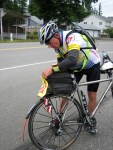
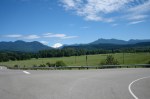
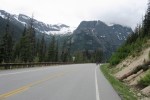
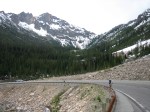
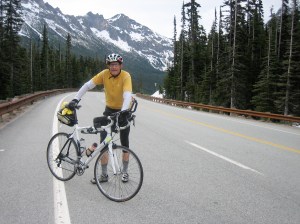
Day 4. Washington Pass, elevation 5477 feet, our high point of the ride.

This randonnee starts and finishes in Monroe, a town at the western base of the Cascades, some 40 miles N.E. of Seattle. The route essentially makes a gigantic counter-clockwise loop around Mount Rainer. This 1200km event is sponsored by one of the largest randonneuring groups in the U.S., the Seattle International Randonneurs or S.I.R. (This randonnee is actually 1240km or 770 miles with about 40 to 43,000 feet of climbing). Some 90+ riders took this challenge from June the 26th through the 30th.

Two years ago I attempted this ride — it was my first 1200K. I had been riding a road bike for less than a year then so I was rather new to the sport of randonneuring.  I dropped out after day three and 600 miles due to saddle sore issues. This event is held every other year, so this year I had a score to settle. We are allowed 93 hours to finish, which is almost four days and three nights. The ride started on 6:00 a.m. on a Saturday and we had to be in by 3:00 a.m. on Wednesday to qualify as a finisher. In the previous two times this event took place, the completion rate was between 68-71%. This time (primarily because of the nicer, not-so-hot weather), the completion rate was closer to 80 or 85% I believe.

Many thanks to the volunteers of S.I.R. for their hours of preparation and tireless service. Oh yeah, thanks also to those unnamed riders who pulled me along during various parts of this ride.

A few stats of the ride:
Day 1, Monroe to Naches: Mileage was 224 with an average moving speed for the day of 16.85 MPH (not taking into account breaks). I left Monroe at 6 a.m. and arrived at 8:35 p.m. Calories consumed during that time was 6365 with a maximum heart rate of 152 BPM (my absolute threshold is 163 on a bike, and 172 on skis). My heart rate during the two hour climb up to White Pass was essentially sustained at 137 BPM (which is the red zone or upper 20% for me) for that period of time.
Day 2, Naches to Quincy: Mileage was 206 with an 2-day accumulated average moving speed of 16.0 MPH. I left the overnight stop at approx. 3:30 a.m. and arrived at 8:49 p.m. I had less climbing that day, but due to the mechanical problem with my bag (as a result of a crash) I lost several hours of time. Calories consumed during that time was 3306 with a maximum heart rate of 132 BPM.
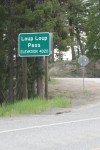
Day 3, Naches to Mazama: Mileage was 180 with an 3-day accumulated average moving speed (to date) of 15.5 MPH. I left the overnight stop at approx. 5:20 a.m. and arrived at 8:13 p.m. Calories consumed during that time was 2703 with a maximum heart rate of 129. My heart rate going up Loup Loup Pass was at a sustained rate of about 115 BPM.
Day 4, Mazama to Monroe: Mileage was 162 with a 4-day accumulated average (final) moving speed of 15.24 MPH. I left the overnight stop at approx. 5:45 a.m. and arrived at the finish at 7:39 p.m. My heart rate monitor watch got switched off as a result of wearing a jacket on the descent so I have no record of that day’s heart stats. I observed that my sustained heart rate while ascending Washington Pass was in the range of 110–115 BPM.
My Total time including riding, resting, sleeping and eating was 85 hours and 39 minutes. My pedaling or moving time (sometimes I coast the downhills which registers as movement with my cyclocomputer) was 51 hours, 17 minutes. My average cadence was 71. My maximum speed was 41.3 MPH. Please note that on the last morning of this brevet, a nice buffet breakfast is provided at Mazama at 5:00 a.m., which is a big deterrent for an early start to grab a good “finishing time.” I choose to stay for the breakfast and use that energy for the long climb that morning.
Notes About Sleep I have found that on 1200k’s I like to set a goal to arrive at each overnight stop by sunset, leaving at whatever time in the morning is needed. Sometimes, that means leaving at 3 or 4 a.m. and perhaps taking a nap along the way. One thing I have learned about 1200k’s…speed = sleep. The faster you can move on the bike, the more sleep you can obtain — this simple fact was a driving force during my spring training. As a solid eight-hour-a-night guy (plus occasional naps…I’m self employed and work at home), sleep was high on my list. The funny thing about this randonneé is that despite arriving at the overnight control by sunset each night, I only slept well one night. The first night, I didn’t have earplugs and it was too hot for me (I finally just got up and started down the road at about 3:30 a.m.). I procured some earplugs for night two (thanks Mike Sturgill) and slept OK in Quincy. Night three in Mazama I was too hot again and slept poorly. Perhaps my heart rate is not dropping down low enough at night and my body remained overheated? (My normal resting rate before climbing out of bed is 42 BPM). I took my heart rate monitor off at night. Next time I think I’ll leave it on and see what it says as I retire. Or next time maybe bring a foam pad and sleep outside where it is cooler?

Do two click-throughs to see the photos enlarged.

The photos are in chronological order, left to right.

All Photos Copyright 2010 Richard Stum

Tombstone 600K Brevet (finally, reaching my goal for a sub-28 hour time!)

Last April, during the Zion 200K brevet, Lonnie “epic” Wolff, my local Utah RBA and rando mentor, introduced me to a site called Cyclos Montagnards. If one completes a brevet series (200, 300, 400 & 600K) within a percentage of the cut off time for each ride, you get listed on their honorary page on the site. Big deal — few people know of this site, right? But somehow it intriguing me and it became a new item to my bucket list. Please note that this concept is not endorsed by RUSA, as it can turn a “ride” into a ”race” and brotherly love and helping fellow riders can go out the window!
Shortly after hearing of this so-called organization or website, I attempted my best time at a 600K (375 mile) at the 2009 Arizona Tombstone ride. To make a long story short, I worked by myself most of the time and ended up with a dismal time of 29:54 which only qualified me for the R80 rating. I had little companionship and lots of wind that year. I was hoping for an sub 28-hour time to get a R70 rating. By the end of the season I had a R70 rating in the other distances, just not a 600K. The Tombstone six only has about 10,000 feet of climbing, but can have nasty winds. It was still by best chance for a fast time, compared to other 600s in the western US.

This year, for the Tombstone 600, I contacted a few riders in advance, to see if we would work together as a team and thus help me  fulfill this goal. We shared some time splits and had a informal “plan” in place. They were Dick Wiss of Boulder Colorado (now with a 2nd home in Ariz.) and Carlton van Leuven of Phoenix. I rode with both of them on the last Ariz. 300K. They climbed better than I, so that worried me though. The morning of the ride, Dick also had a friend, Russ Cummings, also of Arizona, riding with us as well.

Mile 0–43: Little wind at the 0500 start. Typically this is a high wind area. Nice quick trip into the first control. Last year I was already tired after this super-windy section. Lara joined us.
Mile 43–72: Rollers through Saguaro Natl. Park. Stayed together as a group.
Mile 76–103:
Route climbs up and over Mission Road. I was dropped by the guys, but rode with Lara into the next checkpoint and then caught up with the guys. Lara was having leg cramps and stayed back a bit. We were meeting our R70 split times — actually exceeding them by about 30-45 minutes. Starting to feel good about meeting my goal that day.
Mile 103–111: Flat section. Fast paceline. Thanks gentlemen for the help & speed through this section!
Mile 111–128: Route climbs gradually. I couldn’t keep the pace so I had to finally let them go. Slight tail wind. Nice. I unknowingly passed the guys as they stopped for water.
Mile 128–150: Steeper climb up to the Sonoita Plateau. Slight cross wind, but temps were mild and I wasn’t sweating like a dog as I did in 2009. Dick, Russ and Carlton passed me on the climb (of course). Carlton was having issues and dropped back behind me. He finally dropped out completely at Sonoita. Bummer (no pun intended) — Cascade 1200 is looking doubtful this year for him.
Mile 150–160: Up and then down to Elgin for lunch and Susan’s famous wraps.
Mile 160–194: Left Elgin with Dick, Russ and I believe Tom Baker towards the turnaround point of Tombstone. VERY NICE SW tail winds, cruising 25-30 MPH, even on the hills. Forecast for winds to change from the SW to NW. Despite the tail winds, I still got dropped by the guys again. I just can’t climb like Dick and Russ!! Got them again at the Circle K in Tombstone. We were now about an hour ahead of our goal with lots of room on the back end for problems if they arose.
Mile 194–228: The return to Elgin wasn’t bad. At mile 212 it was getting dark so we stopped at the mini-mart and put on clothing and reflective apparel. Saw Lonnie & Joe going the other way towards Tombstone. Cross winds, so we formed an eschelon, taking up the width of the road. Dick and Russ finally accelerated ahead when the winds changed to an almost tail wind. NICE, getting a tail wind BOTH directions for an out and back. I caught up with the group at Elgin “overnight” stop for supper. Enjoyed more of Susan’s good cooking.
Mile 228–232: I left Elgin with Mike Sturgill as Dick and Russ were still getting gear organized for the all-night ride home. Dick’s back was bothering him. My left knee started aching — this was always “someone else’s problem” until now. Time for more Vitamin I (IB Profen).
Mile 232–270 (approx.): We met up with Lasse Bjerga at a border control checkpoint (this is very different than a RUSA checkpoint). His light bracket was broken and the border patrol jury-rigged it on his bars. He was attempting a sub 24-hour time. Most likely would have made it, had he not had issues. He is FAST. He left with Mike and I. We all three bombed the downhills with Mike’s homemade Dynamo Boeing 747-bright light. Mike was having GI problems.
Mile 270–298: Lasse accelerated ahead on a downhill section. Thinking he needed my light, I matched his speed and caught him. Dropped Mike as he was was trying to eat on the run. Sorry Mike, not intentional.
Mile 298–331: Mike, Dick and Russ caught us at mile 298 at the Circle K. Lasse wanted to keep moving, so he and I heading out together. This was a test of patience for Lasse as he is MUCH faster than I, but he needed my light. It was nice to have company on the final climb up Helmet Peak Road. Last year I almost feel sleep on this section. Lasse’s light was dead so he just followed me with a prayer of faith, esp. on the Mission Road descent — many, many potholes.
Mile 331–375: Getting cold, despite being in the valley floor. Lasse and I left the last control (Marana) with the other three behind us somewhere. Only one other rider was ahead of us. Little wind. Perhaps even a tail wind on this section. Too tired to tell. Nice to have company on this last boring section. Lasse stayed with me, despite having enough light to ride alone now. Occasionally he would accelerate up to 25 MPH hoping I could draft behind him. No way, as I could only sustain 17-20 MPH after such a day. We rolled into Wal-Mart at 6:46 a.m. I was most elated to have met (exceeded) my wacky goal. Total time was 25:46. Russ and Dick came in about an hour later. Lasse was DQed by Susan as he rode parts of the ride w/o any lights.

Many thanks to Lara, Dick, Carlton, Mike and Russ for working with me on this ride. Thank you to Susan for the great food and organization. Oh yeah, thanks to Lonnie for introducing me to Cyclos Montagnards, thus giving me another thing to obsess over this past year!

Stats:
Total time: 25:46
Time on bike: 22:37
Time off bike: 3:09
Average speed: 16.60 MPH (not taking into account breaks off the bike)
Maximum speed: 39.7 MPH
Trip distance (my cyclocomputer): 375.64 miles
No flats or mechanical issues.
I forgot my heart monitor chest strap so no data on ME.
Knee was swollen and painful. More Vitamin I and ice for 48 hours.

Products tested on this brevet for use or sell on my cycling gear site DistanceBiker.com:
1. I have a new elongated snack tray for the top tube bag. Inside I put in lightly boiled red potatoes (skins on, heavily salt and peppered & quartered). That sustained me for 3/4s of the ride until I ran out and then I switched to crumpets (they don’t dry out like bread) with PB & honey. This is wonderful compared to “tech food” which I frequently get tired off. I think I’ll order in some of the containers and add them as an another accessory for the popular Kinesis Top Tube Brevet Bag.
2. I mounted a 1/2-once Black Diamond Ion head lamp to my earobars to illuminate my cue sheet. Perfect. The previous LED light was too dim.
3. I tried out a pair of Continental Grand Prix 4-Season tires in 25mm width. I like them and will continue to use them this summer.

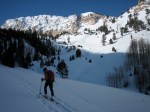
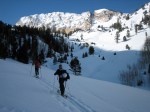
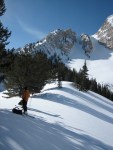
Deseret Peak Ski

Deseret Peak is a little known mountain in the west desert or Stansbury mountains of Utah, just southeast of Tooele and Salt Lake City. It is 11,031 feet in elevation. My rando ski friend, Jim Knight was taking a group of UVU students there for a weekend of backcountry or rando skiing on March the 19th–21st. I joined them on Friday evening and had a great supper prepared by Jim’s wife Liz. The next morning, after a killer breakfast, we heading out to tackle the peak.
2009 Gold Rush 1200K Randonnée

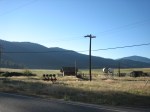
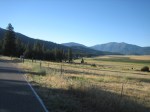
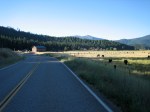
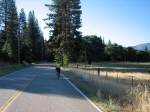
This event happens every four years and is sponsored by the Davis Bike Club, which is located near Sacramento California. It is an out and back 1200K (750 mile) event with 90 hours allowed to finish (almost four days). The route goes up CA-395 and other less traveled highways and roads to Davis Creek near Goose Lake, Oregon.

I finished in just over 79 hours and 12 minutes (90 was the limit) with two primary overnight stops and a brief nap on the last night. This was my second 1200K completion.

2008 Last Chance Randonnée (part 2)

Signs and Scenes of Kansas