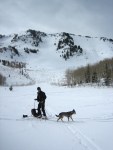
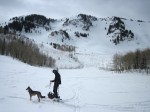
Skiing the west face of Mount Timpanogos

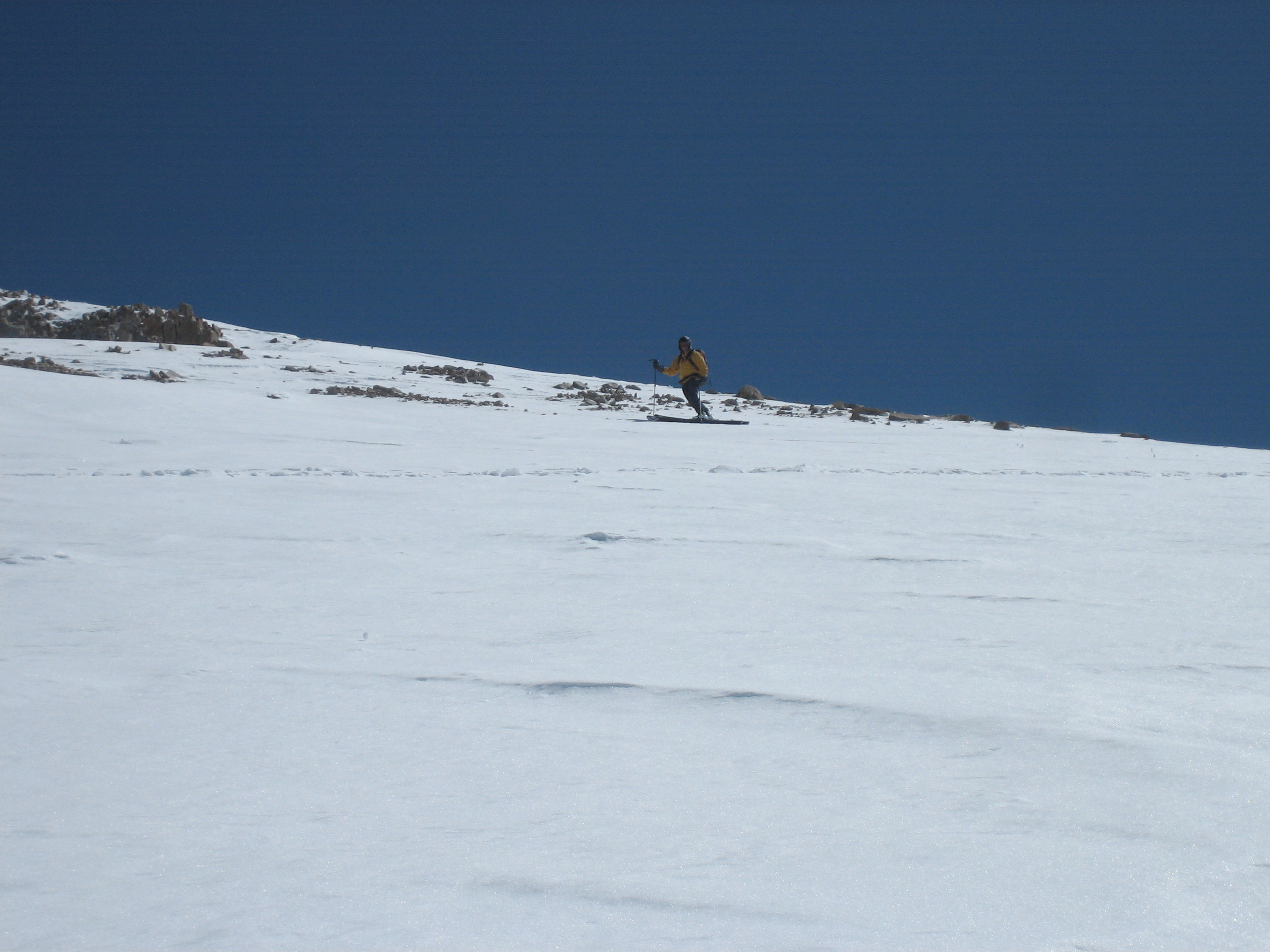
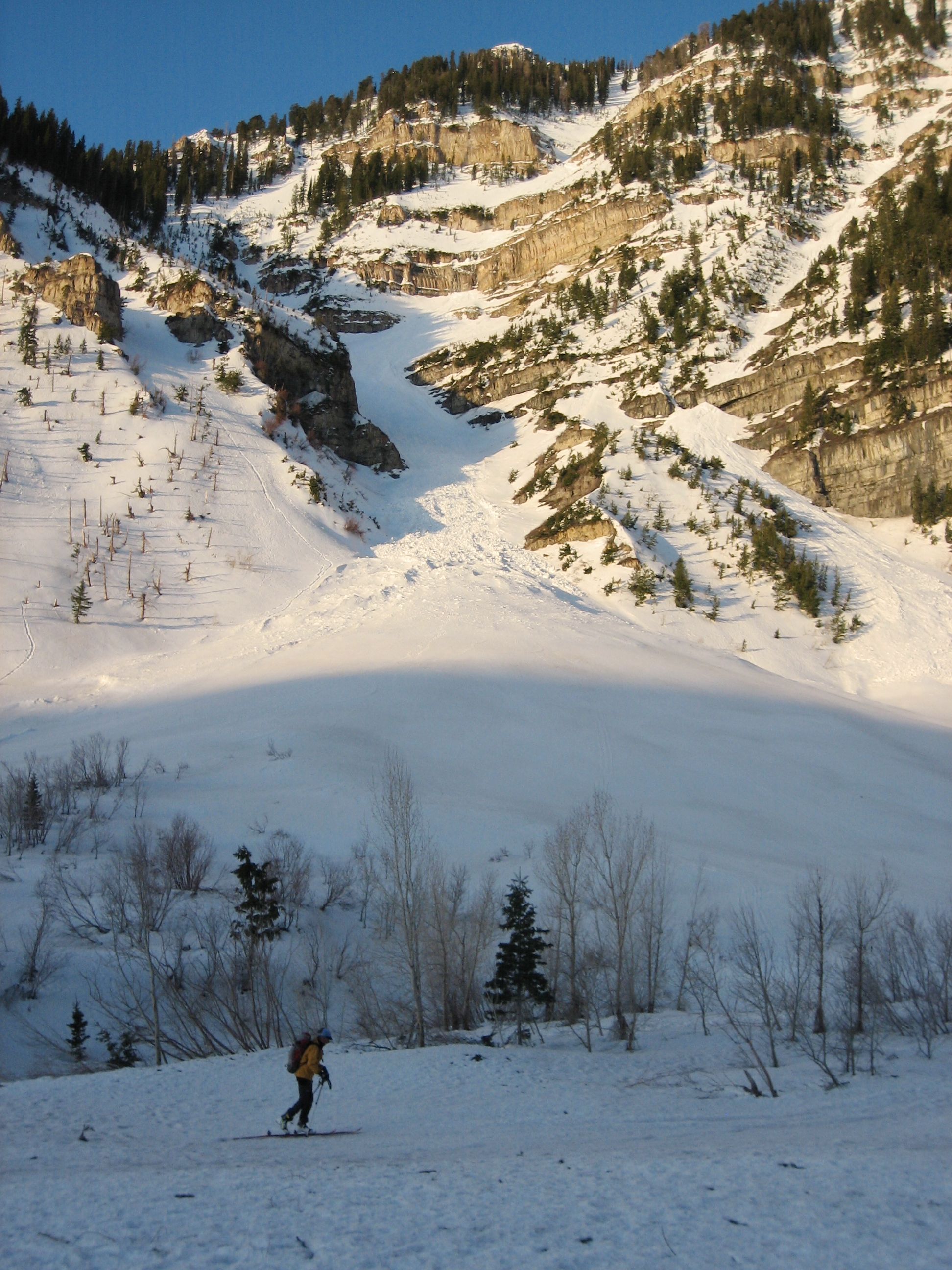
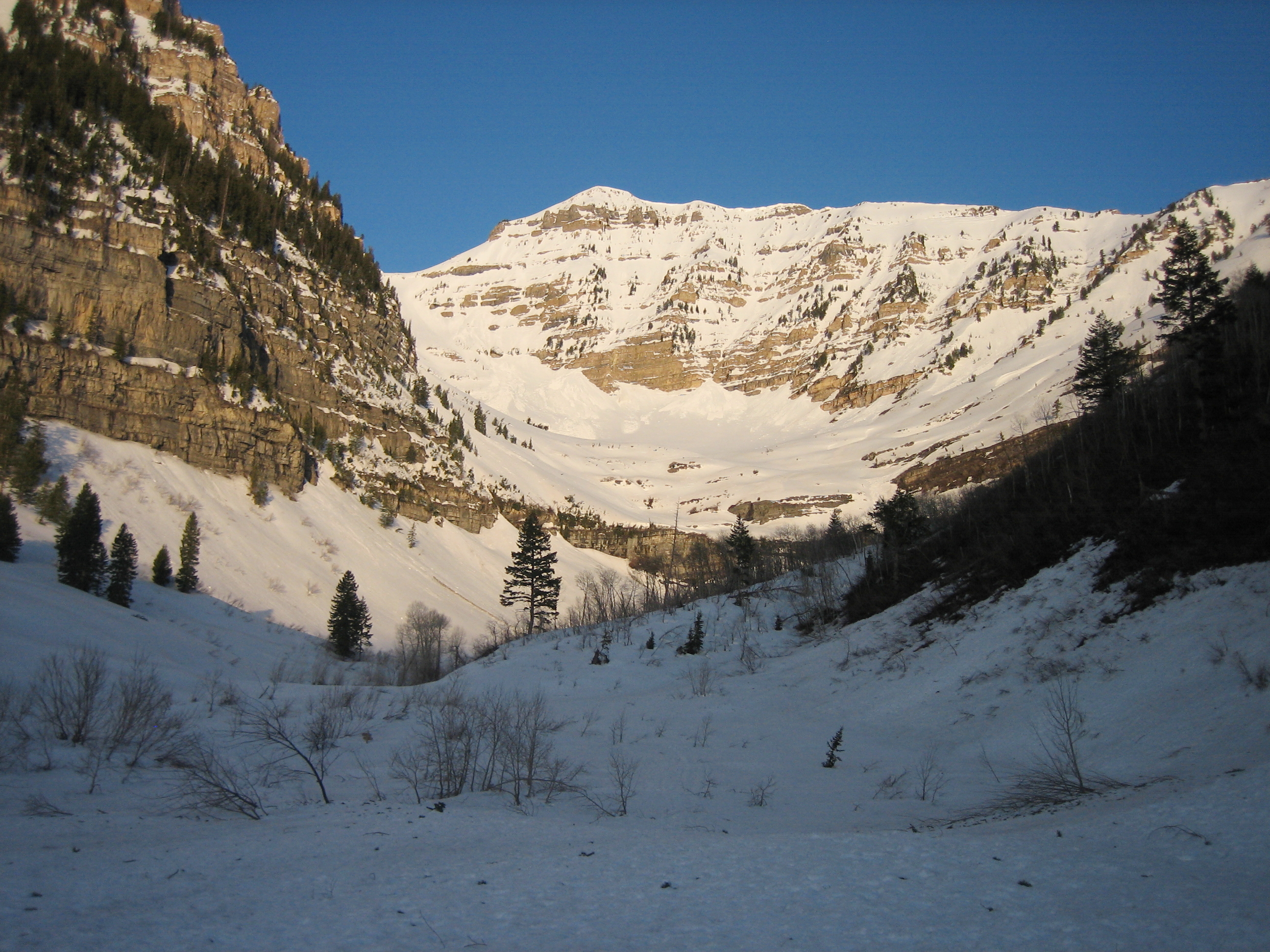
On my bucket list has always been to ski the west face of Mount Timpanogos in Utah. On May the 5th, 2011, a few guys from a local club were hiking (booting) and skiing to the top of the true summit (11,749 ft.) via Everest Ridge or the west face, as I call it. My friend Jim Knight invited me to do an alternate route the same day and ascend to the top of the East Summit via the Aspen Grove/Primose Cirque route (from the northeast side) and then descend the west face. I was worried about the descent route being too steep or icy for my limited ability, but as it turned out the maximum gradient was perhaps only 35 degrees and had many wide-open areas providing stress-free skiing. On previous trips, skiing down Primose Cirque had more challenging terrain and was frequently littered with avalanche debris. It took us about five hours to make the ascent to the southeast summit (approx. 11,722 ft.), arriving at about 11 a.m. We then descending off the windblown and crusty summit bloc and met the others at the main snowfield saddle, which sits above Emerald Lake (totally covered this year). At the saddle, I foolishly dropped a ski and it slid about 800 to 1000 feet down the wrong gully before it luckily came to a stop. I booted down to it and then rejoined the others as they descended.

Davis 400K Brevet

Lonnie “Epic” Wolff, from Cedar City, invited me to join him for the April 30th (2011) Davis California 400K brevet. It was one I had not done before so it sounded like an interesting ride. For a full report, I refer you to his blog post on this ride. Anthony Blauer, my local rando friend, from nearby Manti, also joined us.

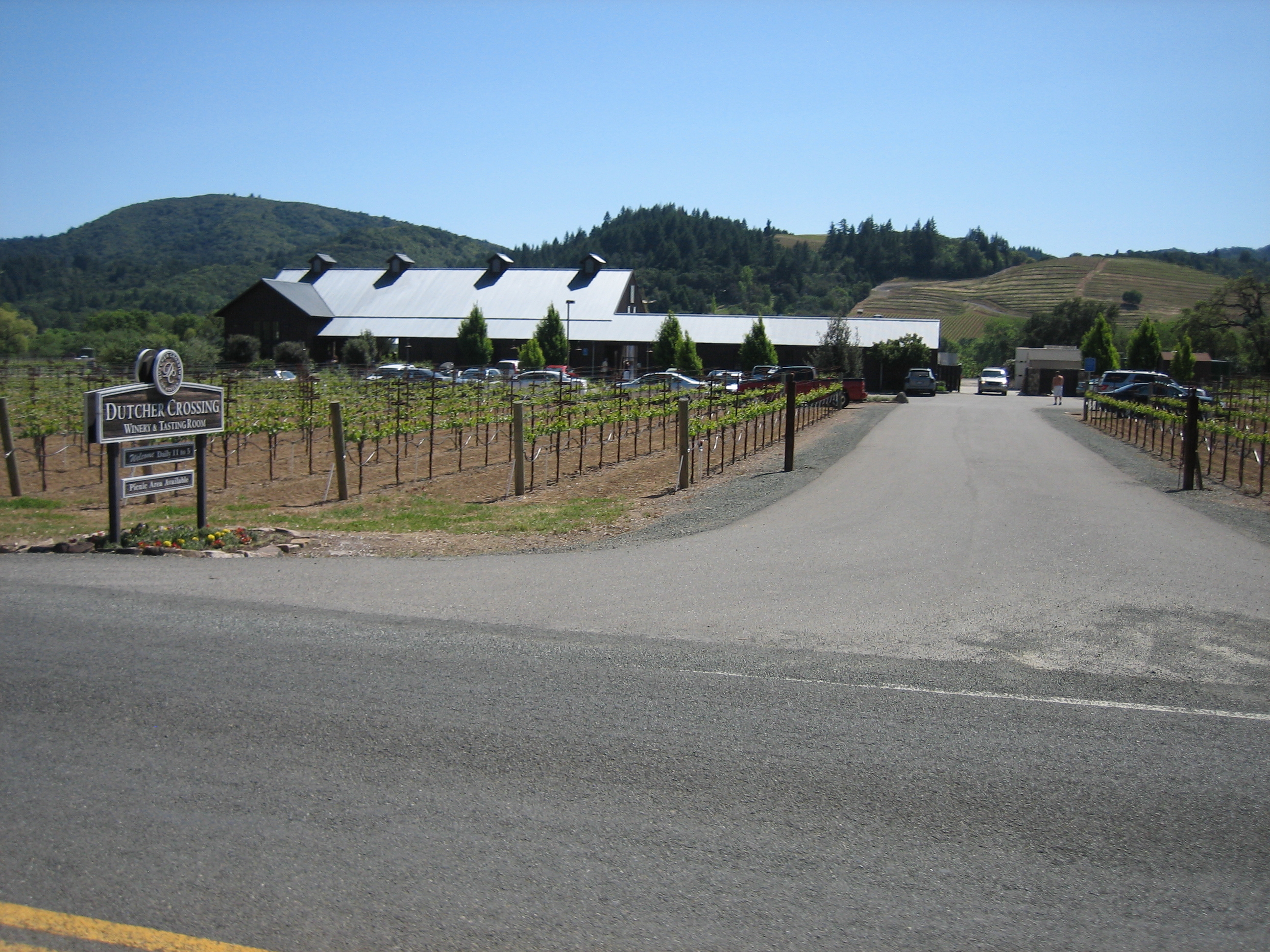
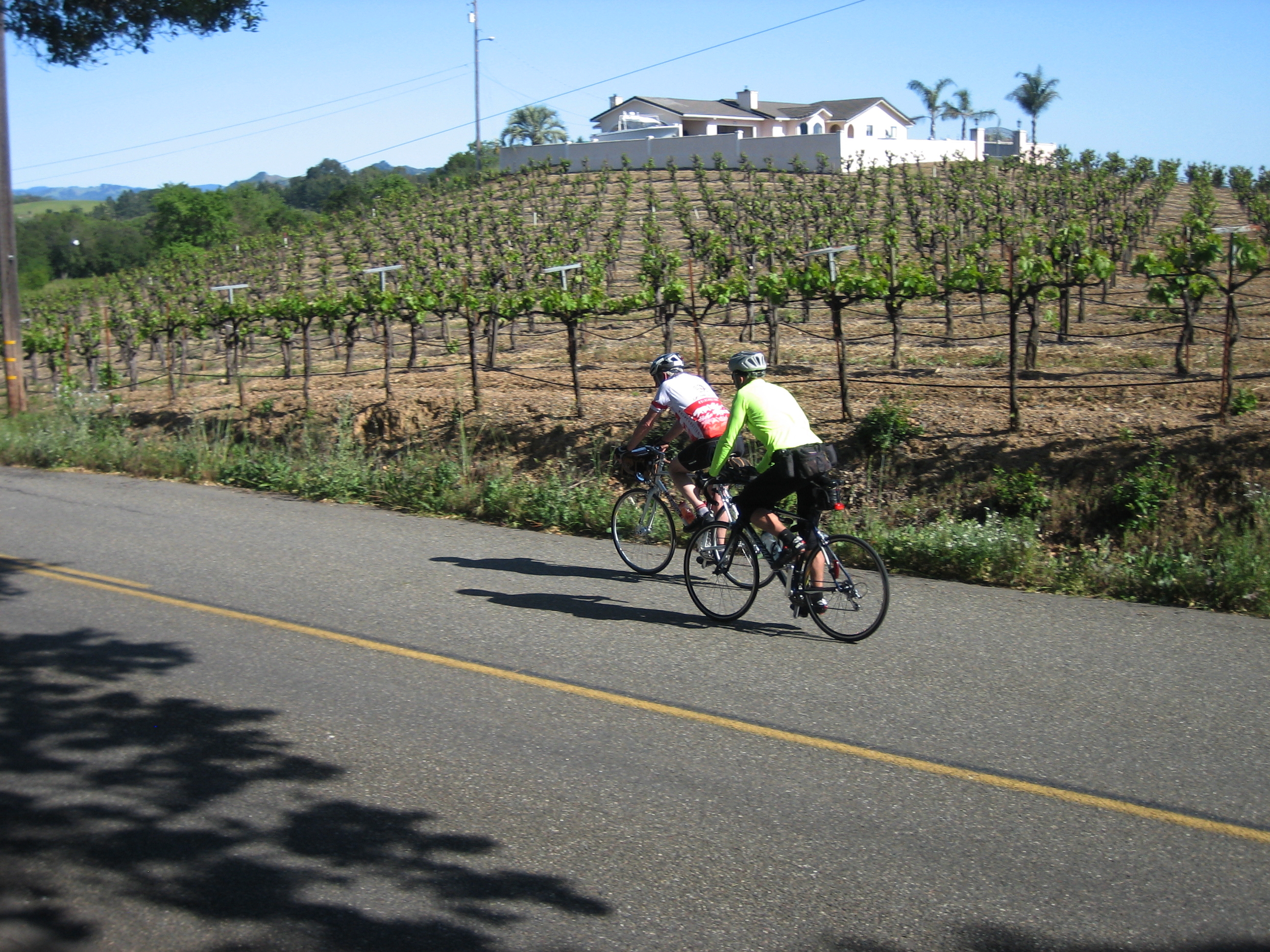
The name of this brevet was rather boring. Perhaps it might be more appropriately called “The Vineyard 400” as it passes by many vineyards in the northern California, Sonoma valley region.

The day started with some pretty stiff winds, but we persevered. They later dissipated. I pushed ahead past Lonnie and Anthony, staying on the wheel of a few tandems, until they fell off the pace on some of the rollers. At that point, I moved along by myself. Finally at the turnaround spot I was rejoined Lonnie and Anthony. (I had a mechanical problem with a cleat and also missed a turn, costing me some time.) Anthony was having some electrolyte depletion issues, along with a painful knee problem he has struggled with all season. We proceeded together during the second half and we finished just within our goal of 20 hours at 19:55!

2011 Grand Canyon 600K

Quick post. Busy week. I didn’t take a camera as I was paranoid about the weight and my point and shoot camera has had some battery issues as of late anyway.

I needed a qualifying ride to get into the Colorado High Country 1200 in July of 2011, so I decided on doing a brevet that is only offered every 3 or 4 years and was a “nearby” location. That was the Grand Canyon 600K. 345 miles and some 20,000 of climbing (yikes on the climbing!). June 3-4th, 2011, starting in Flagstaff.

The ride from Flagstaff to the Grand Canyon went OK, although it was 30F on the first climb, but with fresh legs and extra clothing it went by quickly. The wind worked in our favor getting to the Park. 25MPH on some gradual uphill sections. The temps in the Park were nice, about 65-75F. As a photographer, the Grand Canyon is at it’s worst this time of day (mid-day) as the shadows were flat, but I still enjoyed the views from time to time, although I stopped little at any overlooks. The unexpected rollers encountered from the far west end (Hermit’s Rest) to the east end, at Desert View (only 32 miles), about did me in. I was VERY dehydrated upon arrival as two water bottles was not quite enough— or perhaps I just didn’t hydrate enough at Hermit’s Rest as I did have a light lunch and typically eating can cause dehydration if one is not careful.

The forecast for most of the weekend was for 15-20 steady winds out of the SW, gusting to 30MPH. During the Saturday afternoon portion of the ride, after leaving the Grand Canyon, I experienced major cross winds as I dropped from the South Rim of the park down to the town of Cameron on US89. And then from Cameron climbing south some 2800 feet to Flagstaff it started out very hot, about 100F. It took me some 6.5 hours, from 3:00 p.m. to 9:30 p.m., to travel this “short” section of 54 miles due the heat and the severe winds, which were a mixture of “head” and “cross” winds. I was riding alone and kept stalling at the c-stores so some other riders might join me and hopefully work together to beat the wind. Finally a group of four came along and it was nice to have the company, but because of the slight cross wind direction, it was difficult to draft for long. This was a very long section and was everything the weatherman forecasted and everything I had imagined it would be.

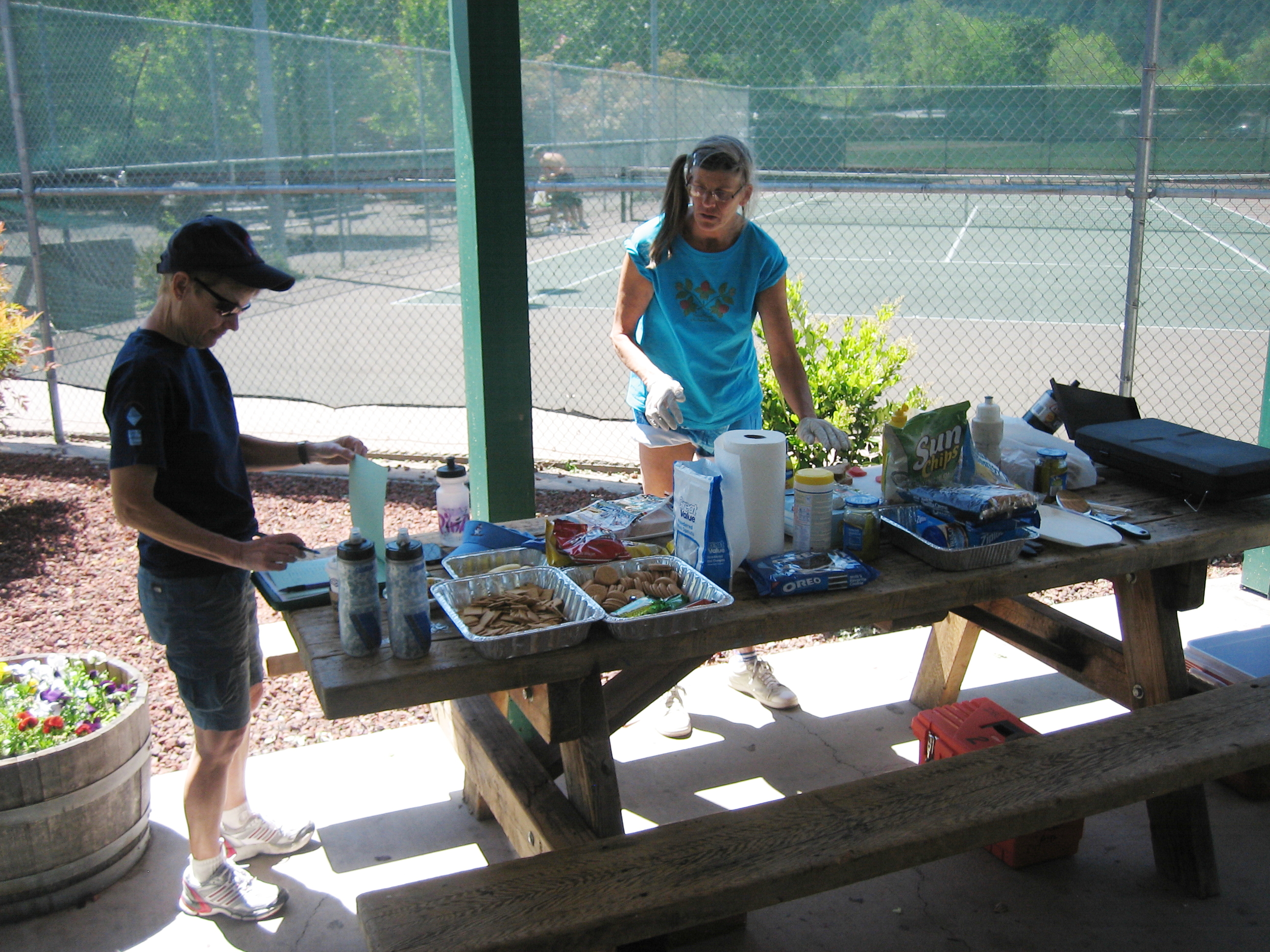
Upon arriving back in Flagstaff I got a great supper, courtesy of the RBA, Susan Plonsky (where does she get all those killer recipes?). At this point, several riders had already bailed out, but I needed to push on. Mike, Don and I proceeded on in the dark to our motel in Camp Verde, some 63 miles of downhill. It was nice to ride this night section with Mike as he knows the route well. We arrived at our motel at 3 a.m., checked into our rooms and promptly went to sleep. Later that morning, as previously arranged, another randonneur, Ryan Watson from N.M., arrived and slept in the other bed in my motel room. After eating breakfast at the motel, I finally got back on the road at about 9 a.m., in an effort beat the heat of this low elevation city of Arizona. Ryan left an hour or two later and was the last finisher of the day. Ahead was a near-continuous 4,200-foot climb and a ton rollers after that, before arriving to the finish, which was at 6:40 p.m. on Sunday evening. Many thanks for the help of Susan’s helper, Lara, on this long climb with water and lunch stops. Impossible without her help as the services were nil on this section.

Check out Mike Sturgill’s link for pix. On a Facebook page, Mike, a seasoned randonneur, said this was his most difficult 600K to date. Of the 12 starters, 6 finished.

Side note. I hope this isn’t TMI (too much information) for some of you!
For the past year or so I have been battling an on-again, off-again saddle sore on my right sit bone area. (Although on the recent Davis 400K it didn’t bug me much and I thought I had this problem behind me.) A week before this ride, after it flared up again on a local training ride, I finally went to a non-cycling savy general-purpose MD (that is all there is in our rural town) and he put me on a RX anti-fungal cream, which I was supposed to use for two weeks. For this ride I used a copious amount of this cream for my chamois creme on the first day. It didn’t work well as a chamois creme and I barely finished the ride — only after wearing two pair of shorts and applying ton of Lantispetic on the second day. I was ready to quit after day one, but I really needed this ride to get into CHC1200 in July — the qualifying deadline was that weekend, so I pushed on. Live and learn. I later visited with a dermatologist, and according to him, mostly likely, this problem was not a fungus-related anyway and most likely caused from chafing!

2011 Training Notes

April 23—
20 mile solo time trial, MP>Moroni>Chester Loop (about 500 vert. gain).
Cross bike and no aerobars.
Time: 1:03:57 after a warm up
Max HR: 162
Average HR: 140
Time spent in each zone: 87%/13%/0%

HR Zones (max set for 165 on Sigma PC15) = Power Zone (100-80%) 165-131, Fitness Zone (80-60%?) 132-115, Health Zone (60-0%) 91-0.

June 4-5th—
Grand Canyon 600K
First climb of the day, heart sustained at 150, 140 pushing on flats
Later in day, HR on climbs: 140
Second day, max. HR on climbs: 115 & maybe 120
Training time: 26:58?
Total Calories: 10,638?
Total measured HR time: 85:48
Max HR: 154
Average HR: 110
Time spent in each zone: 15%/21%/49%
Riding time: 26:21
Aver speed: 14:33
Max speed: 48.10
Distance: 377.9

2011 Heart of Utah 300K Report

On May the 14th, we held the second in a series of two brevets for the new Randonneurs USA region in the Salt Lake area. This route was a brand new design and not merely a modification of an existing “Permanent” route (click for info on what a Permanent is). I wanted to incorporate a wide variety of terrain and so I included in this route an old mining town (Eureka), one continuous 2,000-foot climb, the Utah west desert, which contains the “Little Sahara” sand dunes, my stomping grounds in the hanging valley of Sanpete County near Mount Nebo.

The day before the brevet I got an e-mail from Jim Halay that he was down and out with a cold and sinus infection. That was bad news as I knew he needed this ride as a qualifier for the Colorado 1200K in July.

The morning of the ride started with me picking up my local cycling friend, JB Harward, at 4:15 a.m. He was going to drive the first half of the route and provide support at a few key checkpoints along the way. This would allow me ride the course with everyone else. Because of this, I was a little apprehensive, as this didn’t give me a chance to “pre-ride” the route, but since most of the route was the area where I train, I felt this would be safe bet. Scott was the first to arrive at the Maverik convenience store in Santaquin. He has done a number of tough rides including RANATAD, the Nevada Death Ride and LOTOJA, but this was his first brevet. I provided him his brevet card and explained how the system works. Later Don and Mary Margaret Williams arrived with their tandem — they are both officers in BCC, our sponsoring club. At a 6:03, with an ambient temperature of about 51F, everyone was just departing as Joseph arrived. He indicated he was not feeling well, but would gave it shot anyway. We went ahead and left without him and JB stayed back to help get ready him for the day. As a younger rider, I was expecting that he would catch us on the 2000-foot climb to the town of Eureka, which started only 10 miles into the day.

Scott and I started off together without lights as it was just light enough to safely bike without a headlight. I did turn on my rear blinkie, just to be on the safe side. The sky was full of clouds but the forecast was for only a 20% chance of showers. That usually that means clear skies in the morning and clouds accumulating later in the day. Despite the cloud cover, I still left my rain gear in my drop bag and wore only a wind jacket. The Williams did the same. Scott and I made that initial climb in good time and went over the top without stopping, anticipating the long, but gradual descent toward the first checkpoint (well, actually our 2nd checkpoint, as the start is considered #1), which was at a highway rest stop at mile 32 of the brevet. JB was there with fluids and snacks. We never did see the others as I had expected. We later learned that Joseph, upon arriving at the highway checkpoint, was still feeling lousy, and had decided to call it quits. He called his wife for a ride back. This was only his second brevet and I was hoping he would have been able to complete this distance.

We continued on our route, battling the wind out in the open desert. We alternating drafting each other along this section of the ride. We finally stopped in Nephi at the c-store checkpoint at mile 62 to replace lost fluids and nutrition. The temperature was a nice 70F. We both shed a few layers and then headed up Salt Creek Canyon along the shoulder of 11,800-foot Mt. Nebo. Scott, despite not having done any long rides yet this season, was a better climber than I, and politely backed off his pace a little so we could work together as we had a slight breeze coming down the canyon. Upon arriving at the top of this climb the temperature was much cooler, but we proceeded without adding layers. We had a stiff head wind during the next 12-15 miles of the route as we headed south along the western edge of Sanpete County. Across the valley, we could see some very unstable weather as it was raining on the east side. That same storm moved across to the western side of the valley and engulfed the Williams, who only had their wind jackets as their rain gear was in their drop bag, not too far away.

We arrived at the Spring City checkpoint (mile 95) at 12:43 and JB was there to greet us with lunch and gave us a report on how the others were doing. I swapped out my wind jacket for a rain jacket, grabbed some additional food items and we headed south towards Gunnison, our next checkpoint. That would be the last outside support we would receive on the brevet.

With a tail wind, we made good time, alternating drafting each other and riding single file down Highway 89. At one point, we hit 42 MPH on a not-so-steep incline. It felt good as were finally making good time. My thought this whole time was, if we have a tail wind now, that only means a head wind on the long and straight route back to the start. As it turned out, after making a U-turn in Gunnison we still had a tailwind. How could we be so lucky? But that tail wind was just the front edge of a nasty thunderstorm that hit us about half way between Gunnison and Levan. This is an area of the ride there are no services and very few houses or structures. I paused and put on my rain jacket and helmet cover as the wind shifted to a cross wind and was blowing rain and hail horizontally. Scott only had a wind jacket and I was worried that if the rain continued that it would soak through. Both of us had only short-fingered gloves and neither of us had toe warmers. The temperature was 49F, or much less, if you factor in the wind chill. I did not have on my knee warmers, but didn’t want to hassle sitting down and putting them on. We continued on our way, traveling somewhat apart from each other during this wet part of the day (drafting doesn’t work with fenderless bikes and cross winds). Fortunately there was a decent shoulder on the highway, so we were able to ride on the outside of the rumble strips. I worry about the impaired visibility of motorists during such weather. At 5 p.m. we finally arrived in Levan (mile 158) and Scott, who was riding ahead of me, stopped at a convenience store. He was very cold and wet and indicated he was ready to throw in the towel. He mentioned that as a post-cancer survivor, the nerves in his hands and toes were now less effective, which made them very sensitive to the cold. Despite being inside a building and out of the wind, his whole upper body was shivering. I could see he was not kidding about getting cold easily. As it turns out, he had family in Nephi, which was only 9 miles away, and he called for ride. After his ride arrived, I continued on my way. At that point, the storm had passed and there was some blue sky to the southeast.

Meanwhile, the Williams had just left Manti, at mile 113, and saw the storm coming. They backtracked and retreated into a pizza parlor enjoying hot food, while watching the storm come and go. They spent nearly an hour there.

I finished the route alone at 7:27 p.m. with plenty of daylight left (that is usually my goal and reason for hurrying on 300Ks — to make the ride an “all in daylight” event). The Williams arrived later in the evening, with reflective clothing and lights and a pleasant ambient temperatures of 53F. My camera battery died, otherwise I would have a few shots of them at the finish.

Many thanks to JB for providing support on this brevet. I look forward to many more brevets in the future along the Wasatch front. The support of the Mary Margaret and Don in sponsoring these brevets is also appreciated.

My personal stats from this ride: distance according to my computer: 189.2 miles, cycling time: 11:19, total time was 13:27, average speed: 16.7 MPH, max. speed 45 MPH, average cadence: 82.

Leg Length Inequality


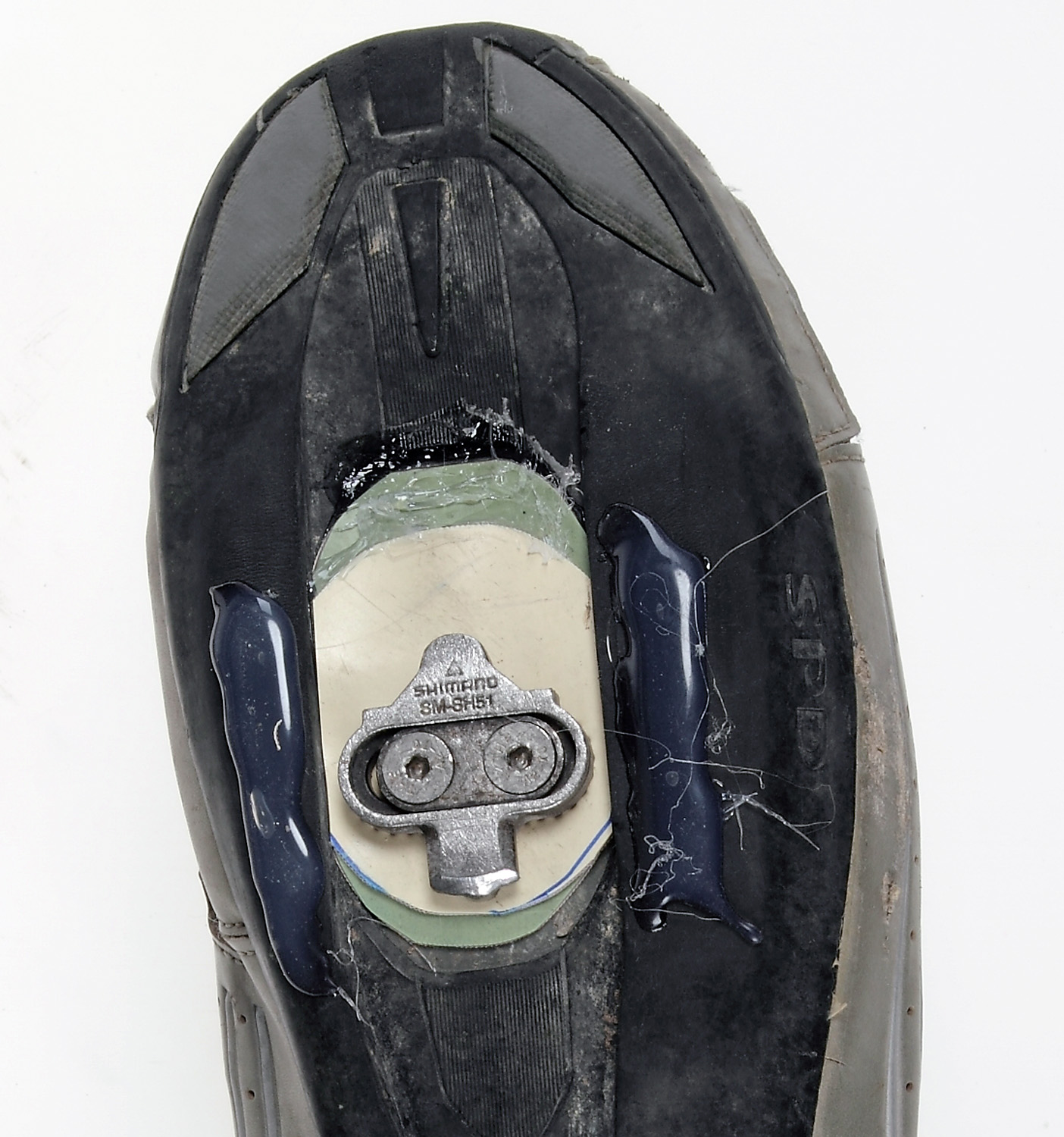
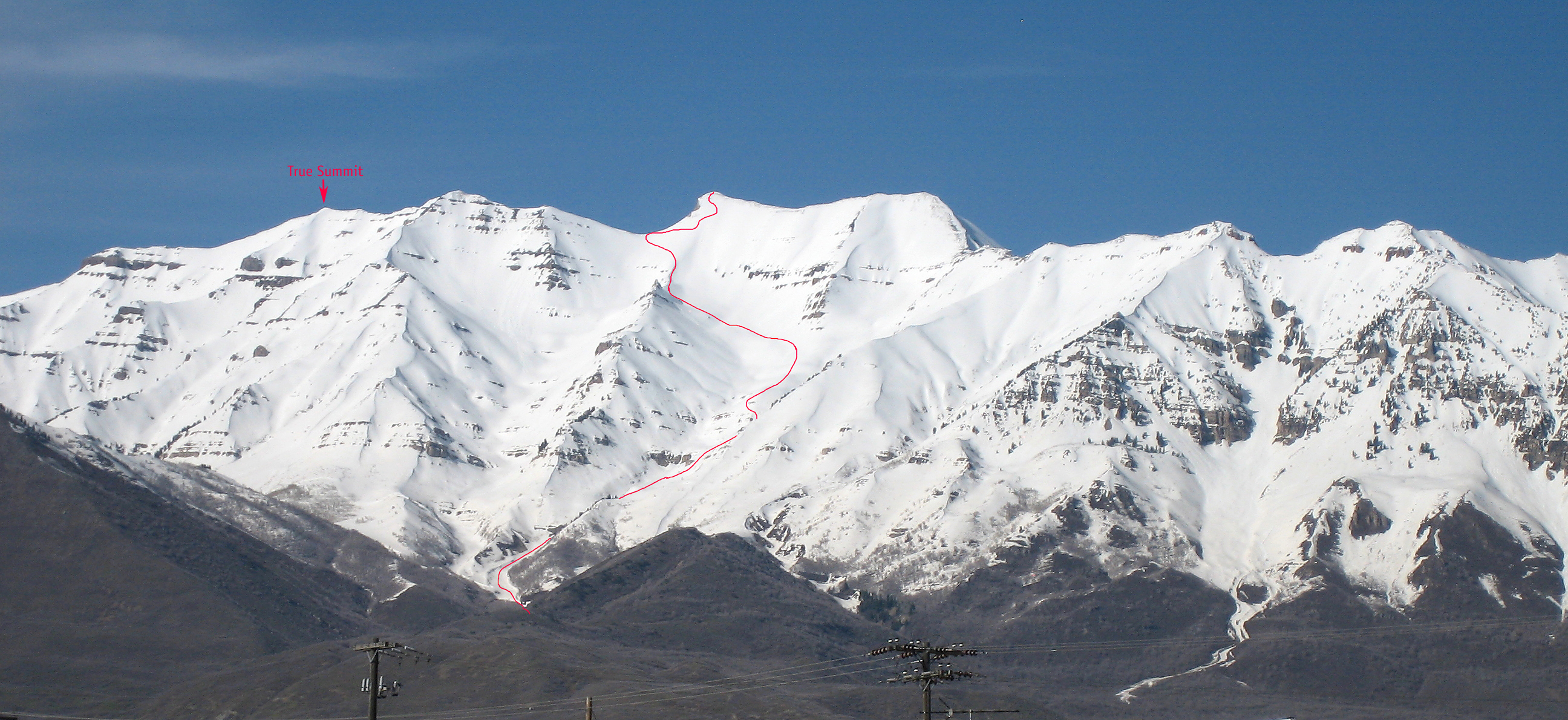
Homemade shim for my MTB cleats on my Shimano “Touring” shoe. I also put strips of hot glue on the side to elevate the sole of the shoe.

During the 2010 cycling season, while trying to find the ultimate saddle for cycling, I constantly had chafing issues, but ONLY on my right side, just forward of my sit bone. After reading Pruitt’s Complete Medical Guide for Cyclists about leg length inequality (p. 69), I had my legs measured. I went to a trusted friend, who is physical therapist. Using a tape measure he determined that my left leg was 10 to 15mm  (1/4 to 3/8″) shorter than my right leg. That seemed to make sense, as my left ankle is my “bad” ankle that has suffered a major break in a mountaineering accident (1984) and has had subsequent surgeries, including a bone graft to build up the length of the leg. But would a shorter left leg contribute to soreness on my right side? Weird.
Since then, I have shimmed up my left shoe. I first used  a custom orthitcs in my left shoe only, which gives me a little more lift than the stock insole which I have in my right shoe. Initially I used a couple of sheets of HDPE (plastic), but the cleat kept rotating loose, so now I have placed two layers of 1.5 mm semi-firm rubber there (used on drafting tables as cutting pads). Pruitt suggested that you shim up only half the distance of your LLI and then, only if your LLI is more than 3mm.

Time will tell. Meanwhile, I am in the midst of testing various saddles, to it may be hard to tell if this made much difference.

2011 Willard Bay & Beyond 200K Brevet Report

This spring has been unseasonably cool with tons of precipitation. Consequently, for many of us, it has been difficult to get many training miles in. The local mountains have a snowpack of 130 to 150% above normal. So I was worried about having our first brevet in weather that was not cycling friendly. I was greatly relieved to finally see a decent forecast for the weekend. The forecast was partly cloudy with a forecasted high in the mid 60s. This was a nice change. I arrived in the parking lot at 7:50 a.m. Shortly thereafter Richard Randall arrived with the intention of doing the 100-mile ride. I quickly learned that this was no ordinary mortal, rather this was THE Grizz — a guy who had ran the grueling Wasatch 100 trail run some 10+ times (that is 100 miles, NOT 100 km). I quickly convinced him that he needed to upgrade to the slightly longer brevet length ride, instead of the “ordinary” 100-mile ride. He said he would upgrade, assuming he could wear his iPod earphones!

Shortly thereafter, Yarden called me on my cell, informing that he was trapped by Salt Lake Marathon traffic and would be late. At about 9:00 a.m. all the riders, including some 50+ BCC 70- or 100-mile riders took off, heading north out of the Middle School parking lot. The temperature was about 53F and overcast. Yarden arrived about 10 minutes later and quickly started his ride also.

The seven randonneurs arrived at the first checkpoint, some 33.5 miles in, between 10:55 a.m. and 11:15 a.m. and in good spirits. The roads leading up to this point are rather rough in spots, but none had flatted. This route is rather flat and although it has many turns, it primarily cruises along some less traveled rural roads. From here, the next checkpoint is only 16 miles down the road, at a Flying J truck stop. This is also the turnaround spot for the century riders that day. It did rain a little en route to the Flying J, but that was a last of the precipitation encountered on this ride.

The riders left the Flying J, which is in Willard Bay, and headed north towards Brigham City. Along the way are some blooming orchards and few rollers as they skirt the shoulders of the snow-capped mountains above. About a mile short of the turnaround spot in Corrine, Joseph flatted and with Anthony’s help, they quickly changed out his tube, arriving in Corrine, at mile 62.9 at 1:10 p.m. Several of the other riders proceeded them into the Sinclair convenience store there.

The return trip went well, with a moderate cross wind (becoming a tail wind in spots) and warming temperatures up to about 70F. Richard (The Grizz) led out, riding solo, for all the inbound leg home, not taking much time at the checkpoints and with the others following a few minutes behind him. Jim Haley took advantage of a free draft in spots by riding behind Don and Mary Margaret on their human Cannondale rocketship tandem. Having started late, Yarden was constantly playing catch up with the other riders, arriving at the checkpoints, just as, or just after they left.

Jim, Anthony, Don and Mary Margaret are seasoned randonneurs (or a randonneuse in Mary Margaret’ case) with many brevets under their belt. For the others, this was their first organized brevet — congratulations especially to Richard, Joseph and Yarden.

Thanks to Don and Mary Margaret and BCC for sponsoring this historic event — the first brevet of hopefully many more to come, in this, the new Salt Lake City Randonneurs USA region!

Below are photos…captions to perhaps come when I get time…

New Kinesis Saddlebags (soon to be called eoGEAR)

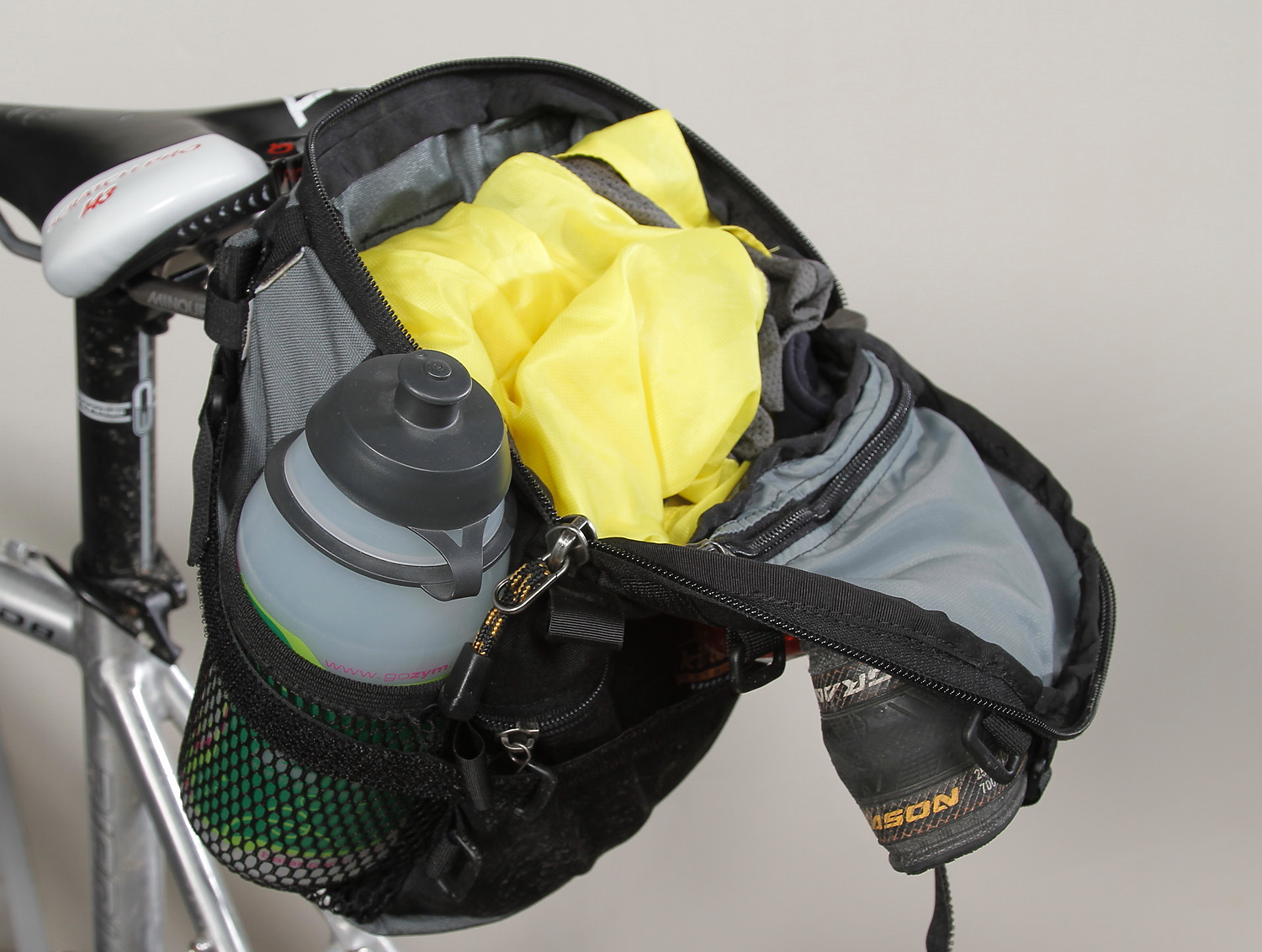
Close up of outer pocket (I just got back from a ride through a rain & hail storm, and the product is still dirty!).

The lid opens wide showing the hidden zippered pocket.
Backboard. Various size bags attach to this.

For the past three seasons I have been using Detours bags and like putting most of gear in a rear saddle bag. I also sell them on my gear site (Distance Biker). I don’t use a handle bar bags because I typically have clip-on aerobars mounted in the front. One of the things I have not liked about the Detours bags is the long mounting bracket — when I stand up to peddle or accelerate quickly, it tends to wag like a dog’s tail and throw me off balance. Correcting this imbalance also eats up extra energy too.

This winter I have been working on producing my own bag (or bag line) with similar volume to the Detours High Tail EXP UL as that has worked for me on longer brevets including 600s and 1200s. (My day job is designing and selling camera bags, Kinesis Photo Gear…the bike gear site is really my night job (this new line of bags will eventually be called eoGEAR (for endurance outdoor athletes). I didn’t like some of the bags that attached to the under side of a saddle to rails with straps only as they tended to sway back and forth, even with stabilizing straps that attach to the chain stays.

I started tinkering with the Minoura double water bottle bracket. After many prototypes (including mounting it up-side-down) it has proven to provide a very study mount for a bicycle bag system. It is made from a robust alloy with brass threaded inserts. The have recently upgraded the mounting bracket with heat treated steel to increase the strength of the mount. I have tested this bracket with a bag attached on both road (several 200k’s so far) and off-road situations (using my suspension-free, stiff alloy cross bike) — it is VERY stable.

If you have done any off-trail backpacking or mountaineering, you soon realize that the most efficient pack is one just large enough for your load, as a pack that is too large tends to sway under the motion of walking. Good internal backpacks also have several compression straps to keep the load close to your body and stabilize any externally added gear (like rope, crampons, jackets, water bottles etc.). These internal backpacks, while very functional, are not always pretty, as the compression straps tend to deform the shape of the bag…but it is functional, and that is what is important. The problem with many bike bags is that they put use stiffeners, plastics or wooden dowels to retain the shape of the bag. I believe in “form follows function” and tend to design with functionality and not prettiness in mind. I would rather shave off some weight and have a less-pretty bag if necessary.

This new bag line will have the following features:
1. Use of modern water-repellent fabrics like Cordura 500-denier cloth, instead of heavier and fungus-prone canvas duck.
2. Lean and mean approach. Build a bag that is barely large enough for the given task and then add additional gear to the outside of the bag when needed (instead of having a much-too-large of a bag which can be unwieldy).
3. Use of compression straps to stabilize the load and the ability to add gear to the outside as needed. I have designed this bag line so the same compression straps also function as tie down straps too.
4. Modular approach. I’m am using the same quick-attach method I use on my Kinesis modular belt-pouch line. It is called the Kinesis Attachment Tab System (KATS for short, also referred to as MATS, or modular attachment tab system). The backboard (alloy bracket + our additional HDPE piece) can stay attached to the bike saddle and various size bags can be swapped on our off.
5. Easy open “wide mouth” zippered lid. The zipper is water-repellent but not waterproof. We may offer a thin dry bag insert for those wanting more protection. The problem with a rain cover is that it will cover your tail light.”
6. Compatible with the Kinesis camera bag line…that is many Kinesis bags will mount directly to the bicycle back board.
7. US-made in small quantities.

Saddle Compatibility
Currently the bracket will attach to nearly any “plastic” saddle and the Giles Berthoud leather saddles, but will not attach to a Brooks or Selle An-Atomica (yet). The space between the rails is just too wide on those models.

Timing and Price
I will working on a final prototype this weekend and photographing it for an upcoming issue of the RUSA magazine. I expect to have final bags shipping in late May or early June…just in time for people to test them out before heading off to PBP. I have not determined a final price, but I suspect it will be around $95 to $130 for the bag and backboard. I will introduce smaller bags later on which will fit the same backboard — more of a “century ride” size.

If you interested in ordering one, please e-mail me and I’ll send you a link, once the product is posted on my gear site.

Weight and Volume Comparison (includes mounting hardware)
Detours High Tail EXP UL (my prior standard for 600s and 1200s) = 590 grams with 6 liters of inside volume
Carradice (Transverse model I believe) bag = 1210 grams with approx. 11 liters of volume
Ortlieb Large Seatpost bag = 330 g with 2.7 liters (claimed). No means to attach gear to the outside.
eoGEAR Prototype #4 Saddle Bag (shown in photos) = 450 g with 6 liters of inside volume. The size of this bag is 24 x 19 x 10 cm.

New Cross Bike

New Used Cannondale Cyclo-Cross Bike

I’ve been looking for a cyclo-cross bike for some time. I found a used one through the local online classifieds. It is a 2010 61cm Cannondale CAAD 8. A “cross” bike is essentially a road bike with more clearance for semi-fat tires. This model features an all aluminum frame with carbon forks and Shimano 105 20-speed components, excepting the cantilever brakes, which are Tektro. The unpainted aluminum makes it look like a titanium frame, so I have nicknamed this my “fake Ti bike.” The top tube is about the same length as my regular carbon road bike, so the fit is similar. The wheels are Cannondale’s in-house Maddux DRX 6000 model.

Upgrades…
I replaced the smaller 36 chainring with a smaller 34. The larger ring is a 46, which is typical for cross bikes (unlike the 50 on my carbon bike). I also replaced the stem with an adjustable model to get the bars higher. The head tube height on cross bikes are always short. I plan to use this bike as a trainer bike for local training rides, especially in the off season when the roads are wetter. The canti brakes don’t get as gunked up as regular road brakes. I use this bike for my daily run to the post office (except on most cold winter days — it is just too much work to get enough clothes on for the 4.4-mile round trip).

Here’s a quick review of the Topeak beam rack: The basket (Rack Top Basket) and rack (MTX Beam Rack) are from Topeak and remove quickly if needed. Before I purchased this combo, I suspected the basket might be a slight problem as there really isn’t enough clearance for my butt. I ended up taking a pair of ChannelLocks and bending the upper part of the basket back so it doesn’t rub while riding. I called Topeak customer service to see if there was an adjustment that I overlooked and they said no, but that the engineers/designers were aware of this clearance problem. If I wasn’t so tall, with the seat post extended up so far, the basket would never fit the average-Joe bike, as it has to go underneath the rear of the seat. The basket locks in place and will not stay on the rack, unless it is shoved all the way forward as shown. I then added some custom long straps to hold the packages in tight. The basket slips into place with their MTX QuickTrack system which is fast to use, but the basket to rack connection does have some wobble while riding. The rack itself does connect tightly to the seat post however and is a decent design. Occasionally, my inside leg touches or lightly rubs against the quick-release lever however. All-in-all, the rack is a good product, but the basket design needs an overhaul.

In the photo I have 28c semi-slick touring tires on it, but I also have a couple pair of 32 and 35c knobbies for off road use (they came with the purchase). For the pedals, I have used the Shimano A530, which has SPD on one side and platforms (for regular shoes) on the other. These are similar to the A520 pair I have on my road bike as they use SPD clips but are designed for road “touring” use. I have not purchased fenders, but plan to do so, thereby I can train on rainy days too. Or on rainy brevets I may use this bike.

I have found that riding an aluminum frame bike with wider 28c tires, although stiffer than a carbon bike, is about the same “discomfort level” as a carbon road bike with 25c tires. Instead of inflating to 100 to 105 lbs. as with my 25s, I only inflate these to 90 PSI. The longest ride I have take thus far is 2.5 hours or about 45 miles. As the weather warms, I will be doing longer training rides, and possibly do a 200k using the bike. Locally we have several rural dirt roads, that are not too steep. With this bike, it will increase my options for training rides. Or I may head to the west desert in Utah and attempt some long distance dirt road endurance rides. This last fall I helped pace a group of friends on a 100-mile relay race on the Pony Express Trail. I used my full-suspension mountain bike, but a cross bike would have been better for such a task.

Stay tuned as the season progresses. Safe riding to you all!